
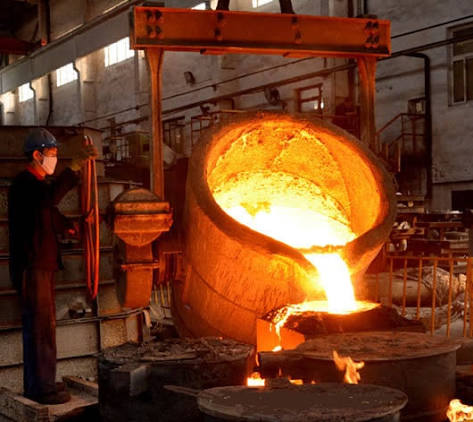

Bulk iron casting orders are an important part of procurement for businesses involved in industrial equipment manufacturing, construction machinery, automotive production, agriculture, and other sectors. Purchasing components in large quantities can help companies maintain production schedules, manage inventory, and establish consistent supply arrangements. However, successful bulk purchasing requires more than comparing unit prices. Buyers must also evaluate material specifications, manufacturing capabilities, quality standards, production capacity, and delivery arrangements.
A well-planned purchasing process helps reduce the risk of receiving components that do not meet technical requirements or production expectations. Working with a reliable Iron Castings Manufacturer can help buyers clarify specifications, assess production feasibility, and establish quality expectations before placing a large order. Understanding the key considerations in advance can make bulk procurement more efficient and predictable.
1. Define Your Iron Casting Requirements Clearly
Before requesting quotations, buyers should identify exactly what they need. Clear technical requirements help manufacturers evaluate the project and provide more accurate pricing and production estimates.
Important details include:
- Component names and intended applications.
- Technical drawings and dimensions.
- Required iron grade.
- Mechanical property specifications.
- Surface finish requirements.
- Dimensional tolerances.
- Machining and finishing needs.
- Expected order quantity.
Providing complete information reduces the possibility of misunderstandings during production. If certain specifications are not yet finalized, buyers should communicate this clearly so that technical discussions can take place before manufacturing begins.
2. Choose the Appropriate Iron Material
<AsyncImage query=”gray iron and ductile iron industrial casting components close up” aspectRatio=”16:9″ width=”100%”/>
Iron castings are produced using different material grades, each offering specific mechanical and physical characteristics. Selecting the wrong grade may affect component performance, service life, and suitability for the intended application.
Common materials include:
Gray iron
Gray iron offers good machinability, vibration damping, and castability. It is commonly used for machine bases, housings, covers, and various industrial equipment components.
Ductile iron
Ductile iron provides greater tensile strength and ductility than conventional gray iron. It is suitable for components that need to withstand higher mechanical loads and impact conditions.
White iron
White iron has high hardness and wear resistance. It is used in selected applications involving significant abrasive wear, although its brittleness limits its suitability for some structural applications.
Alloy cast iron
Alloying elements can be added to modify properties such as wear resistance, strength, and performance under particular operating conditions.
Buyers should select materials according to actual service requirements rather than choosing a grade based only on price. Material specifications should be documented clearly in the purchase agreement.
3. Evaluate the Manufacturer’s Production Capacity
Bulk orders require manufacturers to have sufficient equipment, workforce, and production planning capabilities to meet the requested quantities.
A supplier may produce high-quality samples but struggle to maintain consistent quality across a much larger order. Buyers should therefore evaluate production capacity before committing to substantial quantities.
Consider asking about:
- Available melting and molding equipment.
- Monthly or annual production capacity.
- Experience with similar component sizes.
- Current production commitments.
- Ability to manage repeat orders.
- Availability of machining and finishing facilities.
- Backup arrangements for equipment maintenance.
It is also useful to discuss whether the order will be produced in one batch or divided into several production runs. This can influence delivery schedules, inspection arrangements, and inventory planning.
4. Check the Manufacturer’s Experience and Technical Capabilities
<AsyncImage query=”industrial iron foundry production facility iron casting manufacturing equipment” aspectRatio=”16:9″ width=”100%”/>
Not all foundries specialize in the same types of components. Some focus on small precision castings, while others have experience producing large industrial parts or complex geometries.
Buyers should look for manufacturers with relevant experience in their product category.
Useful evaluation points include:
Industry experience: Check whether the manufacturer has produced similar components for comparable applications.
Engineering support: Determine whether technical staff can review drawings and suggest suitable manufacturing adjustments.
Casting processes: Ask which casting methods are available and why a particular method is suitable for the component.
Machining capabilities: Confirm whether the manufacturer can provide finished or partially machined parts.
Technical documentation: Review available material certificates, inspection reports, and production records.
A manufacturer’s ability to understand the intended application is often as important as its ability to operate casting equipment.
5. Understand the Casting Process and Manufacturing Method
Different casting processes offer different advantages depending on component size, geometry, production quantity, and quality requirements.
Sand casting is widely used for iron components because it can accommodate a broad range of shapes and sizes. Other methods may be suitable for specific applications depending on design and production requirements.
Before ordering, buyers should understand:
- Which casting method will be used.
- Whether new patterns or molds are required.
- How internal cavities and cores will be produced.
- How the manufacturer controls metal temperature and pouring.
- How shrinkage and solidification are managed.
- Which finishing operations are included.
Understanding the manufacturing process helps buyers assess whether the proposed production method is appropriate for their components.
6. Request Samples Before Confirming a Large Order
Sample approval is an important step in bulk procurement, especially when ordering a new component or working with a manufacturer for the first time.
A sample allows buyers to evaluate the product before committing to full-scale production. It can also reveal potential problems with dimensions, surface condition, material properties, and assembly compatibility.
During sample evaluation, check:
- Overall dimensions and critical tolerances.
- Material grade and relevant test results.
- Surface condition and visible defects.
- Machining accuracy where applicable.
- Compatibility with related components.
- Compliance with the agreed technical drawings.
For complex products, buyers may also request a first-article inspection report. Any necessary corrections should be agreed upon before the main production run begins.
7. Examine Quality Control and Inspection Procedures
<AsyncImage query=”iron casting foundry quality control dimensional inspection measuring industrial cast metal part” aspectRatio=”16:9″ width=”100%”/>
Quality consistency is one of the biggest concerns when purchasing iron castings in bulk. Even if the first few components meet specifications, buyers need confidence that the entire order will maintain acceptable quality.
A professional quality control system should cover multiple production stages.
Raw material inspection
Manufacturers should verify incoming materials and ensure that the selected iron grade meets the agreed specifications.
Process monitoring
Important production conditions, such as metal temperature, chemical composition, and molding parameters, should be controlled appropriately.
Dimensional inspection
Critical dimensions should be measured using suitable instruments and inspection procedures.
Mechanical testing
Hardness, tensile strength, or other tests may be required depending on the component’s application and material specification.
Defect inspection
Visual inspection and suitable nondestructive testing methods can help identify surface or internal discontinuities.
Buyers should define inspection requirements before production starts. This prevents disagreements about acceptable quality after the order has been manufactured.
8. Consider Dimensional Accuracy and Machining Requirements
Cast iron components do not always achieve the final dimensions required for assembly directly from the mold. Certain features may require machining to meet tighter tolerances.
For example, bearing seats, threaded holes, sealing surfaces, and mounting interfaces often need additional machining.
Buyers should specify whether they need:
- Raw castings.
- Castings with selected surfaces machined.
- Fully machined components.
- Components with additional surface treatment.
It is also important to identify critical dimensions on engineering drawings. This allows manufacturers to plan machining allowances and inspection procedures accordingly.
Clearly defining the required finishing level can prevent unexpected costs and delays.
9. Compare Pricing Beyond the Unit Cost
Price is an important factor in bulk procurement, but the lowest quotation does not always represent the best overall value.
Iron casting prices can be influenced by material grade, component weight, design complexity, tooling, production quantity, machining, inspection, and packaging.
Buyers should examine the full quotation to understand what is included.
| Cost factor | What buyers should check |
|---|---|
| Raw materials | Iron grade, material availability, and composition requirements |
| Tooling | Pattern and mold development costs |
| Production | Casting method, labor, and equipment requirements |
| Machining | Required precision operations and finishing |
| Inspection | Testing methods and documentation |
| Packaging | Protection against damage and corrosion |
| Transportation | Shipping method, freight, and delivery terms |
A detailed quotation makes it easier to compare manufacturers fairly and identify potential additional expenses.
10. Understand Minimum Order Quantities and Production Planning
Some manufacturers establish minimum order quantities because casting production involves setup, tooling, and material preparation costs.
Buyers should confirm whether the supplier can accommodate the required quantity and whether production can be divided into smaller deliveries.
For example, a company may order a large quantity but request several scheduled shipments to avoid storing all components at once.
Before confirming an order, discuss:
- Minimum order quantity.
- Total production quantity.
- Batch sizes.
- Expected production time.
- Delivery frequency.
- Future repeat-order requirements.
A suitable production arrangement can help balance manufacturing efficiency with inventory management needs.
11. Confirm Lead Times and Delivery Schedules
<AsyncImage query=”industrial metal castings packaged wooden crates warehouse shipping preparation” aspectRatio=”16:9″ width=”100%”/>
Lead time is particularly important for businesses that depend on iron castings to maintain continuous manufacturing operations.
The total delivery period may include drawing review, tooling development, sample production, approval, casting, machining, inspection, and transportation.
Buyers should ask for a realistic schedule that accounts for each stage rather than relying only on an estimated casting production period.
It is also helpful to confirm how the manufacturer handles unexpected delays, equipment breakdowns, material shortages, or quality-related production adjustments.
For recurring orders, an agreed production forecast can help both parties plan capacity and maintain a more stable supply arrangement.
12. Review Packaging and Transportation Arrangements
Iron castings can be heavy and may have irregular shapes, making proper packaging important during storage and transportation.
Inadequate packaging can result in surface damage, corrosion, or handling difficulties. Buyers should discuss packaging requirements according to component size, weight, transportation distance, and storage conditions.
Possible arrangements include:
- Wooden crates for heavy components.
- Palletized packaging for organized handling.
- Protective wrapping for exposed surfaces.
- Rust-prevention measures where appropriate.
- Clear product identification and labeling.
- Separation of components to prevent impact damage.
International buyers should also clarify shipping terms, export documentation, insurance responsibilities, and customs requirements before finalizing the order.
13. Check Certifications and Technical Documentation
Technical documentation helps buyers verify that delivered components meet the agreed requirements.
Depending on the project, useful documents may include:
- Material certificates.
- Chemical composition reports.
- Mechanical test reports.
- Dimensional inspection records.
- Nondestructive testing reports.
- Heat treatment records, where applicable.
- Quality management system certificates.
- Product identification and traceability records.
Buyers should verify the scope and validity of any certifications provided. A certification should not be treated as automatic proof that every individual casting meets the required specifications.
The documentation package should be agreed upon before production so that the manufacturer can prepare the necessary records.
14. Establish Clear Payment and Contract Terms
Bulk iron casting orders can involve substantial financial commitments, especially when new tooling or specialized production arrangements are required.
A clear purchase agreement protects both parties by defining their responsibilities and expectations.
Important contract details include:
- Product drawings and technical specifications.
- Material grades and inspection standards.
- Order quantity and unit pricing.
- Tooling ownership and related costs.
- Sample approval requirements.
- Production and delivery schedules.
- Payment terms and milestones.
- Procedures for handling defective products.
- Packaging and transportation responsibilities.
- Warranty or after-sales arrangements, where applicable.
Buyers should review these terms carefully before making advance payments or authorizing production.
15. Build a Long-Term Relationship With a Reliable Supplier
Bulk purchasing often involves repeated orders over several months or years. Establishing a stable relationship with a capable manufacturer can simplify procurement and improve coordination.
Once a manufacturer understands a buyer’s technical specifications, quality expectations, and production schedule, future orders may become easier to manage.
A reliable supplier relationship can support:
- More consistent product specifications.
- Better production planning.
- Improved communication.
- Easier management of repeat orders.
- Faster resolution of technical questions.
- More predictable procurement arrangements.
Buyers should evaluate suppliers based on long-term performance rather than making decisions solely on the price of a single order.
Conclusion
Ordering bulk iron castings requires careful planning, technical evaluation, and clear communication with the manufacturer. Buyers should assess material selection, production capacity, casting methods, quality control, machining requirements, pricing, and delivery arrangements before confirming a large purchase.
Requesting samples, reviewing technical documentation, and establishing clear contract terms can reduce procurement risks and help ensure that delivered components meet the required specifications.
By focusing on product quality, manufacturing capabilities, and long-term supply reliability, industrial buyers can make more informed purchasing decisions and develop dependable sourcing arrangements for their iron casting requirements.

