
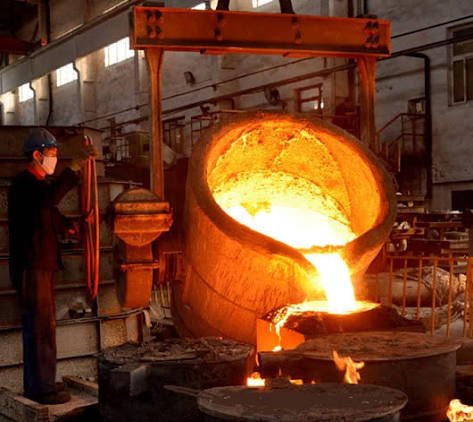

Modern industrial manufacturing depends on components that can withstand demanding operating conditions while maintaining strength, accuracy, and long-term reliability. From heavy machinery and automotive systems to construction equipment and energy infrastructure, metal components play an essential role in keeping industrial operations running efficiently. Among the various metalworking methods, iron casting remains an important manufacturing process because it can produce complex shapes, durable structures, and components in a wide range of sizes.
An experienced Iron Castings Manufacturer supports industrial production by transforming raw iron materials into functional components designed for specific engineering applications. Through material selection, mold development, controlled melting, casting, and machining, manufacturers help businesses obtain parts that meet technical requirements. Their contribution extends beyond producing individual components, as they also support supply chain stability, product development, and manufacturing efficiency across multiple industries.
The Importance of Iron Casting in Industrial Manufacturing
Iron casting has remained a fundamental manufacturing method because of its versatility and ability to produce components with different mechanical properties. Unlike some manufacturing processes that require extensive cutting or material removal, casting allows molten iron to take the shape of a prepared mold.
This makes it particularly useful for manufacturing components with complex geometries, internal cavities, and varying wall thicknesses. Depending on the selected iron grade, cast products can offer excellent compressive strength, vibration resistance, machinability, and wear resistance.
Industrial manufacturers use iron castings in applications where component reliability and cost-effective production are important considerations.
How Iron Casting Manufacturers Support Industrial Production
Iron casting manufacturers contribute to industrial manufacturing through several interconnected activities. Their work begins with understanding product requirements and continues through production, finishing, and quality verification.
1. Producing Components for Heavy Machinery
Heavy machinery requires components capable of handling substantial mechanical loads, vibration, and continuous operation. Iron castings are commonly used to manufacture machine bases, gearbox housings, engine components, pump bodies, and structural supports.
These components must maintain their structural integrity under demanding conditions. Manufacturers select appropriate iron grades and casting techniques to meet the strength, hardness, and durability requirements of each application.
2. Supporting Automotive Manufacturing
The automotive industry relies on iron castings for various engine, transmission, braking, and chassis-related components. Gray cast iron is valued for its vibration-damping properties and thermal conductivity, while ductile iron offers improved toughness and strength.
Casting manufacturers help automotive producers obtain components with consistent dimensions and material characteristics. Reliable production is especially important when supplying parts for high-volume manufacturing operations.
3. Supplying Components for Construction Equipment
Construction equipment operates in challenging environments involving dust, impact, heavy loads, and repeated mechanical stress. Excavators, loaders, cranes, and other machinery depend on durable metal components to perform effectively.
Iron castings are used in equipment housings, mounting structures, hydraulic system components, and other mechanical assemblies. Manufacturers help construction equipment producers select suitable materials and designs for specific working conditions.
4. Contributing to Agricultural Machinery Production
Agricultural machinery must withstand continuous outdoor use, changing weather conditions, and demanding workloads. Tractors, harvesters, irrigation systems, and processing equipment often incorporate cast iron components.
Manufacturers produce parts such as transmission housings, pump bodies, brackets, and machine supports. These components contribute to equipment stability and help agricultural machinery operate reliably throughout different farming seasons.
Material Selection and Its Impact on Manufacturing Performance
Material selection is one of the most important responsibilities in iron casting production. Different iron grades have different mechanical characteristics, making them suitable for particular industrial applications.
Gray Cast Iron
Gray cast iron contains graphite flakes that provide good vibration damping and thermal conductivity. It also offers excellent machinability, making it suitable for machine bases, engine blocks, brake components, and industrial housings.
Ductile Cast Iron
Ductile iron contains spherical graphite structures that improve its tensile strength and toughness. It is frequently used for components exposed to mechanical stress, including crankshafts, gears, pipes, and heavy equipment parts.
White Cast Iron
White cast iron is known for its hardness and abrasion resistance. It is commonly selected for industrial applications involving significant surface wear, such as crushing equipment, grinding components, and wear-resistant parts.
Malleable Cast Iron
Malleable iron offers improved ductility compared with conventional white cast iron. Its properties make it useful for fittings, brackets, connectors, and various mechanical components.
By understanding the differences between these materials, manufacturers can recommend suitable options according to operating conditions, performance expectations, and production costs.
The Role of Precision Casting in Modern Industrial Applications
Precision is increasingly important in modern manufacturing because industrial components must fit accurately into larger mechanical systems. Dimensional variations can cause assembly problems, unwanted vibration, premature wear, and equipment performance issues.
Iron casting manufacturers address these requirements through accurate pattern development, controlled mold preparation, and carefully managed pouring processes.
Modern design software also allows engineers to evaluate component geometry before production begins. Casting simulation can help identify potential problems involving molten metal flow, cooling behavior, and shrinkage.
These methods reduce unnecessary production adjustments and help improve the consistency of finished components.
How Machining Enhances the Quality of Iron Castings
Casting creates the basic shape of a component, but many industrial applications require additional machining to achieve precise dimensions and surface finishes.
Machining operations may include:
- Milling: Removes material from flat or contoured surfaces to achieve accurate dimensions.
- Turning: Produces cylindrical features and accurately sized circular surfaces.
- Drilling: Creates holes for fasteners, connections, and mechanical assemblies.
- Grinding: Improves surface finish and dimensional accuracy where required.
- Boring: Enlarges or refines existing holes to meet specific tolerances.
Combining casting and machining capabilities can simplify production coordination. It also allows manufacturers to manage dimensional requirements more effectively throughout the manufacturing process.
Quality Control in Industrial Iron Casting Production
Quality control is essential because casting defects can affect component strength, performance, and service life. Manufacturers must monitor production conditions and inspect finished products to ensure they meet technical specifications.
Several inspection methods are commonly used.
Visual Inspection
Visual checks help identify surface cracks, rough areas, incomplete sections, and other visible irregularities. This is generally one of the first steps in evaluating casting quality.
Dimensional Inspection
Measuring tools and coordinate measuring machines help verify whether components meet the dimensions and tolerances specified in engineering drawings.
Mechanical Testing
Hardness, tensile strength, and other mechanical tests help determine whether the selected iron grade provides the required material properties.
Non-Destructive Testing
Depending on component requirements, manufacturers may use ultrasonic testing, magnetic particle inspection, or radiographic testing to identify internal or surface defects without damaging the product.
A structured quality management process helps reduce defective products and supports consistent manufacturing results.
Improving Manufacturing Efficiency Through Iron Casting
Industrial companies continually seek ways to reduce production costs without compromising product quality. Iron casting can contribute to these goals because it allows manufacturers to produce complex shapes with relatively efficient material utilization.
Several factors help improve production efficiency.
Optimized mold design: Proper gating and riser systems improve metal flow and reduce casting defects.
Process automation: Automated pouring and handling systems can improve production consistency and reduce manual operations.
Material recycling: Suitable scrap iron and rejected casting materials can be recycled, helping reduce raw material waste.
Integrated machining: Coordinating casting and machining operations can reduce unnecessary transportation and production delays.
Preventive maintenance: Regular equipment inspections help prevent unexpected production interruptions.
Together, these practices support more predictable manufacturing schedules and better resource utilization.
Supporting Different Industrial Sectors
Iron casting manufacturers serve a broad range of industries because cast iron components can be adapted to different mechanical and environmental requirements.
Some major sectors include:
- Energy and power generation: Pump housings, valve bodies, turbine-related components, and equipment supports.
- Mining: Crusher parts, grinding equipment components, and wear-resistant machinery sections.
- Water infrastructure: Pipe fittings, valve components, drainage systems, and municipal equipment.
- Industrial processing: Machine frames, bearing housings, pump bodies, and mechanical supports.
- Transportation: Engine components, braking systems, and transmission housings.
Each industry has different performance expectations, which makes technical consultation and material expertise important during product development.
The Importance of Custom Iron Casting Solutions
Standard components are suitable for many applications, but specialized industrial equipment often requires custom-designed parts. Custom iron casting allows manufacturers to develop products according to specific engineering drawings, dimensions, and operational conditions.
The process generally begins with reviewing the customer’s technical requirements. Engineers evaluate the component’s geometry, material grade, expected loads, and production quantity before developing an appropriate casting method.
Custom production is particularly useful when manufacturing replacement parts, specialized machinery components, and equipment that uses non-standard designs.
It also provides opportunities to improve component geometry, simplify assembly, and address performance limitations found in existing designs.
Challenges Faced by Iron Casting Manufacturers
Despite its advantages, iron casting production involves several challenges that require technical expertise and careful process management.
One major challenge is controlling casting defects. Porosity, shrinkage cavities, cracks, and incomplete filling can affect the quality of finished components. Manufacturers address these issues through proper mold design, temperature control, and production monitoring.
Another challenge involves maintaining consistent material composition. Variations in carbon, silicon, and other elements can influence mechanical properties, making accurate chemical analysis important.
Production costs are also affected by energy consumption, raw material prices, equipment maintenance, and labor requirements. Manufacturers must balance these factors while maintaining acceptable quality standards.
Finally, changing industrial requirements create pressure to improve production flexibility. Companies increasingly need manufacturers that can handle customized designs, different production volumes, and precise machining requirements.
Technology Trends Shaping the Future of Iron Casting
Technological developments are changing how iron casting facilities design, produce, and inspect industrial components.
Computer-aided design and simulation tools help engineers evaluate product geometry and predict potential casting problems. These technologies can reduce trial-and-error production and improve mold design.
Automation is also becoming more common in modern foundries. Robotic systems can assist with pouring, material handling, grinding, and other repetitive activities.
Digital monitoring systems allow production teams to track furnace temperatures, process parameters, and equipment performance. This information supports better decision-making and helps identify production inconsistencies.
Environmental improvements are another important trend. Energy-efficient furnaces, better dust collection systems, and increased material recycling are helping foundries improve resource utilization and reduce environmental impacts.
As these technologies continue to develop, iron casting manufacturers will have more opportunities to improve productivity, consistency, and manufacturing flexibility.
How to Select a Reliable Iron Casting Manufacturing Partner
Choosing the right manufacturing partner is important for businesses that depend on cast iron components. A suitable supplier should understand the technical requirements of the application and have the production capabilities to meet them.
Before making a decision, industrial buyers should evaluate:
- Technical experience: Look for experience producing components similar to the required product.
- Material expertise: Confirm the ability to work with the necessary iron grades and specifications.
- Production capabilities: Review available casting methods, furnace capacity, and machining equipment.
- Quality assurance: Ask about testing procedures, inspection standards, and quality documentation.
- Customization support: Determine whether the manufacturer can work with custom drawings and specialized designs.
- Production capacity: Evaluate whether the facility can support the required order volume and delivery schedule.
- Communication: Assess how effectively the manufacturer handles technical discussions and production updates.
A detailed evaluation helps reduce sourcing risks and supports a more dependable manufacturing relationship.
Conclusion
Iron casting manufacturers play a significant role in supporting modern industrial manufacturing. Their expertise helps transform raw materials into durable components used in machinery, automotive systems, construction equipment, agricultural applications, energy infrastructure, and many other sectors.
Through appropriate material selection, accurate mold development, controlled production processes, machining, and quality inspection, manufacturers contribute to the reliability and efficiency of industrial equipment.
As automation, digital manufacturing, and sustainable production practices continue to advance, iron casting will remain a valuable solution for producing complex and durable metal components. Businesses that understand the capabilities of this manufacturing process can make more informed decisions about component design, material selection, and long-term industrial sourcing.

