
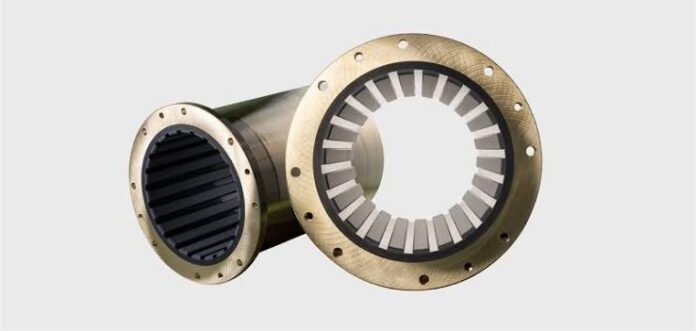

Bearings are essential components in industrial and marine machinery because they support rotating shafts, minimize friction, and help maintain stable equipment performance. The lubrication method used in a bearing has a significant influence on its efficiency, maintenance requirements, operating costs, and service life. Among the commonly used options, water lubrication and oil lubrication are two important approaches for different mechanical applications.
Understanding the differences between Water Lubricated Bearings and oil lubricated bearings helps engineers select suitable solutions according to operating conditions. While both systems are designed to reduce friction and wear, they differ in lubrication mechanisms, material requirements, environmental impact, and maintenance procedures.
Understanding Water Lubricated Bearings
Water lubricated bearings use water as the primary lubricating medium between the rotating shaft and the bearing surface. During operation, water helps create a lubricating film that reduces direct contact between moving components.
These bearings are commonly used in marine propulsion systems, industrial water pumps, hydroelectric equipment, and other machinery operating in water-based environments.
Their construction typically incorporates rubber, polymers, or specialized composite materials that can withstand continuous exposure to water.
One of their main characteristics is that they eliminate the need for conventional petroleum-based lubricants in appropriately designed systems.
Understanding Oil Lubricated Bearings
Oil lubricated bearings rely on lubricating oil to create a protective film between moving surfaces. This film reduces friction, minimizes wear, and helps prevent direct metal-to-metal contact.
Oil lubrication is widely used in industrial machinery, automotive equipment, turbines, compressors, and high-speed rotating systems.
Depending on the application, these bearings may use circulating oil systems, oil baths, or other lubrication arrangements.
Oil also provides useful cooling properties and can help remove contaminants from bearing surfaces when supported by an appropriate filtration system.
Key Differences Between Water and Oil Lubricated Bearings
Although both bearing types serve the same general purpose, their operating characteristics differ considerably.
| Comparison Factor | Water Lubricated Bearings | Oil Lubricated Bearings |
|---|---|---|
| Lubricating medium | Water | Lubricating oil |
| Environmental impact | Lower risk of petroleum contamination | Potential oil leakage and contamination |
| Maintenance | Often simpler lubrication arrangements | Regular oil monitoring and replacement |
| Cooling | Water can dissipate heat effectively | Oil provides lubrication and cooling |
| Material requirements | Water-resistant rubber, polymers, and composites | Materials compatible with lubricating oils |
| Common applications | Marine systems and water pumps | Industrial machinery and engines |
| Corrosion considerations | Requires suitable water-resistant materials | Oil can provide corrosion protection |
| Lubrication system | May use available water supply | Often requires an oil supply system |
The most appropriate option depends on the machinery design, operating environment, load requirements, and performance expectations.
1. Differences in Lubrication Mechanisms
The primary difference between these bearing systems is the medium used to separate moving surfaces.
Water Lubrication Mechanism
Water lubricated bearings use water to develop a film between the shaft and bearing surface. As the shaft rotates, the movement of water supports hydrodynamic lubrication under suitable operating conditions.
However, water has relatively low viscosity compared with most lubricating oils. This means bearing geometry, surface finish, operating speed, and clearance must be carefully designed.
Oil Lubrication Mechanism
Oil lubricated bearings use a higher-viscosity fluid to create a protective film between moving components.
The oil film helps support mechanical loads and reduce friction. Depending on the design, oil may also provide corrosion protection and carry heat away from the bearing assembly.
Oil lubrication is particularly useful in applications requiring controlled lubrication under demanding mechanical conditions.
2. Environmental Impact and Sustainability
Environmental considerations are increasingly important when selecting industrial equipment.
Water lubricated bearings offer an advantage in applications where petroleum-based lubricant leakage could contaminate surrounding water.
Because these systems use water instead of conventional oil or grease, they can reduce the risk of introducing petroleum products into marine environments.
Oil lubricated bearings, on the other hand, require proper handling, storage, and disposal of used lubricants. Leakage from poorly maintained systems may also create environmental concerns.
For marine vessels and water-handling equipment, reducing the possibility of oil contamination can make water lubrication an attractive option.
3. Maintenance Requirements
Maintenance requirements vary depending on bearing design and operating conditions.
Water lubricated bearings can simplify maintenance because they do not require conventional oil replacement or grease application. Their lubrication arrangements may also contain fewer components.
However, operators must still inspect bearing surfaces, water passages, shaft alignment, and water quality.
Oil lubricated bearings generally require more attention to lubrication management. Common maintenance activities include:
- Checking oil levels and operating temperatures.
- Monitoring oil condition and viscosity.
- Replacing oil according to maintenance schedules.
- Inspecting filters and lubrication pumps.
- Checking seals for possible leakage.
For equipment operating in suitable water environments, water lubrication may reduce certain routine maintenance activities.
4. Heat Dissipation and Operating Temperature
Heat management is important for preventing excessive bearing wear and maintaining equipment reliability.
Water has useful heat-transfer properties and can carry heat away from bearing surfaces when adequate circulation is maintained.
Oil also provides effective cooling in properly designed systems. Circulating oil can absorb heat and transport it to heat exchangers or cooling equipment.
The effectiveness of either approach depends on flow rate, bearing geometry, operating speed, applied load, and cooling-system design.
Therefore, engineers should evaluate the actual thermal requirements rather than assuming one lubrication method is always superior.
5. Material Selection and Durability
Water and oil lubricated bearings often require different material considerations.
Water lubricated designs commonly use materials such as:
- Rubber compounds.
- Engineering polymers.
- Thermoplastic materials.
- Specialized composite materials.
These materials must maintain their mechanical properties during prolonged water exposure.
Oil lubricated bearings frequently use metals and engineered bearing alloys designed to work with specific lubricants. Their material selection must account for friction, fatigue resistance, temperature, and compatibility with the selected oil.
Choosing the wrong material can cause premature wear, deformation, or reduced operating efficiency in either system.
6. Installation and System Complexity
Water lubricated bearings can offer relatively simple installation arrangements when the equipment already has an available water supply.
Some systems use the surrounding water for lubrication, reducing the need for separate oil reservoirs, pumps, and filtration equipment.
Oil lubricated bearings may require additional components depending on their configuration. These can include lubrication pumps, reservoirs, filters, cooling units, and sealing arrangements.
However, installation complexity varies significantly between individual bearing designs. A specialized water lubrication system may also require filtration, controlled water circulation, and additional protective components.
7. Applications of Water Lubricated Bearings
Water lubrication is particularly suitable for machinery operating in environments where water is readily available.
Common applications include:
Marine Propulsion Systems: Used to support propeller shafts in ships and boats, where seawater can serve as the lubricating medium in appropriately designed systems.
Industrial Water Pumps: Suitable for selected pump designs that handle clean or treated water.
Hydroelectric Equipment: Used in certain turbine and auxiliary machinery applications.
Wastewater Treatment: Applied in specialized equipment designed to operate under wet and potentially contaminated conditions.
Water Circulation Systems: Used in machinery that requires continuous operation in water-based environments.
8. Applications of Oil Lubricated Bearings
Oil lubricated bearings are widely used in applications where lubrication-film strength, high-speed operation, and controlled lubrication are important.
Typical examples include:
- Automotive engines and transmissions.
- Industrial compressors.
- Gas and steam turbines.
- Heavy manufacturing machinery.
- Gearboxes and rotating equipment.
- High-speed industrial motors.
Their ability to provide a protective lubricant film makes them suitable for many applications where water lubrication may not meet the required operating conditions.
Advantages of Water Lubricated Bearings
Water lubricated bearings provide several benefits in suitable applications.
- Environmental protection: Reduce dependence on petroleum-based lubricants and the associated risk of oil contamination.
- Simplified maintenance: Eliminate certain oil replacement and lubrication servicing requirements.
- Effective cooling: Water circulation can help remove heat from bearing surfaces.
- Corrosion-resistant construction: Suitable materials can withstand continuous exposure to freshwater or seawater.
- Reduced lubrication-system complexity: May eliminate the need for certain oil-related components.
- Marine suitability: Particularly useful for equipment operating in aquatic environments.
Advantages of Oil Lubricated Bearings
Oil lubricated bearings also offer important benefits that make them appropriate for many industrial applications.
- Strong lubrication films: Higher oil viscosity can support effective separation between moving surfaces.
- Wide application range: Suitable for many types of industrial and mechanical equipment.
- Corrosion protection: Oil can protect metal surfaces from moisture and oxidation.
- Effective heat management: Circulating oil can transfer heat to dedicated cooling systems.
- Lubrication flexibility: Different oil grades and formulations can meet specific operating requirements.
- Established technology: Widely supported by existing industrial maintenance practices and equipment designs.
How to Choose Between Water and Oil Lubricated Bearings
Selecting the right bearing requires evaluating the actual operating environment rather than focusing only on the lubrication medium.
Consider the following factors before making a decision:
- Operating environment: Determine whether the equipment operates in freshwater, seawater, dry conditions, or an industrial environment.
- Load requirements: Evaluate radial and axial loads to ensure the bearing can provide sufficient support.
- Rotational speed: Check whether the selected lubrication system can maintain an effective film at the required speed.
- Temperature conditions: Consider operating temperatures and cooling requirements.
- Environmental regulations: Evaluate whether reducing petroleum-based lubricant use is an important priority.
- Maintenance availability: Compare inspection requirements, lubrication arrangements, and replacement procedures.
- Total operating cost: Consider initial investment, maintenance expenses, energy requirements, and expected service life.
For marine propulsion and water-handling equipment, water lubrication may be particularly beneficial. For engines, compressors, and many high-speed industrial machines, oil lubrication may remain the more suitable solution.
Conclusion
Water lubricated bearings and oil lubricated bearings both play important roles in modern machinery, but their advantages depend on the operating conditions and equipment requirements.
Water lubricated designs are particularly valuable in marine and industrial water-handling applications because they can reduce petroleum-based lubricant use, simplify certain maintenance procedures, and provide effective heat dissipation. Oil lubricated bearings remain widely preferred for applications requiring specific lubrication-film characteristics, corrosion protection, and established high-performance lubrication systems.
Understanding these differences allows engineers and equipment operators to make informed decisions based on performance, durability, maintenance, and environmental considerations. Specialized manufacturers such as Techemer contribute to the bearing industry by developing solutions for different marine and industrial operating requirements. Ultimately, the best choice is the bearing system that matches the application’s technical demands and long-term operating objectives.

