
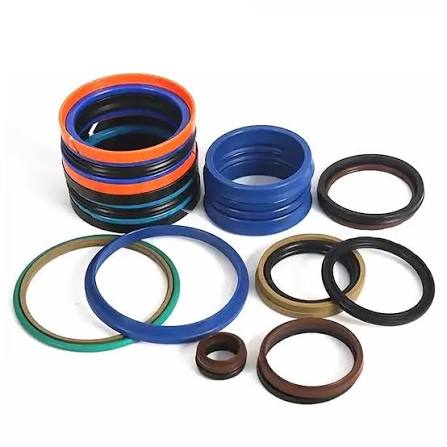

Hydraulic sealing technology continues to evolve as industrial equipment becomes more advanced and operating conditions become increasingly demanding. Modern hydraulic systems often require components that can withstand higher pressures, temperature variations, repeated movement, and exposure to different hydraulic fluids. Meeting these requirements involves more than maintaining standard production processes. It also requires continuous research and development (R&D).
For a Hydraulic Seals Manufacturer, research and development provides opportunities to improve materials, refine product designs, enhance manufacturing methods, and address changing customer requirements. By investing in technical research and product innovation, manufacturers can develop sealing solutions that support equipment reliability and meet the needs of different industrial applications.
1. Understanding Research and Development in Hydraulic Seal Manufacturing
Research and development refers to the systematic process of investigating technical challenges, testing new ideas, improving existing products, and developing manufacturing solutions.
In hydraulic seal manufacturing, R&D can involve several activities, including material research, seal profile development, performance testing, and production process optimization.
The main objectives include:
- Improving sealing performance under demanding conditions.
- Developing materials with suitable mechanical properties.
- Reducing friction and premature wear.
- Improving resistance to temperature and fluid exposure.
- Designing products for specialized equipment.
- Increasing manufacturing consistency.
- Identifying opportunities to reduce production waste.
R&D connects engineering knowledge with practical manufacturing requirements. It helps manufacturers understand why existing products may fail in certain environments and determine how design or material changes can address those problems.
2. Developing Advanced Materials for Better Seal Performance
<AsyncImage query=”polyurethane rubber PTFE industrial polymer hydraulic sealing materials laboratory samples” aspectRatio=”16:9″ width=”100%”/>
Material development is one of the most important areas of research in hydraulic seal manufacturing. Different applications expose seals to different combinations of pressure, friction, temperature, and chemical contact.
Common materials include nitrile rubber (NBR), polyurethane (PU), polytetrafluoroethylene (PTFE), fluorocarbon elastomers (FKM), and other specialized polymers.
Each material has specific advantages and limitations. For example, NBR is widely used in applications involving compatible mineral-oil-based hydraulic fluids, while polyurethane is valued for its abrasion resistance and mechanical strength. PTFE offers low friction and broad chemical resistance, making it useful in selected demanding applications.
R&D teams investigate how material formulations and processing methods influence properties such as:
- Hardness and elasticity.
- Tensile and tear strength.
- Compression set.
- Abrasion resistance.
- Thermal stability.
- Chemical compatibility.
- Long-term aging behavior.
Research helps manufacturers identify suitable material combinations for particular operating conditions rather than relying on a single compound for every application.
3. Improving Hydraulic Seal Designs Through Engineering Research
Seal geometry has a direct influence on sealing contact, friction, installation, and resistance to pressure.
Research and development allows engineers to evaluate existing seal profiles and explore design improvements for different hydraulic applications.
For example, piston seals must prevent internal fluid bypass, while rod seals must control leakage around moving piston rods. Wiper seals have a different responsibility because they remove dirt and other contaminants from exposed surfaces.
Design research may focus on:
Optimizing Sealing Lip Geometry
The shape and dimensions of a sealing lip influence contact with the mating surface. Research can help identify profiles that provide suitable sealing contact without creating unnecessary friction.
Improving Pressure Resistance
Engineers may investigate seal geometries and supporting components that reduce the risk of extrusion under high-pressure conditions.
Reducing Friction
Lower friction can help reduce heat generation and wear in dynamic sealing applications. However, friction must remain balanced with the need to maintain effective sealing contact.
Supporting Easier Installation
Design improvements may help reduce the risk of twisting, cutting, or damaging seals during assembly.
These developments can improve product suitability for different hydraulic cylinder designs and operating environments.
4. Using Advanced Technology in Research and Development
<AsyncImage query=”engineering research laboratory CAD workstation hydraulic seal product design simulation” aspectRatio=”16:9″ width=”100%”/>
Modern engineering tools allow manufacturers to evaluate designs and production methods more efficiently.
Computer-aided design (CAD) software helps engineers create accurate digital models of hydraulic seals. These models can be used to examine dimensions, profiles, and installation requirements before manufacturing begins.
Computer-aided engineering (CAE) and finite element analysis (FEA) can support the evaluation of material deformation, stress distribution, and contact behavior under defined conditions.
Other useful technologies include:
- CNC machining for accurate prototype production.
- Digital measurement systems for dimensional verification.
- Automated testing equipment for repeatable evaluations.
- Data analysis tools for identifying production variations.
- Advanced imaging systems for examining surface defects.
These technologies help engineers compare alternatives and identify potential design problems earlier in the development process.
However, digital analysis should be supported by physical testing. Actual seal performance depends on material behavior, manufacturing conditions, fluid exposure, temperature, and installation details that may not be fully represented in a simulation.
5. Improving Resistance to High Pressure and Temperature
Hydraulic equipment used in construction, mining, agriculture, and industrial manufacturing may operate under demanding pressure and temperature conditions.
High pressure can increase mechanical stress on sealing components and create extrusion risks. Elevated temperatures may accelerate material aging, while low temperatures can reduce the flexibility of certain elastomers.
R&D helps manufacturers investigate how different materials and seal designs respond to these conditions.
Research activities may include:
- Evaluating material deformation under compression.
- Studying extrusion resistance.
- Testing heat aging behavior.
- Measuring changes in hardness and elasticity.
- Examining low-temperature flexibility.
- Comparing performance under different pressure conditions.
The findings can guide material and design decisions for applications that require more specialized sealing performance.
6. Developing Solutions for Different Industrial Applications
Not every hydraulic system has the same operating requirements. Research and development helps manufacturers understand the specific challenges associated with different industries.
Construction Equipment
Excavators, loaders, cranes, and bulldozers operate under heavy loads and often encounter dust, dirt, vibration, and repeated movement. Research may focus on abrasion resistance, contamination protection, and pressure performance.
Agricultural Machinery
Tractors, harvesters, and other agricultural equipment operate outdoors and experience changing temperatures, moisture, and demanding work cycles. Material compatibility and environmental resistance are important research considerations.
Mining Equipment
Mining machinery often works in abrasive environments with heavy mechanical loads. Manufacturers may investigate materials and sealing arrangements that support durability under these conditions.
Industrial Manufacturing
Hydraulic presses and automated production systems may perform repeated cycles over extended periods. Research can help improve friction characteristics, dimensional consistency, and service life.
Marine Equipment
Marine hydraulic systems may require materials suitable for particular fluids, temperature conditions, and moisture exposure. R&D helps evaluate these application-specific requirements.
Understanding the working environment allows manufacturers to develop products that are better suited to their intended use.
7. How R&D Improves Manufacturing Processes
Research and development is not limited to designing new products. It can also improve the methods used to manufacture existing hydraulic seals.
Manufacturing processes such as compression molding, injection molding, transfer molding, and CNC machining require careful control to achieve consistent results.
R&D teams may investigate ways to improve:
Molding Conditions: Adjusting temperature, pressure, and curing time can help reduce defects and improve product consistency.
Machining Accuracy: Refining machining parameters can support better dimensional control and more consistent profiles.
Material Preparation: Improvements in mixing and compound preparation can help reduce variations in material properties.
Production Efficiency: Evaluating production sequences and equipment settings may reduce unnecessary processing time.
Waste Reduction: Better process controls can help minimize rejected components and material waste.
These improvements can benefit both product quality and manufacturing efficiency.
8. The Role of Testing and Validation in R&D
<AsyncImage query=”industrial rubber polymer testing laboratory tensile hardness compression testing machine” aspectRatio=”16:9″ width=”100%”/>
A new material or seal design must be evaluated before it can be considered suitable for production. Testing helps manufacturers determine whether a development meets its intended specifications.
Common research and validation activities include:
Hardness Testing
Measures resistance to indentation and helps confirm whether a material falls within its specified hardness range.
Tensile Testing
Evaluates tensile strength and elongation, providing information about how a material responds to pulling forces.
Compression Set Testing
Measures the permanent deformation remaining after a material has been compressed under defined conditions.
Fluid Compatibility Testing
Examines how exposure to specific hydraulic fluids affects material dimensions and mechanical properties.
Abrasion Testing
Evaluates resistance to surface wear caused by friction under controlled test conditions.
Pressure and Leakage Testing
Assesses whether a seal maintains the required sealing performance under specified operating conditions.
Endurance Testing
Studies how a sealing component performs during repeated movement or operating cycles.
Test selection depends on the intended application, material, design, and relevant standards. A successful laboratory result should also be considered alongside practical operating requirements.
9. Supporting Customized Hydraulic Seal Development
Many industrial businesses use specialized machinery with unique sealing requirements. Standard catalog products may not always provide the correct dimensions, material properties, or sealing profile.
R&D gives manufacturers the technical foundation to evaluate and develop customized components.
The process may involve:
- Reviewing the customer’s equipment specifications.
- Examining technical drawings or existing seal samples.
- Identifying operating pressure and temperature requirements.
- Evaluating hydraulic fluid compatibility.
- Selecting suitable material options.
- Developing a prototype or sample.
- Performing dimensional and performance tests.
- Refining the design before production.
This approach can be useful for original equipment manufacturers, equipment maintenance companies, and businesses working with older machinery.
Customized development should be based on accurate application information. Incorrect pressure, temperature, or fluid specifications can lead to an unsuitable design even when manufacturing dimensions are precise.
10. How R&D Helps Improve Product Reliability and Service Life
Product reliability is a major concern for businesses that depend on hydraulic machinery. Seal failure can lead to leakage, equipment downtime, maintenance expenses, and interruptions to production.
Research can help manufacturers understand the causes of premature seal deterioration and develop improvements that address specific weaknesses.
For example, testing may reveal that a particular material experiences excessive swelling when exposed to a certain hydraulic fluid. A manufacturer can investigate alternative compounds with more suitable compatibility.
Similarly, wear testing may identify a need to refine the seal profile or select a material with better abrasion resistance.
R&D supports reliability improvements by helping manufacturers:
- Identify common failure mechanisms.
- Evaluate alternative materials.
- Improve seal geometry.
- Study long-term material behavior.
- Reduce manufacturing variation.
- Validate design changes before production.
Although these activities can improve product reliability, actual service life still depends on equipment condition, installation quality, operating practices, and maintenance.
11. The Business Benefits of Continuous Research and Development
Consistent investment in R&D can provide long-term benefits for hydraulic seal manufacturers and their customers.
Greater Product Innovation
Research allows manufacturers to introduce improved designs and investigate new material technologies.
Better Technical Problem-Solving
Engineering research provides a structured way to investigate application challenges and identify practical solutions.
Improved Manufacturing Consistency
Process development can reduce variation and improve repeatability across production batches.
Support for Changing Industry Requirements
As machinery and hydraulic systems evolve, manufacturers can use R&D to adapt products to new operating demands.
More Effective Customization
Technical development supports the production of specialized sealing components for equipment with non-standard requirements.
Stronger Quality Management
Testing and validation help manufacturers understand product behavior and establish more effective production controls.
These benefits can support long-term business development while helping customers obtain sealing products suited to their equipment.
12. What Businesses Should Look for in an R&D-Focused Manufacturer
Industrial buyers should evaluate a manufacturer’s technical capabilities before selecting a supplier for long-term hydraulic seal requirements.
Important factors include:
- Engineering Expertise: Check whether the manufacturer has personnel who understand seal design, materials, and hydraulic applications.
- Design Software: Ask whether CAD or simulation tools are used during product development.
- Material Knowledge: Confirm that the company can explain material properties and fluid compatibility.
- Testing Capabilities: Review the available equipment for material, dimensional, and performance testing.
- Prototype Development: Determine whether samples can be produced and evaluated before larger orders.
- Process Improvement: Ask how manufacturing processes are monitored and refined.
- Technical Communication: Look for a supplier that can discuss application requirements clearly and provide realistic recommendations.
R&D capability should be assessed through actual technical processes, testing resources, and development experience rather than marketing claims alone.
13. Future Trends in Hydraulic Seal Research and Development
Hydraulic sealing technology is likely to continue developing alongside advances in industrial automation, material science, and equipment design.
Several areas may influence future research.
Advanced Polymer Materials
Research into new polymer formulations may help improve resistance to wear, temperature, and specific hydraulic fluids.
Digital Manufacturing
Greater use of digital production monitoring and automated inspection may support better process consistency.
Predictive Performance Analysis
Engineering simulations and data analysis may help manufacturers identify potential design weaknesses before physical production.
Additive Manufacturing
Three-dimensional printing may support prototype development and selected specialized production applications, although material suitability and production limitations must be carefully evaluated.
More Efficient Production
Manufacturers may investigate ways to reduce energy consumption, material waste, and unnecessary processing steps.
These developments are not equally applicable to every manufacturer or seal type. Their practical value depends on technical requirements, production scale, and available resources.
Conclusion
Research and development is essential for hydraulic seal manufacturers because it supports continuous improvement in materials, product design, manufacturing processes, and performance testing. Through engineering analysis and practical experimentation, manufacturers can better understand demanding operating conditions and develop sealing components that meet specific industrial requirements.
From improving fluid compatibility and pressure resistance to refining seal geometry and reducing production defects, R&D contributes to more consistent and reliable hydraulic sealing solutions. It also helps manufacturers respond to changing equipment technologies and increasingly specialized customer needs.
For industrial buyers, evaluating a manufacturer’s research capabilities, material knowledge, testing procedures, and engineering support can help identify a supplier capable of addressing both current and future hydraulic sealing challenges.

