
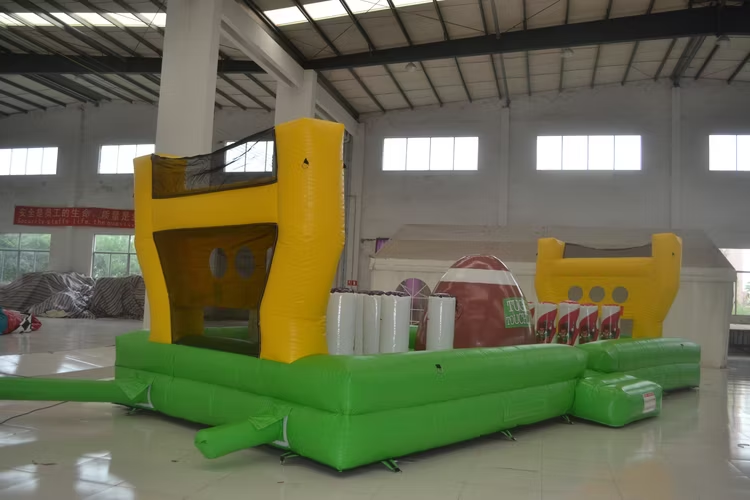

Inflatable games are a popular entertainment option for birthday parties, school events, family gatherings, festivals, and corporate celebrations. They offer an exciting way for guests to stay active, interact with others, and enjoy friendly competition. However, choosing the right attractions requires careful consideration of the participants’ ages, physical abilities, interests, and safety needs.
The best inflatable games for toddlers may not be suitable for teenagers or adults. Younger children often prefer simple bouncing activities and colorful designs, while older participants may enjoy challenging obstacle courses, interactive sports, and competitive games. Understanding these differences helps event organizers create an enjoyable experience for everyone.
Whether you are planning a private celebration or organizing entertainment for a large public event, selecting age-appropriate Inflatable Games can improve participation and help create lasting memories. This guide explains how to choose suitable options for different age groups and what to consider before renting or purchasing inflatable attractions.
Why Age Matters When Choosing Inflatable Games
Age is one of the most important factors when selecting inflatable entertainment. Different age groups have varying levels of coordination, strength, balance, and ability to follow instructions. A game that challenges an older child may be difficult or unsafe for a toddler.
Choosing suitable attractions also helps organizers manage participant flow and avoid overcrowding. When the activities match the audience, guests are more likely to participate confidently and enjoy the event.
Several factors should guide your decision:
- Physical development: Consider balance, coordination, strength, and movement abilities.
- Interests and preferences: Younger children may enjoy imaginative themes, while older participants may prefer competitive activities.
- Safety requirements: Follow age, height, weight, and participant limits specified by the manufacturer.
- Difficulty level: Choose games that provide an appropriate challenge without creating unnecessary risks.
- Group size: Consider how many participants will use each attraction and how quickly they can take turns.
These factors provide a useful starting point when comparing different inflatable entertainment options.
1. Best Inflatable Games for Toddlers and Preschoolers
Children between approximately two and five years old usually benefit from simple, low-complexity activities that support movement and exploration. At this stage, entertainment should prioritize age-appropriate designs, gentle physical activity, and close adult supervision.
Recommended Games for Younger Children
Small inflatable bounce houses
Compact bounce houses with simple layouts can provide an enjoyable jumping experience for younger children when specifically designed for their age group. Bright colors, friendly characters, and familiar themes can make the attraction more inviting.
Soft inflatable play zones
Some inflatable play areas include soft obstacles, crawl-through sections, and small activity spaces. These features allow children to explore movement and coordination without the complexity of a large obstacle course.
Mini inflatable slides
Low-height slides designed for preschoolers can introduce a simple climbing-and-sliding activity. Choose models with suitable access steps, enclosed sides where appropriate, and clearly defined landing areas.
What to Consider
For toddlers and preschoolers, avoid choosing an attraction solely because it looks entertaining. Verify the manufacturer’s minimum age, height requirements, capacity, and intended use. Separate younger children from larger or more physically active participants whenever the setup and manufacturer’s guidance require it.
A responsible adult should supervise the activity continuously, and children should never be left unattended on an inflatable structure.
2. Best Inflatable Games for Children Aged 6–9
Children in the six-to-nine age group often enjoy activities that combine movement, imagination, and simple challenges. They may be ready for more variety than preschoolers, but the difficulty and physical demands should remain appropriate for the specific participants.
Recommended Games for Primary-School Children
Themed inflatable castles
Castles featuring animals, adventure themes, or fantasy designs can make birthday parties and school celebrations more engaging. These attractions offer familiar play experiences while adding visual excitement to the event.
Inflatable obstacle courses for younger participants
Short obstacle courses with manageable climbing sections, tunnels, and low barriers can encourage coordination and active play. Select a design intended for the participants’ age and abilities rather than assuming every obstacle course is suitable.
Inflatable basketball games
Simple basketball challenges give children an opportunity to practice aiming and coordination. Smaller baskets or age-appropriate equipment can make the experience more accessible.
Inflatable target games
Games that involve throwing or kicking soft equipment toward a target can introduce friendly competition. Clear rules and straightforward scoring help children understand how to participate.
Selection Tips
At this age, variety can make an event more enjoyable. Combining a bounce house with one or two simple skill-based activities gives children different ways to participate.
Make sure each game has clearly marked boundaries, suitable supervision, and enough room for children to enter and exit without collisions. If the event includes a wide range of ages, establish separate play periods or designated areas when appropriate.
3. Best Inflatable Games for Children Aged 10–12
Children between ten and twelve years old may prefer activities that involve greater challenge, teamwork, and opportunities to test their skills. Many enjoy games where they can compare scores, complete timed challenges, or compete in small groups.
Recommended Games for Older Children
Inflatable obstacle challenges
More complex obstacle courses can provide climbing, crawling, balancing, and racing activities. They are particularly suitable for school festivals, sports days, and larger birthday parties when the course is designed for the participants.
Inflatable soccer dart
This game combines soccer-style kicking with target-based scoring. It encourages players to improve their accuracy and can be organized as an individual or team competition.
Inflatable basketball shootouts
Timed shooting challenges can help keep participants engaged. Organizers may create a leaderboard or arrange short rounds so everyone has an opportunity to play.
Inflatable human foosball
Human foosball introduces teamwork and communication through a life-sized version of the familiar tabletop game. It can be an entertaining option for school events and group celebrations when participants meet the equipment’s requirements.
How to Make These Games More Engaging
Introduce simple tournaments, team challenges, and score-based activities. For example, participants can compete to complete an obstacle course in the shortest time or achieve the highest score in a basketball shootout.
Avoid making speed the only measure of success. Rules should prioritize safe movement, fair participation, and enjoyment rather than encouraging risky behavior.
4. Best Inflatable Games for Teenagers
Teenagers often appreciate activities that offer competition, physical challenges, and opportunities to socialize with friends. They may be interested in sports-inspired attractions and obstacle games that feel more demanding than traditional children’s play equipment.
Recommended Games for Teen Participants
Large inflatable obstacle courses
Longer or more complex courses can create exciting head-to-head races. These attractions work well for school events, youth festivals, community celebrations, and outdoor parties.
Inflatable bungee runs
Bungee runs challenge participants to move forward against an elastic cord and place a marker as far as possible. The activity combines effort, balance, and friendly competition.
Inflatable sports challenges
Soccer, basketball, and football-based attractions can appeal to teenagers who enjoy testing their accuracy and athletic abilities. Different scoring systems can accommodate participants with varying levels of experience.
Inflatable wipeout-style games
Depending on the model, these games feature obstacles that participants must avoid or navigate. They can become a central attraction at larger events, especially when spectators can watch the challenges.
Important Considerations
Teenagers may be more willing to attempt demanding activities, but this does not mean every attraction is appropriate for them. Confirm the manufacturer’s age and physical requirements, and check whether the equipment is designed for individual or simultaneous participation.
Avoid allowing participants to push, tackle, or interfere with others unless a specific activity is designed for that type of interaction and its rules expressly permit it.
5. Best Inflatable Games for Adults
Inflatable games are not limited to children’s parties. Adults can enjoy a wide range of recreational activities at company events, team-building sessions, university gatherings, family celebrations, and community festivals.
For adult audiences, organizers can emphasize teamwork, coordination, strategy, and friendly competition.
Recommended Games for Adults
Inflatable human foosball
Human foosball encourages communication and collaboration. It is especially useful for company gatherings where participants can work together in teams.
Inflatable basketball and soccer challenges
These activities provide familiar sports experiences in a format that can accommodate casual players. Short rounds make it easier to include guests with different athletic abilities.
Inflatable bungee runs
A bungee run offers a straightforward competitive challenge that can be measured through distance or score. It is often suitable for organized adult events when the equipment and participants meet the manufacturer’s requirements.
Inflatable sumo wrestling
Some adult events feature padded sumo-style suits and an inflatable mat. This activity can create humorous moments, but organizers must verify that the equipment is suitable for the participants and enforce clear rules.
Inflatable gladiator jousting
Purpose-designed jousting attractions can add a competitive element to parties and corporate gatherings. Select equipment intended for the appropriate age group and use only the specified protective gear.
Planning Adult Activities
Adults may have different fitness levels, mobility needs, and comfort levels with physical challenges. Offer alternative activities and make participation voluntary.
For bungee, jousting, and contact-oriented games, check manufacturer restrictions and ensure trained personnel understand the operating procedures. A suitable game should be entertaining without placing unnecessary physical demands on participants.
6. Choosing Inflatable Games for Mixed-Age Events
Many events include toddlers, school-age children, teenagers, parents, and older relatives. Choosing attractions for a mixed-age audience requires a balanced approach because one game may not be appropriate for everyone.
Create Separate Activity Zones
Where space permits, divide the event into designated areas based on age or activity type. A younger children’s zone could feature an age-appropriate bounce house and simple play equipment, while an older children’s area might offer sports challenges or obstacle courses.
Adult-oriented attractions can be placed in a separate section when their operating requirements differ from those of children’s equipment.
The exact arrangement should follow the manufacturer’s instructions and any applicable event safety requirements.
Offer Different Levels of Challenge
Choose a selection of attractions with different physical demands. For example, target games may appeal to guests who prefer accuracy-based activities, while obstacle courses may attract those who enjoy more vigorous challenges.
Not every participant needs to use every attraction. Providing several options allows guests to choose activities that suit their interests and abilities.
Use Clear Rules and Scheduling
For some attractions, scheduled sessions can help reduce overcrowding and separate participants of different ages. Clearly communicate age restrictions, height requirements, maximum capacity, and instructions before guests begin playing.
If an inflatable is approved for a specific age group only, do not expand its use simply because older or younger guests want to participate.
7. Safety Factors to Consider for Every Age Group
Safety should remain a priority regardless of the participants’ ages. An age-appropriate game still requires correct installation, suitable supervision, and compliance with operating instructions.
Check the Manufacturer’s Requirements
Review the manufacturer’s guidance for:
- Minimum and maximum participant ages, where specified.
- Height and weight restrictions.
- Maximum occupancy and permitted participant combinations.
- Required anchoring and installation conditions.
- Appropriate surfaces and clearance around the inflatable.
- Weather restrictions and operating procedures.
- Cleaning, inspection, and maintenance requirements.
These details can vary significantly between products, so do not assume that two similar-looking inflatables have identical requirements.
Ensure Proper Installation
Set up the inflatable on a suitable surface and secure it according to the manufacturer’s instructions. Keep the area free from sharp objects, obstructions, and hazards that could affect participants.
Outdoor equipment may require additional precautions related to wind, rain, ground conditions, and electrical connections. Stop operating the attraction whenever conditions fall outside the manufacturer’s permitted limits.
Provide Active Supervision
A responsible operator should monitor participants, enforce capacity limits, and prevent unsafe behavior. Depending on the attraction, this may include managing entry and exit points, keeping participants separated by size or age, and stopping play when necessary.
Maintain Equipment Regularly
Inspect the inflatable, seams, anchor points, blower connections, and other relevant components before use. Follow the manufacturer’s maintenance schedule and arrange repairs when damage is identified.
Regular inspection can help identify problems before they affect the event.
8. Renting vs. Buying Inflatable Games
Your decision to rent or buy inflatable attractions should depend on how frequently you expect to use them and the resources available for operation.
When Renting Makes Sense
Renting is often a practical option for families, schools, and organizations planning a one-time celebration. It may reduce the need to arrange long-term storage, transportation, maintenance, and installation.
Before booking, ask the rental provider about the equipment’s intended age group, condition, setup requirements, supervision arrangements, insurance, and cancellation policies.
When Buying Is Worth Considering
Purchasing may be suitable for event companies, entertainment venues, schools, or rental businesses that expect regular demand.
When comparing products, evaluate material quality, dimensions, participant capacity, durability, warranty coverage, repair support, and storage requirements. Consider the full cost of ownership rather than comparing purchase prices alone.
If you are exploring products for regular event use, reviewing the available Inflatable Games can help you compare designs and identify attractions that match your intended audience and event format.
9. Budgeting for Age-Appropriate Inflatable Entertainment
A suitable budget should account for both the equipment and the practical requirements of operating it.
The overall cost may include rental or purchase fees, transportation, installation, electricity, staffing, cleaning, storage, repairs, and any applicable permits or insurance.
For smaller parties, one attraction that matches the guests’ ages may provide sufficient entertainment. Larger events may benefit from several activities that serve different groups and reduce queues.
Prioritize suitability, reliability, and safety over the number or size of inflatables. A carefully selected combination of games can provide a better experience than a large collection of attractions that do not match the audience.
Conclusion
Choosing the best inflatable games for different age groups starts with understanding participants’ interests, abilities, and safety needs. Toddlers and preschoolers generally benefit from simple, age-appropriate play equipment, while primary-school children may enjoy themed bounce houses and basic challenges. Older children and teenagers often appreciate obstacle courses and sports games, and adults may prefer team activities or more competitive attractions.
For mixed-age events, a combination of suitable games, clear operating rules, and effective supervision can help everyone enjoy the celebration. Always verify the manufacturer’s requirements and consider venue space, budget, installation, and maintenance before renting or purchasing equipment.
By matching each attraction to its intended audience, you can create an engaging event that encourages participation and delivers an enjoyable experience for guests of different ages. Explore the available range of Inflatable Games to compare possible options for your next party, festival, school function, or outdoor gathering.

