
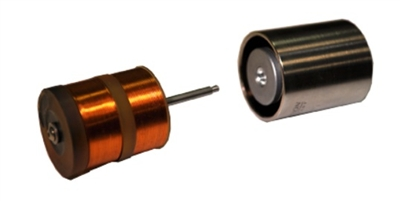

Modern precision motion systems depend heavily on compact, fast, and highly responsive actuation technologies. As industries such as robotics, medical devices, semiconductor manufacturing, and optical engineering continue to advance, the demand for efficient electromagnetic motion systems has increased significantly. These systems must deliver precise control, rapid response, and long-term reliability in increasingly compact designs.
A voice coil motor is a direct-drive electromagnetic device that generates motion through the interaction of a magnetic field and a current-carrying coil. Unlike traditional mechanical systems that rely on gears or screws, it produces smooth and direct linear motion. Understanding its design principles is essential for appreciating how a voice coil actuator achieves high precision and dynamic performance in modern applications.
Basic Working Principle of a Voice Coil Motor
The operating principle of a voice coil motor is based on Lorentz force, which describes the force exerted on a current-carrying conductor within a magnetic field. When electrical current flows through the coil, it interacts with the surrounding magnetic field and generates a linear force.
This force is directly proportional to the current and magnetic field strength, allowing for precise control of motion. Reversing the direction of current reverses the direction of movement, enabling smooth bidirectional control.
Magnetic Field Interaction and Force Generation
The interaction between the coil and the magnetic field is the core of the system’s performance. A well-designed magnetic circuit ensures consistent and efficient force production.
Key elements include:
- Permanent magnets that generate a stable magnetic field
- A coil that carries controlled electrical current
- A carefully designed air gap where force is generated
- Magnetic flux paths that guide and optimize field strength
When current flows through the coil, it experiences a force perpendicular to both the magnetic field and current direction. This interaction produces linear motion without mechanical contact.
Importance of Magnetic Circuit Design
Magnetic circuit design plays a critical role in determining the efficiency and power output of a voice coil motor. Engineers focus on maximizing magnetic flux density while minimizing energy loss.
Important design considerations include:
- Use of high-energy permanent magnets such as neodymium
- Optimization of flux paths to reduce leakage
- Maintaining uniform air gaps for consistent force output
- Reducing magnetic saturation in core materials
A well-optimized magnetic circuit results in higher force density and improved linearity of motion.
Coil Design and Electrical Performance
The coil is responsible for converting electrical energy into mechanical force. Its design directly influences speed, efficiency, and thermal behavior.
Key factors include:
- Wire gauge and winding density
- Electrical resistance and inductance
- Heat dissipation capability
- Material selection for thermal stability
Lower resistance improves efficiency, but it must be balanced with thermal management to prevent overheating during continuous operation.
Thermal Behavior and Energy Loss
As current flows through the coil, heat is generated due to electrical resistance. Managing this heat is essential for maintaining performance and reliability.
Common thermal challenges include:
- Reduced efficiency at higher temperatures
- Changes in coil resistance affecting performance
- Risk of thermal drift in precision applications
To address these challenges, engineers use heat sinks, cooling systems, and optimized duty cycles to maintain stable operating conditions.
Role of Mechanical Structure in Performance
Although motion is generated electromagnetically, mechanical design is still essential for guiding movement and ensuring stability.
Key mechanical components include:
- Linear guides or flexure bearings
- Rigid mounting structures
- Alignment systems to maintain air gap consistency
Proper mechanical design ensures smooth motion and prevents side loading that could reduce efficiency or accuracy.
Applications of Voice Coil Motors
Voice coil motors are widely used in applications requiring high precision and fast response.
Common uses include:
- Camera autofocus and image stabilization systems
- Semiconductor wafer positioning systems
- Medical imaging and surgical devices
- High-speed robotics and automation systems
Their ability to deliver smooth, controlled motion makes them ideal for sensitive and high-performance environments.
Conclusion
The design of a voice coil motor is centered around efficient magnetic field interaction, precise coil construction, and optimized thermal and mechanical systems. By converting electrical energy directly into linear motion, it eliminates mechanical inefficiencies and delivers highly accurate and responsive performance.
As demand for precision motion continues to grow, voice coil technology will remain a key solution in advanced engineering applications, offering a powerful combination of speed, accuracy, and reliability.

