
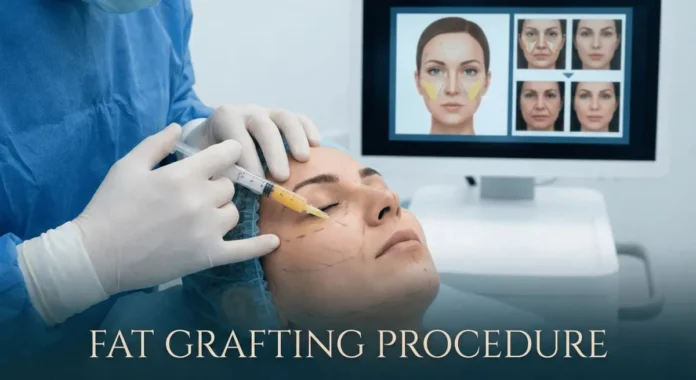

Weight loss can change more than clothing size. The face may lose fullness around the cheeks or temples, while the breasts, buttocks or other areas can look less supported. For some people, the change feels healthy and welcome overall but leaves one area out of proportion. Restoring volume with the person’s own tissue is one option, though it involves surgery and a recovery process that deserve careful consideration.
Fat transfer involves removing fat from one area, preparing it and placing selected amounts into another. It is not a simple exchange in which every removed cell survives. Some transferred tissue may establish a blood supply, while some may be reabsorbed. The final retained volume varies, so an ethical consultation should avoid guarantees about exact size, symmetry or permanence.
Candidate selection begins with health, anatomy and stability. A surgeon may consider weight trends, smoking or vaping, medicines, previous surgery, scarring, circulation and the amount of donor tissue available. Recent major weight loss can still be followed by further change. Waiting until weight has stabilised may make planning more reliable, but the right timing is individual and should be discussed with an appropriately qualified practitioner.
The donor and recipient areas need to be viewed together. Removing too much from a small donor site can create contour irregularities, while adding too much to the receiving area may not improve survival or balance. Good planning is therefore conservative. The aim is not only to fill a hollow but to create a transition that looks consistent with nearby tissue and with the person’s frame.
Recovery includes more than swelling at the treated area. There may be bruising, tenderness and compression requirements where tissue was removed, as well as restrictions intended to protect the receiving site. Instructions differ by procedure and body area. Anyone considering fat transfer should ask about time away from work, driving, exercise, sleeping position, garments and the practical help that may be needed at home.
Risks must be explained in procedure-specific terms. These may include infection, bleeding, asymmetry, contour changes, prolonged swelling, fat necrosis, oil cysts, scarring and the need for further treatment. Some placement sites carry particular serious risks, making surgeon training and technique especially important. A general online overview cannot replace personalised advice or a discussion of how complications would be recognised and managed.
The emotional side also matters after substantial weight loss. A person may expect restored volume to complete a transformation, yet surgery cannot erase every sign of skin laxity or tissue change. In some areas, lifting or skin removal may be considered instead of, or alongside, volume restoration. A surgeon should explain the trade-offs rather than steering every concern towards the same operation.
A second procedure may be discussed if volume retention is uneven or less than hoped. That possibility should be understood before surgery, including additional cost and recovery. It is also sensible to ask how long the surgeon recommends waiting before judging the result. Early swelling can distort the picture, while later weight change can alter both donor and treated areas.
Choosing a surgeon requires more than comparing galleries. Patients can ask about recognised qualifications, hospital access, anaesthesia arrangements and how often the surgeon performs the proposed procedure. It is also worth confirming who provides postoperative reviews and what happens after hours. A clear care pathway is especially important when surgery involves more than one body area.
Patients should also plan for ordinary responsibilities, including childcare, lifting, pets and transport. Recovery advice is easier to follow when practical support has been arranged before the operation.
For a suitable patient, fat transfer can use existing tissue to restore selected contours after weight loss. Its appeal should not hide the fact that it is an operation with variable biological outcomes. The soundest decision comes from a qualified surgical assessment, realistic expectations and a clear plan for recovery and follow-up. The goal is proportion and personal comfort, not a promised copy of an earlier body.

