

Introduction
Solid surface materials have become an important part of modern architecture and interior design because of their versatility, smooth appearance, and adaptability to different applications. From kitchen countertops and bathroom vanities to commercial reception desks and decorative wall panels, these engineered materials offer a combination of aesthetic and functional characteristics. However, their final quality depends heavily on the manufacturing processes used to produce them.
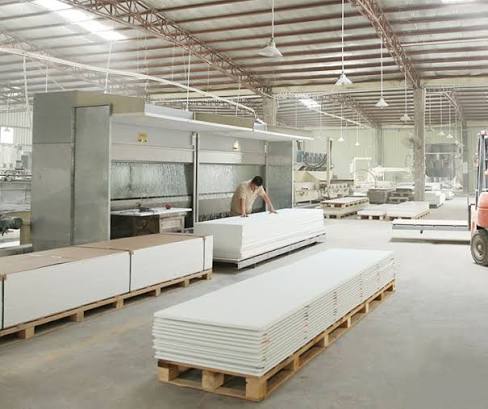
Understanding how KingKonree Solid Surface products are manufactured provides useful insight into the materials, production techniques, and quality considerations involved in creating engineered surfaces. The manufacturing process generally involves raw material preparation, mixing, molding, curing, finishing, and inspection. Each stage contributes to the appearance, consistency, and performance of the finished product.
1. Selecting and Preparing Raw Materials
The manufacturing process begins with selecting the appropriate raw materials. Solid surface products are generally produced using a combination of mineral fillers, resin systems, pigments, and other additives.
Common components include:
- Mineral fillers: Aluminum trihydrate (ATH) is frequently used to provide body, surface characteristics, and dimensional stability.
- Resins: Acrylic, polyester, or blended resin systems help bind the mineral components together.
- Pigments: These provide the colors and decorative patterns required for different product designs.
- Additives: Certain additives may be incorporated to support processing, improve material properties, or achieve specific production requirements.
The proportions and quality of these ingredients influence the finished material’s appearance, workability, and performance.
Before production begins, manufacturers typically inspect and prepare the raw materials to ensure that they meet the required specifications.
2. Accurate Material Measurement and Mixing
After raw material preparation, the ingredients are measured according to the product formulation. Accurate proportions are important because variations in the mixture can affect consistency, appearance, and physical properties.
The selected resin system is combined with mineral fillers, pigments, and other required ingredients using specialized mixing equipment.
During this stage, manufacturers aim to achieve a uniform mixture with minimal air entrapment. Consistent mixing helps distribute the different components evenly throughout the material.
For products with distinctive colors or decorative patterns, additional attention is required to maintain the intended visual characteristics.
3. Vacuum Mixing and Air Removal
Air bubbles can negatively affect the appearance and structural consistency of solid surface products. For this reason, some manufacturing processes incorporate vacuum mixing or degassing techniques.
Vacuum processing helps remove trapped air from the material mixture before it enters the molding stage.
This process can provide several benefits:
- Reduces visible air pockets and bubbles.
- Supports a more consistent material structure.
- Improves the appearance of the finished surface.
- Helps reduce certain production defects.
- Contributes to better product uniformity.
The exact equipment and processing conditions depend on the manufacturer’s production system and material formulation.
4. Molding and Casting the Material
Once the mixture has been prepared, it is transferred into suitable molds or casting systems. This stage determines the initial dimensions, thickness, and general shape of the solid surface product.
Manufacturers may use different molding techniques depending on whether they are producing sheets, slabs, or customized components.
Proper mold preparation is important for achieving accurate dimensions and a consistent finish. Temperature, material distribution, and processing conditions must also be controlled during production.
For large-scale manufacturing, standardized molds and production procedures help maintain consistency across multiple batches.
5. Curing and Material Hardening
Curing is an essential stage in solid surface manufacturing. During this process, the resin system undergoes chemical reactions that allow the material to develop its solid structure.
Depending on the formulation, curing may involve controlled temperature conditions, specific processing times, and carefully managed production environments.
Proper curing helps determine important characteristics of the finished product, including hardness, dimensional stability, and overall structural integrity.
Insufficient or inconsistent curing can affect product quality. Manufacturers therefore need to monitor the relevant processing conditions to achieve reliable results.
6. Cooling and Initial Product Inspection
After curing, the material needs to cool under controlled conditions before further processing. Proper cooling helps reduce the possibility of dimensional changes and unwanted stresses.
Once the material has reached a suitable temperature, an initial inspection can be performed.
Manufacturers may examine the products for:
- Visible bubbles or surface imperfections.
- Cracks and other structural defects.
- Uneven coloration or pattern inconsistencies.
- Dimensional accuracy.
- Surface irregularities.
Identifying defects at this stage allows manufacturers to determine whether the product requires additional processing or should be rejected.
7. Cutting and Precision Processing
After initial inspection, solid surface sheets or slabs are processed into the required dimensions. Cutting operations must be accurate because the finished products may need to fit specific architectural or furniture designs.
Modern manufacturing facilities may use CNC cutting equipment to improve dimensional accuracy and repeatability.
CNC technology can support the production of:
- Countertop components.
- Washbasin sections.
- Customized vanity tops.
- Decorative wall panels.
- Specially shaped interior elements.
Precision cutting also helps reduce unnecessary material waste and simplifies subsequent fabrication work.
8. Surface Sanding and Polishing
Surface finishing plays an important role in determining the final appearance of solid surface products. After cutting and processing, the material may undergo sanding and polishing to achieve the specified finish.
Different abrasive materials and polishing techniques can be used depending on the required surface texture.
Common finishes include:
Matte Finish: Provides a soft, understated appearance that works well in contemporary interiors.
Satin Finish: Offers a balanced surface appearance with moderate reflection.
Gloss Finish: Creates a more reflective appearance that can enhance the visual impact of certain designs.
Finishing procedures must be consistent to ensure that the product meets the expected appearance standards.
9. Thermoforming and Customized Fabrication
One of the important advantages of certain acrylic solid surface materials is their ability to be thermoformed. This process involves heating the material to an appropriate temperature so that it becomes flexible enough to form into customized shapes.
After shaping, the material is cooled to retain the intended configuration.
Thermoforming can be useful for producing:
- Curved reception counters.
- Rounded bathroom vanities.
- Customized washbasins.
- Decorative architectural components.
- Specially shaped furniture surfaces.
The feasibility of thermoforming depends on the material composition, thickness, and manufacturer specifications. Not every solid surface formulation supports the same degree of shaping flexibility.
10. Quality Control and Performance Testing
Quality control is essential throughout the manufacturing process. Even small variations in raw materials, mixing, curing, or finishing can influence the final product.
Manufacturers may conduct different inspections and tests to evaluate product consistency and performance.
Important quality considerations include:
- Dimensional accuracy: Ensuring that sheets and components meet specified measurements.
- Surface quality: Checking for scratches, bubbles, cracks, and visible defects.
- Color consistency: Comparing products against approved color samples.
- Physical performance: Evaluating relevant hardness, impact, and flexural properties.
- Chemical resistance: Assessing compatibility with specified cleaning agents and substances.
- Water absorption: Evaluating moisture-related performance according to applicable testing methods.
Testing procedures and acceptance criteria can vary between manufacturers and product categories. Buyers should request technical data sheets and relevant test reports when comparing different products.
11. Packaging and Transportation
Once products pass the required inspections, they are prepared for packaging and transportation.
Solid surface sheets and customized components must be protected against scratches, edge damage, and accidental impacts during handling.
Manufacturers may use protective films, foam materials, corner guards, and suitable packaging structures to reduce transportation risks.
For large commercial orders, proper labeling and product identification can also help simplify inventory management and installation planning.
Packaging quality is particularly important for international shipments because products may experience multiple handling stages before reaching their final destination.
12. How Manufacturing Quality Influences the Final Product
Each manufacturing stage contributes to the performance and appearance of solid surface materials. Poor raw material selection can affect consistency, while inaccurate mixing or curing may influence structural properties.
Similarly, inadequate cutting and finishing can create installation challenges or reduce the visual quality of the finished surface.
A reliable production system should therefore focus on consistency across the entire manufacturing process rather than relying on final inspection alone.
For buyers, understanding these production stages makes it easier to ask manufacturers relevant questions about equipment, material formulations, testing procedures, and production standards.
Conclusion
The manufacturing process behind solid surface products involves several carefully managed stages, including raw material selection, mixing, vacuum processing, molding, curing, cutting, polishing, and quality inspection. Each stage contributes to creating a finished material suitable for different architectural and interior design applications.
Understanding these processes helps homeowners, designers, contractors, and commercial buyers evaluate product quality more effectively. By examining manufacturing methods, technical specifications, and quality control procedures, buyers can make informed decisions when selecting solid surface materials for residential or commercial projects.

