
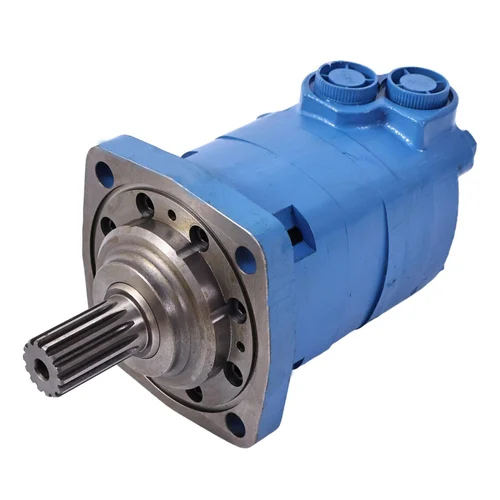

Technical expertise is one of the most important factors to consider when selecting a supplier for industrial hydraulic equipment. A manufacturer may offer competitive pricing and a broad product range, but the ability to understand application requirements and provide technically appropriate solutions is equally important.
When evaluating a hydraulic motor manufacturer, buyers should examine its engineering capabilities, product knowledge, testing methods, customization experience, and technical support. These factors can reveal whether a supplier is equipped to handle both standard and application-specific requirements.
Why Technical Expertise Matters
Hydraulic motors operate as part of a larger system involving pumps, valves, hoses, controls, and mechanical loads. Selecting a motor based only on basic specifications can result in poor performance if the component is not properly matched to the system.
A technically capable manufacturer can help buyers evaluate pressure, flow, torque, speed, displacement, duty cycle, and environmental conditions before recommending a suitable configuration.
Review the Manufacturer’s Product Knowledge
A knowledgeable supplier should be able to explain the differences between major hydraulic motor types and their intended applications.
Gear, vane, radial piston, and axial piston motors have different characteristics. A manufacturer should be able to explain their advantages, limitations, operating ranges, and suitability for different loads.
Clear technical explanations are often a useful indicator of genuine product expertise.
Evaluate Engineering Capabilities
Engineering capability extends beyond producing standard catalog products. It includes the ability to analyze applications, adapt designs, solve technical problems, and manage product development.
Ask whether the manufacturer has experienced mechanical or hydraulic engineers and whether engineering resources are available for customer projects.
A supplier with strong engineering capabilities is generally better positioned to address unusual operating requirements.
Ask About Application Engineering
Application engineering involves matching a motor to the actual conditions in which it will operate.
Important factors may include:
- Required torque
- Operating speed
- Hydraulic flow
- Continuous and peak pressure
- Starting load
- Duty cycle
- Temperature
- Hydraulic fluid
- Mounting arrangement
- Environmental exposure
A supplier that asks detailed questions about these conditions is more likely to provide an appropriate recommendation than one that immediately quotes a product based on a single specification.
Understand Displacement and Performance Calculations
A technically competent manufacturer should understand how displacement, flow, pressure, torque, and speed interact.
For example, hydraulic flow is closely related to motor speed, while pressure and displacement influence torque. Actual performance is also affected by volumetric and mechanical efficiency.
Suppliers should be able to explain these relationships and provide realistic performance information rather than relying solely on theoretical calculations.
Examine Product Testing Capabilities
Testing provides evidence that engineering specifications translate into actual motor performance.
Ask what tests are conducted during product development and production. Depending on the motor and application, these may include:
- Pressure testing
- Leakage testing
- Torque testing
- Speed testing
- Efficiency testing
- Temperature monitoring
- Endurance testing
- Noise and vibration checks
A manufacturer with appropriate testing capabilities can use measured results to validate designs and maintain production consistency.
Review Quality-Control Processes
Technical expertise and manufacturing quality are closely connected. A well-designed motor will not perform consistently if production tolerances are poorly controlled.
Ask how the manufacturer inspects critical components and controls dimensions, clearances, surface finishes, assembly, and sealing.
Precision inspection equipment and documented quality procedures can indicate a mature manufacturing process.
Assess Customization Experience
Some industrial applications require modifications to standard motor configurations.
Customization may involve shaft dimensions, mounting arrangements, ports, displacement, seals, materials, or other design characteristics.
When customization is required, ask the supplier to explain how it manages design review, engineering approval, prototyping, testing, and production.
Ask for Technical Drawings
Technical drawings can reveal how thoroughly a supplier documents its products.
Dimensional drawings should provide the information necessary to evaluate mounting compatibility, shaft dimensions, ports, and other relevant interfaces.
For customized products, controlled drawings are particularly important because they establish a clear reference for production and inspection.
Examine Performance Data
Catalog specifications provide useful starting information, but performance curves can offer a more detailed understanding of a motor.
Depending on the product, useful data may show relationships between pressure, flow, speed, torque, displacement, or efficiency.
Buyers should also determine the conditions under which the data was measured because performance values can change with temperature, fluid properties, and operating conditions.
Evaluate Knowledge of Hydraulic Fluids
Hydraulic motors must operate with fluids that are compatible with their seals, internal components, and intended operating conditions.
A technically capable supplier should be able to provide information about compatible fluid types, viscosity ranges, temperature limits, and filtration requirements.
This knowledge is particularly important when equipment operates in extreme temperatures or uses specialized hydraulic fluids.
Consider Environmental Expertise
Operating environments can place additional demands on a hydraulic motor.
Outdoor equipment may encounter moisture, dust, mud, temperature changes, and corrosion. Industrial equipment may operate continuously under high loads or elevated temperatures.
Ask how the manufacturer adapts materials, seals, coatings, and other design features for demanding environments.
Evaluate Problem-Solving Ability
Technical expertise becomes particularly visible when something goes wrong.
A strong supplier should be able to investigate problems systematically rather than immediately recommending replacement. It should be capable of considering potential causes involving the motor, hydraulic circuit, mechanical load, installation, and operating conditions.
The ability to perform root-cause analysis can be valuable for long-term industrial relationships.
Look at Research and Product Development
Manufacturers that continuously improve their products may invest in engineering development, testing, materials, manufacturing processes, and efficiency improvements.
Ask how new products are developed and validated. Useful indicators include documented design procedures, prototype testing, performance evaluation, and feedback from field applications.
However, innovation should always be evaluated according to practical application requirements.
Assess Manufacturing Equipment
Technical expertise is supported by appropriate manufacturing infrastructure.
Depending on the motor design, relevant capabilities may include precision CNC machining, heat treatment, grinding, assembly equipment, balancing, surface treatment, and specialized testing systems.
The presence of advanced equipment alone does not guarantee quality, but it can indicate that the manufacturer has invested in the processes required for precision hydraulic components.
Check Traceability and Documentation
Traceability allows manufacturers to connect finished products with production information, components, inspection records, or test results.
This can be especially important for industrial applications where consistent quality and troubleshooting are priorities.
Ask what product records are maintained and what documentation can be provided with the motor.
Evaluate Technical Support
Technical expertise should remain available after the sale.
A useful supplier should be able to assist with installation questions, troubleshooting, replacement-part identification, and application concerns.
Response quality matters as much as response speed. Technical support should ideally provide specific, evidence-based guidance rather than generic recommendations.
Ask About Failure Analysis
A manufacturer with strong technical capabilities should understand common hydraulic motor failure modes.
Potential problems can involve:
- Excessive internal leakage
- Bearing damage
- Shaft wear
- Seal failure
- Cavitation
- Contamination
- Excessive pressure
- Misalignment
- Overheating
- Improper installation
Ask how the supplier investigates failures and whether it provides recommendations to prevent recurrence.
Consider Industry Experience
Experience in the relevant industry can be useful because different applications create different technical challenges.
A manufacturer serving construction, agriculture, material handling, marine, or industrial machinery may have developed specialized knowledge related to the operating conditions of those sectors.
However, years in business should not be considered a substitute for demonstrated technical capability.
Questions to Ask a Potential Manufacturer
A structured discussion can help buyers evaluate technical expertise. Consider asking:
- How do you determine the appropriate motor size?
- What information do you need about the application?
- Which motor technologies do you specialize in?
- What performance data can you provide?
- What testing is performed?
- Can you support custom configurations?
- How are engineering changes controlled?
- What hydraulic fluids are compatible?
- How do you investigate product failures?
- What technical support is available after delivery?
The quality and specificity of the answers can provide useful insight into the supplier’s capabilities.
Red Flags to Watch For
Certain behaviors may indicate that a supplier’s technical capabilities should be investigated further.
Be cautious if a manufacturer cannot clearly explain basic performance specifications, provides inconsistent technical information, avoids application questions, or cannot supply appropriate drawings and testing documentation.
Another concern is a supplier that recommends the same motor configuration for widely different applications without reviewing operating conditions.
Compare Technical Expertise Systematically
When evaluating several manufacturers, it can help to create a technical assessment covering the most important areas.
| Evaluation Area | What to Examine |
|---|---|
| Product knowledge | Understanding of motor types and applications |
| Engineering | Design and application-support capabilities |
| Testing | Performance and durability verification |
| Manufacturing | Precision equipment and process controls |
| Documentation | Drawings, specifications, and test data |
| Customization | Ability to adapt products appropriately |
| Troubleshooting | Root-cause analysis and technical support |
| Industry experience | Relevant application knowledge |
| After-sales support | Service and replacement-part assistance |
This approach makes supplier comparisons more objective.
Technical Expertise and Total Value
A technically capable supplier may not always offer the lowest initial price. However, better engineering support can help prevent incorrect motor selection, installation problems, premature failures, and unnecessary replacements.
The resulting reduction in downtime and maintenance costs can have a significant effect on total ownership costs.
For this reason, technical expertise should be evaluated as part of overall supplier value rather than as an isolated qualification.
Conclusion
Assessing the technical expertise of a hydraulic motor manufacturer requires more than reviewing a product catalog. Buyers should examine engineering capabilities, application knowledge, testing procedures, manufacturing precision, customization experience, documentation, and after-sales technical support.
The strongest suppliers can explain how motor specifications relate to real operating conditions and provide evidence to support their recommendations. By evaluating technical expertise systematically, industrial buyers can improve the likelihood of selecting a motor that performs reliably and remains suitable throughout its intended service life.

