
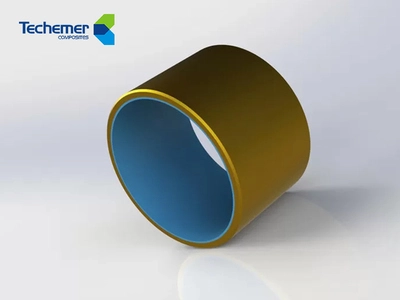

Proper bearing alignment and installation are essential for the safe and efficient operation of hydropower turbines. Bearings support rotating shafts, manage mechanical loads, and help maintain the correct position of critical components. Even a small installation error can affect shaft alignment, increase vibration, generate excessive heat, and accelerate bearing wear.
Installing hydro turbine bearings requires careful preparation, accurate measurements, suitable handling procedures, and compliance with equipment specifications. A well-planned installation process helps prevent early failures, reduces maintenance requirements, and supports reliable turbine operation over the long term.
Why Bearing Alignment Matters in Hydro Turbine Systems
Bearing alignment determines how accurately the bearing supports the rotating shaft in relation to the turbine and generator assembly.
When alignment is correct, mechanical loads are distributed as intended, and the bearing can operate within its designed clearances. When alignment is incorrect, additional forces may develop and place unnecessary stress on bearing surfaces and connected components.
Common consequences of poor alignment include:
- Increased vibration during operation
- Uneven bearing surface loading
- Excessive operating temperatures
- Premature wear and surface damage
- Increased friction and mechanical losses
- Damage to seals, couplings, and shafts
Alignment is particularly important in vertical-shaft turbine-generator arrangements, where several components must maintain accurate positioning along a common rotational axis.
1. Review Technical Specifications Before Installation
Installation should begin with a detailed review of the bearing and turbine documentation.
Different bearing types have different requirements. Journal bearings, thrust bearings, and water-lubricated bearings may require different installation clearances, fitting methods, lubrication arrangements, and inspection procedures.
Before starting work, technicians should review:
- Bearing dimensions and tolerances
- Shaft diameter and surface specifications
- Required radial and axial clearances
- Bearing housing dimensions
- Permitted alignment deviations
- Lubrication requirements
- Manufacturer installation instructions
- Recommended tightening sequences and torque values
The turbine manufacturer’s documentation should take priority over general installation practices. This helps ensure that the procedure matches the actual equipment design.
2. Prepare the Installation Area
A clean and organized work area helps prevent contamination and reduces the risk of installation errors.
Dust, metal particles, moisture, and other foreign materials can damage bearing surfaces or interfere with lubrication.
Before installation, maintenance teams should:
- Clean the bearing housing and surrounding components.
- Remove old lubricant deposits and unwanted residues.
- Inspect mounting surfaces for corrosion or damage.
- Confirm that lifting and handling equipment is suitable.
- Prepare calibrated measuring instruments.
- Ensure that all required components are available.
The installation area should also provide adequate lighting and sufficient space for accurate measurements.
3. Inspect Bearing Components Before Fitting
A new or refurbished bearing should be inspected before it is installed.
Transportation, storage, and handling can sometimes introduce damage that may not be immediately visible.
Inspect the following areas:
- Bearing contact surfaces
- Bearing liners or pads
- Housing and mounting faces
- Lubrication passages
- Sealing arrangements
- Fasteners and locating features
- Protective coatings and surface finishes
Check for scratches, cracks, corrosion, deformation, or manufacturing defects.
If a component does not meet the required specifications, it should be evaluated before installation rather than fitted in the hope that the problem will disappear during operation.
4. Check Shaft Condition and Dimensional Accuracy
The shaft is a critical reference surface during bearing installation.
A damaged, worn, or incorrectly dimensioned shaft can prevent the bearing from operating properly, even when the bearing itself is manufactured accurately.
Important shaft checks include:
- Diameter measurements
- Roundness
- Surface finish
- Straightness
- Runout
- Journal surface condition
- Alignment with connected components
Measurements should be taken at appropriate positions using calibrated instruments.
Any excessive wear, scoring, or dimensional variation should be evaluated against the equipment manufacturer’s limits before proceeding.
5. Establish Accurate Shaft Alignment
Shaft alignment helps ensure that rotating components maintain their intended position during operation.
In hydropower systems, alignment may involve the turbine shaft, generator shaft, couplings, guide bearings, and thrust-bearing assembly.
Common alignment methods include:
Laser Alignment
Laser alignment equipment measures the relative position and angular relationship between connected rotating components.
It can provide accurate measurements and help technicians identify misalignment that may be difficult to detect using conventional methods.
Dial Indicator Measurements
Dial indicators are commonly used to measure shaft runout, displacement, and alignment-related variations.
They can help identify deviations in concentricity and component positioning.
Straightedge and Feeler Gauge Methods
For suitable applications, straightedges and feeler gauges can provide basic checks of surface alignment and gaps.
These methods may be useful during preliminary inspection, although they are not substitutes for more precise measurements when tight tolerances apply.
The selected method should match the equipment design and required accuracy.
6. Maintain Correct Bearing Clearances
Bearing clearance is one of the most important factors affecting operating performance.
For journal bearings, radial clearance allows the shaft to rotate while supporting a lubricating film between the shaft and bearing surface.
For thrust bearings, the relevant clearances and pad settings help maintain the required axial position and load distribution.
Incorrect clearance can lead to several problems:
- Excessively small clearance may increase friction and operating temperature.
- Excessively large clearance may allow unwanted shaft movement.
- Uneven clearance may produce irregular loading and vibration.
- Incorrect thrust-bearing settings may affect axial positioning.
Clearances should be measured using approved methods and compared with the manufacturer’s specified values.
Technicians should never rely on visual judgment alone when dimensional accuracy is required.
7. Use Proper Handling and Lifting Techniques
Large hydropower bearings can be heavy and difficult to position. Incorrect handling may damage precision surfaces or create safety risks.
Suitable lifting equipment should be selected according to component weight, lifting points, and site conditions.
Important handling practices include:
- Use designated lifting points where provided.
- Avoid placing lifting equipment against precision bearing surfaces.
- Protect machined surfaces during transportation.
- Prevent impact and sudden movement.
- Keep components covered when not being installed.
- Follow site lifting and safety procedures.
Bearing components should be handled carefully throughout the installation process, including during temporary storage and positioning.
8. Install Bearing Components Without Forcing the Fit
Bearing installation methods depend on the component design and specified fit.
Some bearings require controlled positioning, while others may use specific fitting or thermal procedures. The correct method should always follow manufacturer instructions.
During installation:
- Confirm that the housing and shaft are clean.
- Verify component identification and orientation.
- Check that locating features are correctly positioned.
- Use approved tools and fitting methods.
- Avoid unnecessary impact or force.
- Confirm that the bearing sits correctly in its housing.
Forcing a bearing into position can damage its surfaces, distort the housing, or create unwanted internal stresses.
Any unexpected resistance during fitting should be investigated before work continues.
9. Follow the Correct Fastening Sequence
Bearing housings and supporting structures must be secured according to their design requirements.
Incorrect tightening can distort mounting surfaces or create uneven loading.
Technicians should follow the specified fastening sequence and use calibrated torque tools where required.
The following points deserve attention:
- Confirm that mating surfaces are properly seated.
- Check fastener condition and thread quality.
- Apply specified tightening values.
- Follow the manufacturer’s tightening sequence.
- Recheck alignment after securing components.
- Verify that no unwanted movement has occurred.
For large assemblies, tightening operations may need to be performed in stages to maintain uniform contact.
10. Verify the Lubrication System Before Startup
Correct lubrication is essential after bearing installation.
The lubrication system should be inspected and tested before the turbine is returned to service.
For oil-lubricated bearings, checks may include:
- Correct lubricant grade and viscosity
- Oil reservoir cleanliness
- Filter condition
- Oil pump operation
- Supply pressure and flow
- Cooler performance
- Pipework and connection integrity
- Leakage around the bearing assembly
For water-lubricated bearings, the inspection should confirm suitable water supply, flow conditions, filtration where required, and compatibility with the bearing materials.
The lubrication arrangement must meet the specific requirements of the installed bearing design.
11. Check Thrust Bearing Installation Carefully
Thrust bearings manage axial forces generated by the rotating assembly and hydraulic operation.
Their installation requires particular attention because incorrect positioning or uneven pad loading can affect shaft location and bearing performance.
Important checks include:
- Correct pad orientation
- Proper seating of individual pads
- Accurate thrust surface positioning
- Specified axial clearances
- Correct lubrication distribution
- Proper assembly of support and adjustment mechanisms
Where applicable, technicians should verify that the thrust-bearing arrangement can accommodate the intended operating conditions and any specified movement.
A detailed inspection is especially important in vertical-shaft turbine-generator systems.
12. Perform Alignment Checks After Assembly
Alignment should not be treated as a single measurement performed before installation.
Securing bearing housings, connecting shafts, and completing the assembly can change component positions.
For this reason, alignment should be verified again after relevant installation stages.
Post-assembly checks may include:
- Shaft centerline position
- Radial runout
- Axial position
- Bearing clearances
- Coupling alignment
- Housing position
- Shaft rotation freedom
If measurements fall outside specified tolerances, the cause should be identified and corrected before startup.
13. Conduct Controlled Pre-Startup Testing
Before full turbine operation, the assembled system should undergo the checks required by the equipment manufacturer and commissioning procedure.
These may include manual rotation checks, lubrication system testing, instrument verification, and controlled startup activities.
During initial operation, maintenance teams should monitor:
- Bearing temperature
- Vibration levels
- Oil or water supply conditions
- Shaft displacement
- Lubrication pressure
- Unusual noise
- Leakage
Initial readings should be recorded and compared with acceptable operating limits.
Any abnormal condition should be investigated according to the facility’s operating and safety procedures.
14. Common Bearing Installation Mistakes to Avoid
Even high-quality bearings can experience early failure when installation procedures are not followed correctly.
| Common Mistake | Possible Consequence |
|---|---|
| Incorrect shaft alignment | Uneven loading and vibration |
| Improper clearance settings | Excessive friction or shaft movement |
| Contaminated installation area | Abrasive wear and surface damage |
| Incorrect tightening sequence | Housing distortion |
| Forced bearing fitting | Damage to precision surfaces |
| Inadequate lubrication checks | Overheating and accelerated wear |
| Skipping post-assembly measurements | Undetected installation errors |
| Poor handling practices | Scratches, dents, or deformation |
Avoiding these mistakes helps protect bearing components and reduces the likelihood of premature maintenance.
15. Maintain Installation Records for Future Maintenance
Accurate documentation supports long-term equipment reliability.
Installation records allow maintenance teams to compare future inspection results with the original assembly condition.
Useful records include:
- Bearing model and identification
- Installation date
- Shaft and housing measurements
- Alignment readings
- Radial and axial clearances
- Fastener torque records
- Lubrication details
- Pre-startup inspection results
- Initial operating temperatures and vibration readings
These records can help identify gradual changes and support informed maintenance decisions.
Selecting the Right Bearing for Reliable Installation
Installation quality is important, but the bearing must also be suitable for the turbine application.
Selection should account for bearing type, operating speed, radial and axial loads, shaft dimensions, lubrication method, temperature range, and environmental conditions.
Manufacturing tolerances and material compatibility should also be reviewed to ensure that the selected component can meet the equipment’s requirements.
Technical information from Techemer can help professionals explore industrial bearing applications and consider the engineering factors involved in choosing suitable components for hydropower systems.
Conclusion
Accurate bearing alignment and careful installation are fundamental to reliable hydro turbine operation. Correct shaft positioning, suitable clearances, clean installation conditions, proper fastening, and effective lubrication all contribute to stable bearing performance.
A systematic installation process should include preparation, dimensional inspection, alignment verification, controlled assembly, and pre-startup testing. Each stage helps reduce the risk of excessive vibration, overheating, uneven loading, and premature wear.
By following manufacturer specifications and maintaining detailed installation records, hydropower facilities can protect critical rotating equipment, improve maintenance planning, and support dependable long-term operation.

