
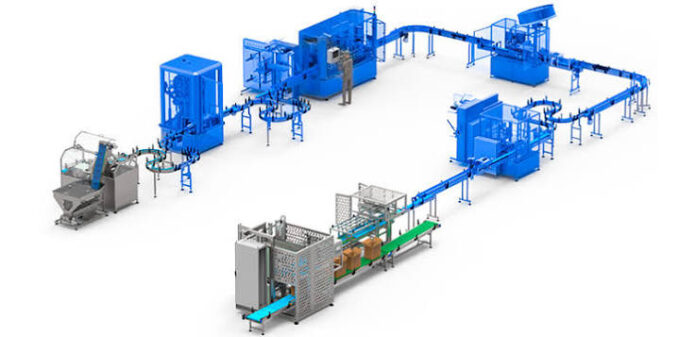

Production efficiency is a major priority for modern manufacturing businesses. As customer expectations increase and industries face growing demand, manufacturers must find ways to produce, package, and distribute goods more quickly without compromising quality. Traditional packaging methods can struggle to meet these requirements, particularly when production volumes increase or packaging processes involve multiple repetitive tasks.
Automated Packaging Lines provide an effective solution by integrating different packaging machines into a coordinated production system. These systems automate operations such as product feeding, filling, sealing, labeling, wrapping, and palletizing. By reducing unnecessary manual handling and connecting individual processes, manufacturers can improve workflow efficiency, maintain consistent output, and make better use of available resources.
Understanding the Role of Packaging Automation in Manufacturing
Packaging automation involves using specialized machinery, sensors, conveyors, and control systems to perform packaging operations with limited manual intervention. Instead of depending on workers to complete every stage separately, manufacturers can connect multiple machines into a continuous production process.
This integration reduces delays between operations and allows products to move smoothly from one packaging stage to another. It also helps businesses maintain predictable production schedules and respond more effectively to changing market requirements.
Automated packaging systems are widely used in food processing, pharmaceuticals, cosmetics, beverages, chemicals, and consumer goods manufacturing. Their configurations can be adjusted according to product characteristics, packaging materials, and production capacity.
1. Increasing Production Speed and Output
One of the most significant advantages of packaging automation is its ability to increase production speed. Automated machines can perform repetitive operations continuously at controlled speeds, helping manufacturers process larger quantities of products within shorter periods.
Manual packaging often involves pauses between tasks, employee fatigue, and variations in working speed. Automated equipment minimizes these interruptions by maintaining a consistent operating cycle.
For example, an integrated bottle packaging line can automatically feed empty containers, fill them with products, apply caps, attach labels, and prepare finished bottles for secondary packaging.
This coordinated process reduces waiting time and improves overall production output.
2. Reducing Manual Labor and Repetitive Tasks
Packaging operations frequently involve repetitive activities such as lifting containers, arranging products, applying labels, and sealing packages. Performing these tasks manually for extended periods can increase labor demands and create opportunities for human error.
Automation allows machinery to handle many of these repetitive activities. Employees can focus on equipment monitoring, quality inspection, production planning, and maintenance.
The main advantages include:
- Reduced dependence on manual packaging operations.
- Less physical strain from repetitive handling.
- Better allocation of employees across production activities.
- More consistent task execution.
- Improved workplace organization.
Although automated systems require trained operators and maintenance personnel, they can help businesses use their workforce more effectively.
3. Improving Packaging Accuracy and Product Consistency
Product consistency is essential for maintaining customer satisfaction and meeting quality standards. Manual packaging can produce variations in filling quantities, sealing quality, label positioning, and package appearance.
Automated equipment uses programmed settings and precision controls to perform these operations consistently.
Accurate Filling and Dosing
Automated filling machines dispense predetermined quantities of liquids, powders, and granular products. This helps reduce overfilling, underfilling, and unnecessary material consumption.
Consistent Sealing
Automated sealing equipment applies controlled pressure, temperature, or other operating parameters depending on the packaging material. Proper sealing helps protect products during storage and transportation.
Precise Label Application
Automatic labeling machines maintain consistent label positioning and support accurate product identification. They can also integrate coding systems for batch numbers, manufacturing dates, and expiration information.
Together, these capabilities help manufacturers maintain uniform packaging quality across large production batches.
4. Minimizing Production Downtime
Unexpected equipment interruptions can affect production schedules and increase operating expenses. Integrated packaging systems help manufacturers manage production activities more efficiently by coordinating machine operations and identifying potential problems.
Modern systems can use sensors and monitoring technologies to detect irregular conditions, such as container jams, missing packaging materials, or incorrect product positioning.
Some advanced systems also support predictive maintenance by collecting equipment performance data. This information can help maintenance teams identify unusual operating patterns before they develop into serious mechanical problems.
To minimize downtime, manufacturers should:
- Schedule preventive equipment inspections.
- Monitor machine performance regularly.
- Replace worn components when necessary.
- Train operators to recognize common equipment faults.
- Maintain essential spare parts.
- Keep maintenance and repair records.
A well-maintained packaging line can support more reliable production and reduce unnecessary interruptions.
5. Reducing Material Waste and Operating Costs
Packaging waste can affect manufacturing profitability, particularly when businesses process large product volumes. Incorrect filling, damaged containers, poorly applied labels, and defective seals can lead to unnecessary material consumption.
Automated systems help reduce these problems through accurate controls and repeatable operating procedures.
For instance, precision filling equipment can dispense the required quantity of material into each container. Automated inspection systems can also identify defective packages before they move to subsequent production stages.
Over time, reduced material waste can contribute to lower operating costs.
However, manufacturers should consider the complete cost of automation, including equipment investment, installation, electricity consumption, servicing, and employee training. Evaluating these expenses against expected productivity improvements provides a clearer picture of long-term financial benefits.
6. Improving Workflow Through Integrated Equipment
A packaging line performs best when its individual machines operate as parts of a coordinated system.
When separate packaging operations are poorly connected, products may accumulate between machines, creating bottlenecks and unnecessary waiting periods.
Integrated equipment helps maintain a smoother production flow.
The Importance of Conveyor Systems
Conveyors transport products between different packaging stages. They reduce manual movement and help maintain a continuous supply of products to downstream machines.
Machine Synchronization
Automated controls coordinate the operating speeds of connected equipment. This helps prevent situations where one machine operates significantly faster or slower than another.
Automated Product Handling
Robotic arms, pick-and-place systems, and automatic feeders can organize products and transfer them between processing stages.
By connecting these components, manufacturers can create a more organized production environment with fewer unnecessary handling activities.
7. Enhancing Quality Control and Product Safety
Quality control is another important area where packaging automation improves productivity. Identifying defective products early helps prevent unnecessary processing, packaging, and distribution expenses.
Modern packaging lines can incorporate inspection technologies to monitor different product characteristics.
Common quality control applications include:
- Checking containers for cracks, damage, or incorrect positioning.
- Detecting missing caps and improperly sealed packages.
- Verifying label placement and printed information.
- Identifying incorrect filling levels.
- Removing damaged or unsuitable products.
- Checking package weights and dimensions.
In industries such as food processing and pharmaceuticals, automated inspection can also support hygiene procedures and product traceability.
These technologies help manufacturers maintain quality standards while reducing the need for time-consuming manual inspections.
8. Supporting Flexible and Scalable Production
Manufacturing requirements can change due to seasonal demand, new product launches, and changing customer preferences. A packaging system should therefore be capable of adapting to different production requirements.
Modern automated equipment can be designed to handle multiple container sizes, packaging materials, and product formats.
For example, a manufacturer producing several beverage varieties may need to switch between different bottle sizes or labeling designs. Adjustable filling systems, flexible conveyors, and programmable controls can simplify these changes.
Modular packaging systems also allow manufacturers to expand their production capabilities by adding additional machines when demand increases.
This flexibility helps businesses prepare for future growth without necessarily replacing their entire packaging infrastructure.
9. Improving Employee Safety and Workplace Organization
Packaging environments often involve moving equipment, heavy materials, repetitive handling, and continuous production activities. Appropriate automation can reduce employee exposure to some of these operational risks.
Automated conveyors and robotic palletizers can handle tasks that involve frequent lifting or repetitive product movement.
Modern equipment may also include protective guards, emergency stop controls, safety sensors, and automated shutdown functions.
These features help create a more organized working environment when combined with proper operator training and established safety procedures.
Manufacturers must still follow equipment safety guidelines and ensure that employees understand the correct procedures for operating and maintaining automated machinery.
10. Measuring the Productivity of Automated Packaging Systems
Installing automated equipment does not automatically guarantee improved productivity. Manufacturers should monitor relevant performance indicators to understand whether their packaging systems are delivering the expected results.
Several measurements can help evaluate system performance.
| Performance Indicator | What It Measures |
|---|---|
| Production output | Number of products packaged within a specific period |
| Machine utilization | How effectively equipment operating time is used |
| Downtime | Time lost due to machine interruptions |
| Packaging accuracy | Consistency of filling, labeling, and sealing |
| Material waste | Amount of packaging material or product lost |
| Labor productivity | Production output relative to labor resources |
| Overall Equipment Effectiveness (OEE) | Equipment availability, performance, and quality |
Tracking these indicators regularly allows production managers to identify bottlenecks, evaluate equipment performance, and make informed operational improvements.
Challenges Manufacturers Should Consider Before Automation
Although packaging automation offers considerable advantages, implementation requires careful planning. Businesses should evaluate potential challenges before investing in new equipment.
Initial Investment
Automated machinery can require substantial upfront expenditure. Costs may include equipment purchases, factory modifications, installation, and system integration.
Technical Training
Employees need appropriate training to operate, monitor, and maintain automated equipment. A lack of technical knowledge can affect system performance.
Integration With Existing Machinery
Connecting new equipment to an existing production line may involve adjustments to conveyor layouts, electrical systems, and machine controls.
Maintenance and Technical Support
Automated machinery requires regular servicing and access to replacement components. Manufacturers should consider spare parts availability and technical support when selecting equipment.
Production Compatibility
Not every packaging system is suitable for every product. Businesses must evaluate product dimensions, packaging materials, filling requirements, and production targets before selecting machinery.
Addressing these challenges during the planning stage can help manufacturers achieve a smoother transition toward automated production.
Future Developments in Packaging Automation
Technological advancements are creating new opportunities to improve packaging efficiency and productivity. Several emerging developments are shaping the future of manufacturing.
Artificial Intelligence: AI-powered systems can analyze production information, identify operational irregularities, and support more informed equipment management decisions.
Machine Vision: Advanced cameras and image-processing technologies can inspect products, detect packaging defects, and verify label accuracy.
Industrial Internet of Things (IIoT): Connected equipment allows manufacturers to collect real-time performance information and monitor production activities across multiple machines.
Collaborative Robotics: Collaborative robots can assist employees with suitable packaging and material-handling activities while supporting flexible production environments.
Sustainable Packaging: New equipment designs are increasingly focused on handling recyclable materials, reducing packaging waste, and improving resource efficiency.
These developments are expected to make packaging operations more connected, adaptable, and data-driven.
Conclusion
Automated packaging systems play an important role in improving manufacturing efficiency and productivity. By increasing production speed, reducing repetitive labor, improving packaging accuracy, minimizing material waste, and coordinating individual production stages, automation helps businesses create more reliable manufacturing operations.
Successful implementation requires more than simply purchasing advanced machinery. Manufacturers must evaluate production requirements, equipment compatibility, maintenance needs, workforce training, and long-term expansion plans.
As packaging technology continues to develop, businesses exploring integrated production solutions can research equipment configurations and industry applications offered by Techflow Pack when evaluating their packaging automation requirements.

