
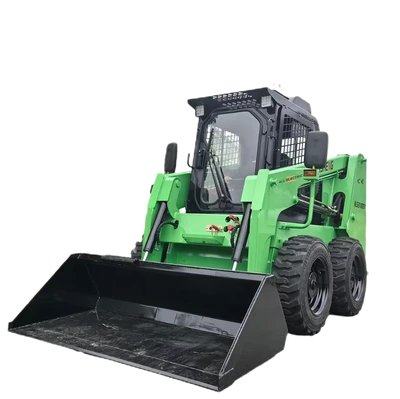

Modern construction, landscaping, agriculture, and material-handling projects often require equipment that can perform multiple tasks without taking up excessive space or increasing fleet costs. Attachments make compact loaders more adaptable by allowing operators to switch between tools for digging, lifting, grading, cleaning, and moving materials. Selecting the right attachments can help businesses improve productivity and get more value from their equipment.
An Electric Skid Loader can support a wide range of applications when paired with compatible attachments. Its compact design and battery-powered operation make it useful in many indoor and outdoor environments, while interchangeable tools can extend its capabilities beyond basic material handling. However, attachment compatibility, hydraulic requirements, battery runtime, and rated operating capacity must all be considered to ensure safe and efficient performance.
What Are Electric Skid Loader Attachments?
Electric skid loader attachments are tools designed to connect to a loader so it can perform specific jobs. Instead of purchasing a separate machine for every task, operators can use different attachments with one compatible loader.
Common attachment categories include buckets, pallet forks, grapples, augers, trenchers, sweepers, and grading tools. Some attachments rely primarily on the loader’s lifting and pushing capabilities, while others require hydraulic power or additional electrical connections.
The range of available tools depends on the machine’s design, attachment interface, hydraulic flow, operating pressure, and manufacturer approvals. Not every attachment will fit every skid loader, so compatibility should always be verified before purchase.
1. General-Purpose Buckets for Material Handling
<AsyncImageGroup query={[“compact electric skid steer loader bucket moving soil construction site”,”skid steer loader general purpose bucket gravel material handling”]} aspectRatio=”5:4″ layout=”bento” />
A general-purpose bucket is one of the most useful attachments for everyday loader operations. It allows operators to collect, lift, transport, and unload loose materials efficiently.
Common Applications
Buckets are commonly used for:
- Moving soil, sand, gravel, and mulch.
- Transporting construction debris.
- Loading loose materials into suitable containers.
- Cleaning up landscaping and construction sites.
- Moving agricultural materials where appropriate.
Choosing the Right Bucket
Bucket capacity, width, shape, and cutting-edge design affect how efficiently the machine handles different materials. A bucket intended for light, bulky materials may not be the best choice for dense aggregate.
Operators should also account for the weight of the attachment and its load when checking the machine’s rated capacity. A larger bucket is not always more productive if the material is too heavy or the machine cannot safely lift a full load.
2. Pallet Forks for Lifting and Transporting Supplies
<AsyncImageGroup query={[“compact skid steer loader pallet fork attachment lifting wooden pallet construction materials”,”skid steer loader forks moving pallet warehouse yard”]} aspectRatio=”5:4″ layout=”carousel” />
Pallet forks allow compatible skid loaders to lift and move palletized goods. They can be useful at construction sites, farms, industrial facilities, and material storage yards.
Typical Uses
Pallet forks can help operators move:
- Bags of cement and packaged building supplies.
- Palletized tools and equipment.
- Agricultural supplies and feed containers.
- Suitable packaged materials in designated warehouse areas.
Important Safety Considerations
Before using forks, check the attachment’s rated capacity, fork spacing, load center, and the loader’s approved lifting limits. The machine must remain stable throughout lifting and transport.
Loads should be kept as low as practical during travel, and operators must maintain clear visibility and keep people away from the load-handling area. Pallet forks should only be used for loads and lifting arrangements approved for the machine.
3. Grapple Attachments for Bulky and Irregular Materials
<AsyncImage query=”skid steer loader grapple bucket handling tree branches logs construction debris” aspectRatio=”5:4″ width=”100%” />
Grapple attachments use gripping arms to hold materials that may be difficult to contain in a conventional bucket. Depending on their design, they can handle branches, logs, brush, bulky waste, and certain construction materials.
Where Grapples Are Useful
Landscaping contractors can use grapples to collect vegetation and clear debris. Construction crews may use compatible models to handle irregular waste, while agricultural operators may find them useful for moving brush or other suitable bulky materials.
Selecting a Grapple
Grapples differ in jaw design, opening width, hydraulic requirements, and intended material type. A brush grapple may not be suitable for heavy demolition debris, and a model designed for one material should not automatically be used for another.
Check hydraulic compatibility, attachment weight, rated capacity, and the manufacturer’s operating instructions before use.
4. Augers for Digging and Ground Preparation
<AsyncImage query=”skid steer loader hydraulic auger attachment drilling post holes landscaping” aspectRatio=”5:4″ width=”100%” />
An auger attachment uses a rotating drilling tool to create holes in the ground. It can help reduce manual digging for suitable projects that require repeated holes.
Common Applications
Augers may be used for:
- Preparing holes for fence posts.
- Supporting selected landscaping and planting tasks.
- Installing posts for signs and barriers.
- Performing certain ground-preparation jobs.
Hydraulic Requirements and Site Checks
Augers typically require hydraulic power, and their performance depends on flow, pressure, soil conditions, bit diameter, and drilling depth.
Before digging, identify underground utilities and follow the required site-clearance procedures. Operators should also confirm that the machine and auger are approved for the intended soil and drilling conditions.
5. Trenchers for Narrow Excavation Work
<AsyncImage query=”compact skid steer loader trencher attachment digging narrow trench construction” aspectRatio=”5:4″ width=”100%” />
A trencher attachment is designed to cut narrow trenches for selected installation and landscaping tasks. It can be useful when a project requires a more controlled excavation path than general bucket digging provides.
Typical Uses
Depending on the attachment and ground conditions, trenchers may help with:
- Installing irrigation lines.
- Preparing routes for suitable utility conduits.
- Landscaping drainage work.
- Creating narrow trenches for approved installations.
Factors to Consider
Trencher performance depends on chain configuration, cutting width, required depth, soil type, hydraulic output, and the machine’s available power.
Utility locating is essential before trenching. Operators must also follow local excavation rules and manufacturer instructions, particularly when working near buried infrastructure or unstable ground.
6. Sweepers for Site and Facility Cleaning
<AsyncImage query=”compact skid steer loader rotary sweeper attachment cleaning paved construction yard” aspectRatio=”5:4″ width=”100%” />
Sweeper attachments can help collect dust, dirt, gravel, and other suitable debris from paved surfaces. They are useful for maintaining cleaner work areas and reducing the time required for manual cleanup.
Applications for Sweepers
A compatible sweeper may be used in:
- Construction yards and paved access routes.
- Warehouse and industrial service areas.
- Parking areas and loading zones.
- Outdoor maintenance and landscaping projects.
Some sweepers collect debris in a hopper, while others move material aside. The appropriate design depends on the surface, debris type, cleaning requirements, and available dust-control measures.
For indoor use, operators should consider dust exposure, ventilation, floor conditions, and facility safety procedures.
7. Grading and Leveling Attachments
<AsyncImage query=”skid steer loader grading attachment land leveling soil preparation landscaping” aspectRatio=”5:4″ width=”100%” />
Grading attachments help operators shape, smooth, or level surfaces for selected construction and landscaping tasks. Depending on the tool, they may be used for preparing driveways, distributing fill material, or finishing areas before further work.
Why Grading Attachments Matter
Using a tool designed for grading can provide more controlled results than relying on a general-purpose bucket alone. The correct attachment can also reduce repeated passes when the ground and machine specifications are suitable.
Choosing a Grading Tool
Consider the working width, adjustment range, attachment weight, ground conditions, and required finish. Some grading tools require hydraulic connections or additional controls, so compatibility must be checked before purchasing.
For work requiring precise elevation or slope control, confirm whether the attachment includes suitable guidance or control features.
8. How Attachments Affect Battery Runtime
Attachments can significantly influence the operating time of an electric skid loader. While some tools mainly use the loader’s lifting and driving systems, powered attachments may place additional demand on its hydraulic or electrical systems.
For example, operating an auger or trencher continuously may consume more energy than intermittently moving light materials with a bucket. Actual consumption depends on the attachment, ground conditions, machine efficiency, and work cycle.
Practical Ways to Manage Energy Consumption
- Choose an attachment designed for the intended task.
- Confirm hydraulic flow and pressure requirements.
- Avoid forcing tools beyond their rated operating limits.
- Plan work to reduce unnecessary travel and repositioning.
- Monitor battery indicators during demanding operations.
- Schedule charging around realistic work requirements.
Contractors should review manufacturer guidance and, where possible, measure energy consumption during representative tasks. This helps establish whether the selected attachment and battery capacity can support the required work schedule.
9. Attachment Compatibility: What Should You Check?
Before buying an attachment, verify that it is suitable for the specific electric skid loader. Physical fit alone does not guarantee safe or effective operation.
Mounting Interface
Confirm that the attachment’s mounting system matches the loader’s coupler. Different machines may use different mounting standards or connection arrangements.
Hydraulic Flow and Pressure
Hydraulically powered attachments have specific flow and pressure requirements. The loader must provide suitable hydraulic performance without exceeding the manufacturer’s limits.
Electrical Connections and Controls
Some specialized tools may require electrical connections, control compatibility, or additional features. Confirm that the loader supports these requirements.
Attachment Weight and Rated Capacity
An attachment reduces the remaining capacity available for the payload. Consider the combined effect of attachment weight, load weight, load center, and lift height.
Manufacturer Approval
Check the manufacturer’s approved attachment list and operating instructions. Using incompatible equipment can reduce performance, damage components, or create safety hazards.
10. How to Select Attachments for Different Industries
The most useful attachment combination depends on the type of work performed most often.
| Industry | Potential Attachments | Typical Tasks |
|---|---|---|
| Landscaping | Bucket, auger, grapple, grading tool | Soil movement, planting preparation, debris clearing, leveling |
| Farming | Bucket, pallet forks, grapple | Moving supplies, handling suitable bales, transporting bulky materials |
| Construction | Bucket, forks, trencher, grapple | Material movement, pallet handling, approved trenching, debris cleanup |
| Warehousing and industrial facilities | Bucket or forks where appropriate, sweeper | Selected material handling and surface cleaning |
| Municipal maintenance | Bucket, sweeper, grapple | Cleanup, debris collection, and surface maintenance |
These are general examples rather than guaranteed compatibility recommendations. Attachment selection must account for the specific loader, work environment, material, and safety requirements.
11. Can One Electric Skid Loader Replace Multiple Machines?
In some operations, an electric skid loader with suitable attachments can perform several jobs that would otherwise require different specialized machines. This can reduce equipment duplication, storage needs, and the expense of maintaining a larger fleet.
However, a single loader cannot replace every machine. Dedicated equipment may be more productive for tasks requiring specialized reach, high lifting capacity, extensive digging, or continuous heavy-duty operation.
Businesses should compare the cost of the loader and its attachments with the cost of alternative equipment, including purchase price, maintenance, operator training, attachment changes, and productivity.
The goal is not to make one machine perform every possible task. It is to identify a practical set of attachments that covers the business’s most common requirements without compromising performance or safety.
12. Maintenance Tips for Electric Skid Loader Attachments
Proper maintenance helps attachments perform reliably and reduces the risk of unexpected downtime.
Recommended practices include:
- Inspect mounting points, locking mechanisms, and connection pins before use.
- Check hydraulic hoses and fittings for damage or leaks.
- Follow lubrication instructions for moving components.
- Inspect cutting edges, teeth, chains, and other wear parts.
- Clean attachments after use, particularly when handling soil, manure, or corrosive materials.
- Store attachments securely in suitable conditions.
- Disconnect and change attachments according to the manufacturer’s procedure.
Electric skid loaders also require routine inspection of their battery, electrical systems, cooling components, tires or tracks, and hydraulic system. Follow the equipment manufacturer’s maintenance schedule rather than relying on a generic service interval.
Frequently Asked Questions
What attachments can an electric skid loader use?
Depending on the model, common options include buckets, pallet forks, grapples, augers, trenchers, sweepers, and grading tools. The machine must meet each attachment’s mounting, hydraulic, electrical, and capacity requirements.
Do attachments reduce electric skid loader battery runtime?
They can. Powered attachments and demanding material-handling tasks may increase energy consumption. The effect depends on the attachment, operating intensity, terrain, and battery capacity.
Can I use diesel skid loader attachments on an electric model?
Some attachments may be compatible, but this should never be assumed. Check the mounting interface, hydraulic specifications, electrical requirements, attachment weight, and manufacturer approval.
Which attachment is best for landscaping?
A general-purpose bucket is a useful starting point for moving soil and loose materials. Grapples, augers, and grading tools may be valuable for more specialized tasks, depending on the machine and project.
Are electric skid loader attachments difficult to change?
The process depends on the loader’s coupler and attachment design. Compatible quick-attach systems can simplify changes, but operators must follow the manufacturer’s locking, connection, and safety procedures.
Conclusion
Attachments are one of the main reasons skid loaders are useful across construction, landscaping, agriculture, and material handling. Buckets, forks, grapples, augers, trenchers, sweepers, and grading tools can expand an electric skid loader’s capabilities and allow one machine to support multiple types of work.
The best results come from selecting attachments that match the machine’s rated capacity, hydraulic performance, mounting system, and battery capabilities. Proper operator training, routine maintenance, and realistic energy planning are equally important.
By evaluating the tasks performed most frequently and confirming compatibility before purchasing attachments, businesses can build a practical equipment setup that improves versatility, supports productivity, and helps control long-term operating costs.

