
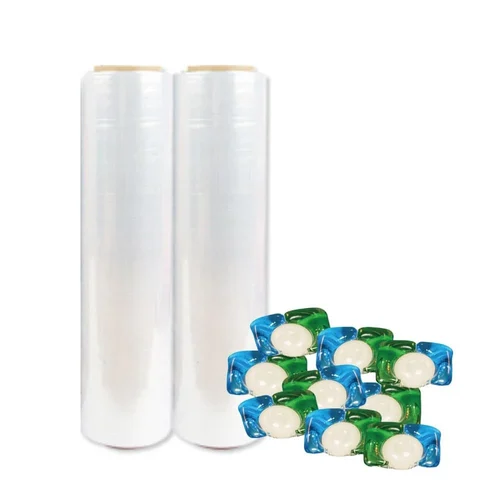

Water soluble film is used in applications where controlled dissolution, reliable packaging, and specific mechanical properties are important. However, different industries often require different film characteristics. Thickness, strength, flexibility, dissolution rate, and moisture resistance may all need to be adjusted according to the intended use.
For this reason, Water Soluble Film Manufacturers typically develop film specifications around the customer’s application rather than relying on a single standard formulation. POLYVA, for example, can be considered within the broader market of suppliers producing PVA-based water soluble film for specialized applications.
Why Film Thickness Matters
Film thickness directly affects several performance characteristics. A thicker film may provide greater mechanical strength and durability, while a thinner film can reduce material usage and may be appropriate when rapid dissolution is required.
The appropriate thickness depends on factors such as packaging size, product weight, handling conditions, sealing requirements, and the desired dissolution behavior. Manufacturers therefore need to balance these properties rather than treating thickness as an isolated specification.
Balancing Strength and Dissolution
One of the main challenges is achieving sufficient strength without making the film unnecessarily thick. Packaging that experiences transportation and handling needs adequate resistance to tearing and puncturing.
At the same time, excessive thickness can influence how quickly the film dissolves in water. Manufacturers may adjust the film structure and formulation to achieve an appropriate balance between durability during handling and dissolution during use.
How Manufacturers Customize Film Thickness
Film thickness can be controlled during the production process through manufacturing parameters and formulation choices. Precise control helps maintain consistency across different production batches.
Depending on the application, manufacturers may produce films with different thickness ranges to meet specific requirements. The selected specification should also account for the equipment used to form, fill, and seal the packaging.
Factors That Influence Thickness Selection
Several considerations can affect the appropriate film thickness, including:
- Type and weight of the packaged product
- Required tensile strength
- Packaging and sealing method
- Expected handling and transportation conditions
- Required dissolution speed
- Environmental humidity during storage
- Shape and dimensions of the finished package
Evaluating these factors together can help determine a practical thickness for the final application.
Adjusting Mechanical Performance
Thickness is only one part of film performance. Water soluble film may also need specific levels of tensile strength, elongation, flexibility, and resistance to tearing.
Manufacturers can modify material formulations and processing conditions to achieve different combinations of these characteristics. The objective is to produce a film that remains stable during manufacturing and handling while still performing as required during its intended use.
Tensile Strength and Flexibility
A film with adequate tensile strength can withstand the stresses associated with packaging and transportation. Flexibility, meanwhile, helps the material adapt to forming and sealing processes without cracking or breaking.
The ideal balance depends on the application. A film intended for small-dose packaging may have different mechanical requirements from one used for larger industrial products.
Controlling Dissolution Performance
Dissolution is a defining characteristic of water soluble film. However, not every application requires the same dissolution rate or water temperature.
Manufacturers can develop film specifications designed for different dissolution conditions. Factors such as polymer characteristics, formulation, film thickness, and processing can influence how the finished material behaves when exposed to water.
For customers, specifying the required dissolution conditions early in the development process can help manufacturers select a suitable film grade.
Managing Moisture Sensitivity
Water soluble materials naturally require careful consideration of moisture exposure. Humidity can influence the physical properties and handling characteristics of the film.
Manufacturers may therefore consider moisture resistance when developing a film specification. Packaging, storage conditions, transportation, and production environments should all be evaluated to help maintain consistent performance.
Customization for Different Applications
Water soluble film is used across several industries, and each application can have distinct requirements. For example, detergent packaging may prioritize controlled dissolution and sealing performance, while agricultural applications may place greater emphasis on handling strength and compatibility with the packaged formulation.
Industrial applications can also require specific dimensions, thicknesses, or mechanical characteristics. A customized approach allows the film to be matched more closely to the customer’s production process.
The Role of Testing and Quality Control
Customization should be supported by testing. Manufacturers can evaluate properties such as thickness, tensile strength, elongation, dissolution behavior, and appearance to confirm that the material meets the agreed specifications.
Consistent testing is particularly important for large-volume production because small variations in film properties can affect automated packaging processes.
Maintaining Batch-to-Batch Consistency
A customized film specification is useful only when it can be reproduced consistently. Quality-control procedures should therefore monitor key characteristics throughout production.
Maintaining consistent thickness and physical properties helps reduce packaging problems and makes production parameters easier to control.
What Buyers Should Discuss With Manufacturers
Before ordering a customized water soluble film, buyers should provide as much information about the intended application as possible. Useful details include:
- The type and weight of the product being packaged.
- Required film dimensions and thickness.
- Desired dissolution conditions.
- Packaging and sealing equipment being used.
- Expected storage and transportation conditions.
- Required mechanical properties.
- Applicable technical or regulatory requirements.
Clear specifications give manufacturers a better basis for recommending or developing a suitable film.
Final Thoughts
Customizing water soluble film involves more than simply selecting a thickness. Manufacturers need to consider dissolution behavior, tensile strength, flexibility, moisture sensitivity, sealing performance, and the conditions under which the finished packaging will be handled.
By defining application requirements clearly and working with a manufacturer capable of controlling both material formulation and production parameters, businesses can obtain film that is better suited to their specific packaging process and performance objectives.

