
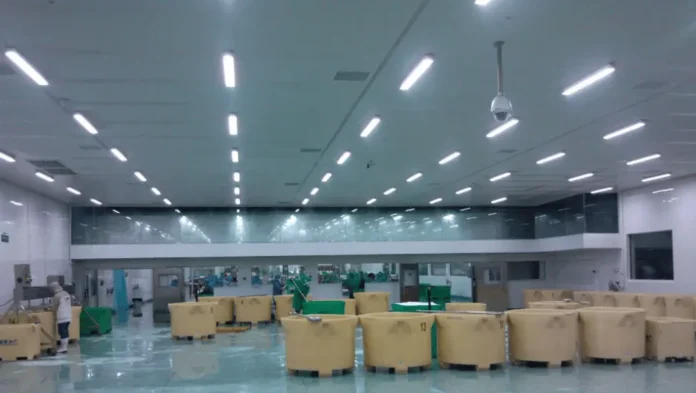

Quality control is an important part of producing reliable LED tri-proof lights. These fixtures are often used in commercial and industrial environments where consistent illumination, electrical reliability, and resistance to dust or moisture are important.
A professional LED Tri-Proof Light Manufacturer can use quality control procedures throughout the production process rather than relying only on final inspection. Checking components, assembly, electrical performance, environmental protection, and finished products helps identify potential issues before fixtures are delivered.
Inspecting Incoming Components
Quality control can begin before production starts. Manufacturers inspect incoming materials and components to confirm that they meet the required specifications.
LED modules, drivers, circuit boards, housings, lenses, connectors, wiring, and sealing materials may all require inspection. Consistent incoming materials provide a stronger foundation for consistent finished products.
Checking LED Components
LED components directly affect light output, efficiency, color temperature, and overall performance. Manufacturers can check components against defined specifications before they are incorporated into finished fixtures.
This process helps identify unsuitable or inconsistent components early in production and reduces the risk of performance variation between products.
Verifying Driver Quality
The LED driver is responsible for regulating electrical power supplied to the LED modules. Its specifications need to match the fixture’s intended electrical configuration.
Quality checks may include verifying input and output characteristics, electrical connections, and general driver performance. This helps ensure that the driver works appropriately within the completed fixture.
Inspecting Housing Components
The housing protects internal components and contributes to the fixture’s physical durability and environmental protection. Manufacturers can inspect housing dimensions, material condition, finishing, and structural integrity.
Consistent housing components are important because they affect assembly accuracy and the overall fit of lenses, seals, end caps, and electrical connections.
Checking Assembly Accuracy
During assembly, quality control teams can verify that components are installed correctly and consistently. Incorrect positioning, loose connections, or damaged components can affect fixture performance.
Assembly inspections may focus on LED modules, drivers, wiring, connectors, fasteners, and other internal parts before the fixture is fully sealed.
Verifying Electrical Connections
Electrical connections are checked to identify issues such as loose wiring, incorrect connections, insulation problems, or other assembly defects.
Depending on the manufacturing process, electrical testing may be performed at different stages to identify problems before the completed fixture reaches final inspection.
Testing Light Output
Light output is an important performance characteristic for LED lighting. Manufacturers can test finished fixtures to verify that their brightness and other optical characteristics are within specified ranges.
Testing may also evaluate color temperature, color consistency, or other characteristics depending on the product requirements.
Checking Thermal Performance
Heat management can affect the performance and service life of LED fixtures. Quality control processes may therefore consider the fixture’s thermal behavior during operation.
Manufacturers can evaluate whether the housing and internal design provide appropriate heat dissipation under specified operating conditions.
Testing Environmental Protection
Tri-proof lights are often designed for environments where dust and moisture may be present. Environmental testing can help determine whether the fixture meets its stated protection requirements.
Depending on the product, testing may relate to resistance against water or the entry of solid particles. The applicable IP rating provides a reference for the intended level of protection.
Performing Visual Inspections
Visual inspection remains a useful final quality control step. Inspectors can check for scratches, cracks, assembly defects, uneven sealing, damaged lenses, loose components, or other visible problems.
Although visual inspection cannot replace functional testing, it can help identify physical issues before products are packaged.
Conducting Final Functional Testing
Before shipment, finished fixtures may undergo final functional checks to confirm that they operate as expected.
These checks can include powering the fixture, verifying illumination, checking electrical behavior, and confirming that major components function correctly.
Reviewing Product Consistency
For large orders, consistency between individual fixtures is especially important. Quality control procedures can compare products against established specifications for dimensions, electrical characteristics, light output, and appearance.
Maintaining consistent production standards helps ensure that multiple fixtures can be used together within the same commercial or industrial installation.
Maintaining Quality Records
Documentation can support quality control by recording inspection and testing results. Records may include component checks, production inspections, electrical tests, and final verification.
Maintaining appropriate records can also help manufacturers identify recurring issues and improve production processes over time.
Checking Packaging Before Shipment
Quality control does not necessarily end when the fixture passes functional testing. Packaging should also be checked to ensure that products are protected for transportation.
Manufacturers can verify that fixtures are properly secured, labeled, and packaged according to the order requirements. This can reduce the risk of damage during handling and shipping.
Supporting Continuous Improvement
Quality control data can provide useful information for improving manufacturing processes. If recurring defects or inconsistencies are identified, manufacturers can investigate the underlying causes and adjust production procedures.
Continuous improvement can involve changes to component sourcing, assembly methods, testing procedures, equipment, or employee training.
Conclusion
LED tri-proof light manufacturers use multiple quality control steps to support product consistency and reliable performance. These can include incoming component inspection, assembly checks, electrical testing, light output verification, thermal evaluation, environmental testing, visual inspection, and final functional checks.
By applying quality controls throughout production and maintaining appropriate records, manufacturers can identify potential issues earlier and improve consistency across finished lighting products. For buyers, understanding these processes can provide useful context when evaluating product quality and manufacturing practices.

