
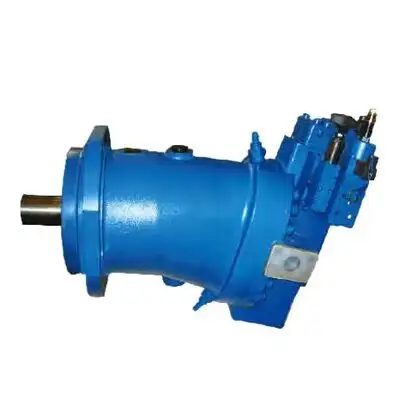

Piston pumps are commonly used in industrial systems where dependable fluid delivery, controlled displacement, and high-pressure operation are important. Their performance depends on several factors, including pump design, component quality, operating conditions, installation, and maintenance.
When assessing a piston pump manufacturer, buyers should look beyond basic product specifications and examine how manufacturing practices influence reliability and efficiency. Understanding the connection between quality and performance can help industrial users choose equipment that is appropriate for their operating environment.
What Determines Piston Pump Performance?
Pump performance is influenced by the interaction of mechanical components and operating conditions. A well-designed pump must maintain appropriate pressure and flow while handling the physical and chemical characteristics of the pumped fluid.
Key performance factors include:
- Flow rate
- Operating pressure
- Pump speed
- Volumetric efficiency
- Mechanical efficiency
- Fluid temperature
- Viscosity
- Operating duty cycle
These variables should be considered together because changing one operating condition can affect the others.
The Role of Manufacturing Quality
Manufacturing quality has a direct relationship with pump performance. Precision components must be produced within appropriate tolerances so that pistons, cylinders, valves, seals, and other parts function correctly.
Inconsistent dimensions or poor surface finishes can increase friction, leakage, vibration, and wear. Over time, these issues may reduce efficiency and shorten component life.
Precision Machining
Precision machining is particularly important for components that move or form pressure-containing surfaces. Accurate machining helps maintain proper clearances and alignment.
Manufacturers may use CNC equipment, grinding, polishing, and other processes to achieve the dimensional and surface requirements specified by the pump design.
Material Selection and Performance
The materials used in a piston pump must match the application’s operating conditions. Fluid compatibility is especially important when the pump handles corrosive, abrasive, high-temperature, or chemically reactive substances.
Materials can affect resistance to corrosion, wear, pressure, and temperature. Seals and other fluid-contact components may also require specialized materials depending on the medium being pumped.
Why Compatibility Matters
A material that performs well with one fluid may deteriorate quickly when exposed to another. Chemical compatibility should therefore be verified before selecting a pump.
Operating temperature and pressure should also be considered because they can change the behavior and durability of materials.
Pressure Capability
One of the main reasons industries select piston pumps is their ability to operate under demanding pressure conditions. However, maximum pressure ratings should not be treated as the only performance indicator.
Buyers should determine the normal operating pressure as well as possible pressure fluctuations. Continuous operation near a pump’s maximum rating may place greater demands on seals, valves, and mechanical components.
A properly selected pump should provide an appropriate operating margin for the intended system.
Flow Accuracy and Consistency
Piston pumps use positive displacement principles, which allow them to deliver a defined volume of fluid during each pumping cycle. This can be useful when controlled or predictable fluid delivery is required.
Actual flow can still vary because of factors such as pump speed, pressure, internal leakage, fluid viscosity, and component wear.
For applications where flow consistency is important, performance should be evaluated under realistic operating conditions.
Efficiency Considerations
Pump efficiency affects energy consumption and operating costs. Volumetric efficiency is influenced by internal leakage and the condition of components, while mechanical efficiency is affected by friction and other mechanical losses.
Proper sizing and operating conditions can help maintain efficient performance. Regular maintenance is equally important because worn seals, valves, and other components can increase losses.
Managing Pulsation
Because piston pumps use reciprocating motion, their output can contain pressure and flow pulsations. The degree of pulsation depends on the pump configuration and number of cylinders, among other factors.
In systems that require smoother flow, engineers may consider multi-piston configurations, pulsation dampeners, or other system-level solutions.
The acceptable level of pulsation depends on the equipment connected to the pump and the requirements of the overall process.
Importance of Valve Quality
Valves control the movement of fluid into and out of the pump chamber. Their condition and design can therefore have a significant effect on performance.
Poorly functioning valves may cause leakage, reduced flow, pressure instability, or increased wear. Valve materials and construction should be appropriate for the fluid and operating conditions.
Seal and Packing Performance
Seals and packing help prevent fluid leakage around moving components. Their performance can affect both pump efficiency and operating safety.
The correct sealing material should be selected according to pressure, temperature, fluid characteristics, and expected service conditions. Regular inspection can identify deterioration before it causes significant performance problems.
Testing and Quality Verification
Manufacturing quality should be supported by appropriate inspection and testing. Testing procedures help verify that completed pumps perform within their specified operating parameters.
Depending on the application, quality checks may include:
- Dimensional inspection
- Pressure testing
- Leakage testing
- Flow verification
- Operational testing
- Component inspection
For projects with strict requirements, buyers may request suitable test reports or quality documentation.
How Maintenance Affects Performance
Even a high-quality pump can lose performance if maintenance is neglected. Regular inspections help identify worn components, lubrication problems, leakage, and abnormal operating conditions.
Maintenance requirements vary according to pump design and application. Manufacturers should provide appropriate guidance regarding inspection intervals, lubrication, component replacement, and operating limits.
Signs of Declining Performance
Operators should pay attention to changes such as:
- Reduced flow
- Unexpected pressure changes
- Increased vibration
- Unusual noise
- Fluid leakage
- Rising operating temperature
- Higher energy consumption
These symptoms can indicate component wear or another developing issue that requires investigation.
Installation and Operating Conditions
Pump performance is not determined by the pump alone. Incorrect installation can create alignment problems, excessive vibration, suction difficulties, or additional mechanical loads.
The installation should follow the manufacturer’s technical requirements. Piping, foundation, drive alignment, valves, and other connected equipment should be suitable for the pump’s operating conditions.
Evaluating a Manufacturer’s Technical Capabilities
Industrial buyers can learn more about a manufacturer’s capabilities by asking detailed technical questions before purchasing.
Useful areas to investigate include:
- Manufacturing and machining processes
- Material inspection procedures
- Quality-control systems
- Pump testing methods
- Available performance data
- Engineering and customization capabilities
- Maintenance documentation
- Spare-parts support
A manufacturer’s ability to provide clear and technically consistent information can be an important part of the evaluation.
Quality Versus Initial Purchase Price
Price is an important consideration, but it should be evaluated alongside performance and lifecycle costs. A pump with a lower initial price may require more frequent maintenance or have a shorter service life.
Conversely, a higher-priced pump is not automatically better. Buyers should compare measurable factors such as materials, performance, testing, expected maintenance, and application suitability.
The goal is to select equipment that provides an appropriate balance of reliability, performance, and total cost.
Conclusion
Quality and performance are closely connected in piston pump applications. Precision manufacturing, suitable materials, reliable valves and seals, proper testing, and consistent assembly all contribute to dependable operation.
For industrial buyers, evaluating these factors alongside pressure, flow, efficiency, maintenance, and installation requirements provides a more complete picture of pump suitability. A careful assessment of both the equipment and its manufacturing quality can help reduce operational risks and support reliable long-term performance.

