
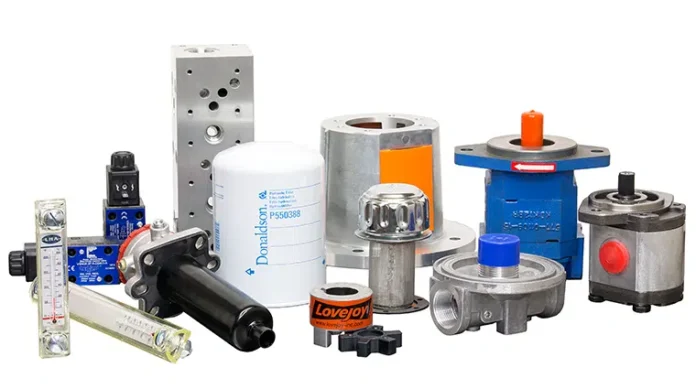

Hydraulic technology continues to evolve as industries look for equipment that delivers greater efficiency, precision, reliability, and control. Advances in materials, manufacturing methods, sensors, and electronic control are changing how hydraulic systems are designed and operated.
A modern hydraulic components manufacturer must consider these developments when designing components for today’s equipment. Innovation does not necessarily mean replacing traditional hydraulic technology; in many cases, it involves improving existing components so they perform more efficiently and integrate better with modern control systems.
More Efficient Hydraulic Systems
Energy efficiency has become an important consideration in hydraulic equipment. Traditional systems can experience energy losses through pressure drops, throttling, leakage, and heat generation.
Manufacturers and system designers are increasingly focusing on components that can reduce unnecessary losses. More efficient pumps, valves, motors, and control systems can help equipment use hydraulic power more effectively.
Improved efficiency can also reduce heat generation, which may support longer fluid and component service life.
Variable Displacement Pump Technology
Variable displacement pumps allow hydraulic flow to be adjusted according to system demand. This can reduce the amount of energy wasted when full flow is not required.
Modern pump designs can be combined with load-sensing or electronically controlled systems to provide more precise flow management.
The appropriate approach depends on the machine’s operating cycle, required pressure, control strategy, and overall system architecture.
Electro-Hydraulic Control
Electro-hydraulic technology combines hydraulic power with electronic control. Sensors, electronic controllers, and proportional valves can work together to regulate hydraulic functions with greater precision.
This approach is increasingly relevant to automated industrial machinery and modern mobile equipment.
Electronic control can help manage pressure, flow, position, speed, and other operating parameters according to real-time requirements.
Smart Sensors and Condition Monitoring
Sensors can provide information about hydraulic pressure, temperature, position, flow, vibration, and other operating conditions.
This data can be used to monitor equipment performance and identify unusual changes that may indicate developing problems.
Condition monitoring can support preventive maintenance by helping maintenance teams focus on components that show signs of deterioration rather than relying only on fixed service intervals.
Improved Hydraulic Valve Technology
Hydraulic valves continue to evolve through improvements in internal design, control accuracy, and electronic integration.
Proportional and servo valves can provide more precise control than simple on-off arrangements in applications where accurate movement is required.
Modern valve systems may also incorporate electronic feedback and control algorithms to improve machine response.
Advances in Hydraulic Cylinder Design
Hydraulic cylinders remain fundamental to many machines, but their design continues to improve. Advances may involve stronger materials, improved sealing systems, better surface treatments, and optimized internal geometry.
Modern cylinder designs can be adapted for demanding operating conditions, including high loads, repeated cycles, and harsh outdoor environments.
Position sensors can also be integrated into certain cylinders to provide feedback to an electronic control system.
Better Sealing Technologies
Seals play a critical role in preventing fluid leakage and maintaining hydraulic pressure. Advances in elastomer formulations and sealing designs can improve resistance to temperature, pressure, wear, and chemical exposure.
Improved seals can contribute to longer component service life and reduced maintenance requirements.
However, seal performance still depends on proper material selection, surface finish, installation, hydraulic fluid compatibility, and operating conditions.
Advanced Materials and Surface Treatments
Material development is another area of hydraulic technology innovation. High-strength alloys, engineered polymers, and specialized coatings can provide useful combinations of strength, wear resistance, corrosion protection, and reduced weight.
Surface treatments can also improve the performance of specific components. For example, a cylinder rod may benefit from a treatment that increases surface hardness and corrosion resistance.
Material selection should always be based on actual application requirements rather than technology trends alone.
Additive Manufacturing and Rapid Prototyping
Additive manufacturing is creating new possibilities for prototyping and certain specialized hydraulic components. It can allow engineers to produce complex geometries that may be difficult or expensive to manufacture using conventional processes.
Rapid prototyping can shorten design cycles by allowing engineers to evaluate physical samples before committing to larger production runs.
For production applications, the suitability of additive manufacturing depends on factors such as material properties, pressure requirements, production volume, and quality standards.
Digital Design and Simulation
Computer-aided design and engineering simulation allow manufacturers to evaluate component designs before physical production.
Engineers can use digital tools to study factors such as stress, fluid flow, heat, and component movement. Identifying potential design problems earlier can reduce development costs and shorten the time required to reach a validated product.
Simulation does not replace physical testing, but it can make the development process more efficient.
Hydraulic Systems and Industry 4.0
Modern hydraulic equipment is increasingly connected to digital control and monitoring systems. This reflects the broader move toward Industry 4.0, where machines use sensors and data to improve production and maintenance.
Hydraulic components can become part of a larger network in which operating information is collected and analyzed.
Such integration can support predictive maintenance, performance optimization, and remote monitoring when implemented appropriately.
Reducing Hydraulic Fluid and Environmental Impact
Environmental considerations are also influencing hydraulic technology. Better system efficiency can reduce energy consumption, while improved seals and connections can help minimize fluid leakage.
In some applications, manufacturers may also consider compatibility with biodegradable or lower-impact hydraulic fluids.
Environmental performance must be balanced with technical requirements because fluid properties can affect seals, pumps, valves, and other components.
Custom Engineering for New Applications
Innovation is often driven by specific equipment challenges. A standard component may not provide the required combination of size, performance, control, or environmental resistance.
Custom engineering can allow manufacturers to adapt components to new machine designs. This may involve modified dimensions, integrated sensors, specialized materials, or alternative control arrangements.
Application-specific development can help hydraulic systems keep pace with changing equipment requirements.
Challenges of Hydraulic Innovation
New technology also introduces challenges. Advanced components may require greater engineering expertise, more complex controls, specialized maintenance, or higher initial investment.
Compatibility with existing hydraulic systems is another important consideration. Introducing a new component without evaluating the entire system can create unexpected performance or integration issues.
For this reason, innovation should be guided by measurable application requirements and validated through appropriate testing.
What Buyers Should Look for in an Innovative Manufacturer
Businesses evaluating hydraulic suppliers should consider whether a manufacturer has the technical resources to support modern applications.
Useful areas to evaluate include:
- Engineering and product development capabilities
- Precision manufacturing equipment
- Testing and validation resources
- Sensor and electronic integration experience
- Customization capabilities
- Quality management systems
- Technical documentation and support
A manufacturer does not need to use every emerging technology. The more important factor is whether its capabilities are appropriate for the customer’s actual requirements.
Conclusion
Innovations in hydraulic technology are improving efficiency, precision, monitoring, durability, and system integration. Developments in variable displacement pumps, electro-hydraulic controls, sensors, advanced materials, sealing technologies, digital design, and manufacturing are creating new possibilities for hydraulic equipment.
For equipment designers and industrial buyers, the most useful innovations are those that solve specific operational challenges. By combining proven hydraulic principles with appropriate modern technologies, manufacturers can support systems that are more efficient, reliable, and adaptable to changing industrial requirements.

