
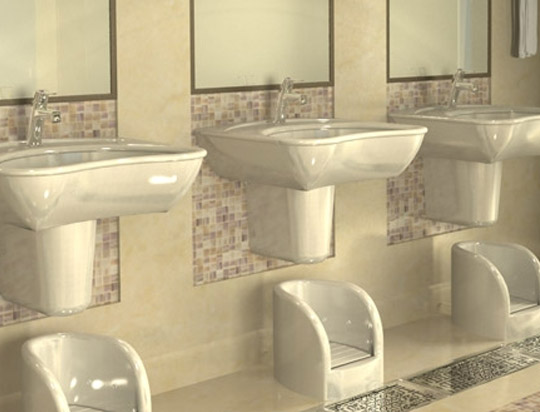

The Importance of Ergonomics in Wudu Areas
Ergonomic design in wudu areas plays a crucial role in providing comfort, safety, and efficiency for users. Improperly designed sinks can cause strain, discomfort, and even minor injuries when worshippers perform ablutions. Ensuring that both hand and foot washing stations are ergonomically designed allows users of all ages and abilities to perform wudu efficiently and safely.
Key Ergonomic Considerations
Several factors contribute to an ergonomic wudu sink setup. Height, reach, and basin orientation are critical to minimize bending and stretching. The distance between adjacent sinks should allow multiple users to perform wudu simultaneously without crowding. Additionally, thoughtful placement of faucets and controls reduces unnecessary movement, creating a smoother and more comfortable ablution process.
Advantages of a Wudu Sink with Foot Wash
A high-quality Wudu sink with foot wash combines ergonomic features with practical functionality. These sinks integrate upper basins for hand and face washing and lower basins for foot washing in a single, compact unit. Smooth, non-porous surfaces facilitate cleaning, while carefully calibrated heights ensure accessibility for children, adults, and the elderly. The design reduces physical strain, prevents water spillage, and creates a more efficient workflow during peak usage.
Enhancing Accessibility for All Users
An ergonomic design ensures that all users, including those with limited mobility, can comfortably perform wudu. Lower basins for foot washing are designed to be easily reachable without excessive bending, while upper basins provide adequate space for hand and face washing. Properly spaced sinks prevent crowding, making the wudu area inclusive and user-friendly. Accessibility planning also enhances hygiene, as users are less likely to spill water on surrounding floors.
Material and Design Features
Materials used in ergonomic wudu sinks should be durable, water-resistant, and easy to maintain. Solid surfaces, treated stone, or other non-porous materials provide long-lasting performance and resist bacterial growth. Textured or anti-slip lower basins enhance safety during foot washing, while smooth upper basins reduce splashing. Combined with efficient drainage, these materials support a clean and safe wudu environment.
Maintenance and Long-Term Benefits
Ergonomically designed sinks also simplify maintenance. Efficient water flow, anti-splash features, and accessible plumbing reduce the time and effort required for cleaning. Properly installed ergonomic sinks maintain their functionality and comfort over time, ensuring that high-traffic facilities remain hygienic, safe, and user-friendly. This long-term durability benefits both facility managers and worshippers alike.
Conclusion
Ergonomic design features in wudu sinks with foot wash enhance comfort, safety, and hygiene for users of all ages and abilities. By combining thoughtful height, reach, accessibility, and durable materials, these sinks create an efficient and inclusive wudu environment. Facilities that invest in ergonomically designed sinks provide worshippers with a more comfortable and practical experience, while ensuring long-term durability and ease of maintenance. Proper planning and design result in a wudu area that meets both spiritual and practical needs.

