

Outbound sales haven’t become easier in 2026 — it has simply become less forgiving.
Prospects are busier. Attention spans are shorter. Competition is tighter. And sales teams are expected to produce predictable results, not occasional spikes. The problem isn’t effort. Most outbound teams work hard. The real question is whether the system behind them supports growth or silently limits it.
For many companies, scaling outbound sales doesn’t fail because of poor talent. It stalls because the process was never designed to handle scale.
The Hidden Cost of Manual Dialing
If you observe a sales rep working with a traditional manual setup, you’ll notice how much time disappears between conversations.
Dial a number. Wait for it to ring. Reach voicemail. Update notes. Move to the next lead. Repeat.
It feels active, but the actual talk time is often far lower than expected. Across a full team, those small gaps become significant productivity losses.
This is why automated dialers have moved from being optional tools to operational essentials. Instead of reps hunting for the next number, the system automatically connects them to the next live call. The difference may seem small on paper, but in practice it changes the entire rhythm of the day.
When conversations happen back-to-back, momentum builds. And in outbound sales, momentum matters.
Why Consistency Matters More Than Volume
Scaling doesn’t simply mean making more calls. It means making outbound activity consistent.
Without structure, outbound campaigns tend to spike and drop. Some days are overloaded. Others are slow. Reps feel pressured at the end of the month because earlier efforts lacked flow.
Automated dialers create a steady calling pace. They remove the stop-start pattern that drains energy and replace it with a predictable workflow. Over time, that stability improves performance because reps spend more time speaking with prospects and less time managing mechanics.
It’s not about pushing people harder. It’s about removing friction.
Where Call Routing Changes the Game
Many outbound teams focus only on dialing efficiency. But scaling properly requires thinking about what happens after a prospect responds.
When a campaign performs well, callbacks increase. Missed call returns increase. Inbound interest rises. Without structured call routing, those incoming calls often land randomly — sometimes with agents who lack context, sometimes with overloaded team members.
Smart call routing prevents that chaos.
Instead of distributing calls blindly, routing systems assign them based on availability, skill sets, campaign source, or predefined rules. That means when interest comes back in, it’s handled properly and quickly.
Outbound success depends not only on reaching out, but on managing the response efficiently.
Supporting Agents Instead of Overloading Them
One mistake companies make while scaling is assuming they simply need more headcount. Hiring is expensive, training takes time, and turnover in sales roles can be unpredictable.
Technology offers a different path.
When automated dialers handle repetitive tasks and call routing ensures balanced distribution, agents are free to focus on conversations instead of logistics. Workloads become more even. Stress during peak hours reduces. Performance discussions shift from “Why didn’t you dial enough?” to “How did that conversation go?”
That shift changes team culture.
Salespeople perform better when they feel supported by systems rather than overwhelmed by them.
Data Visibility Improves Decision-Making
Another overlooked advantage of structured dialing systems is visibility.
Manual processes make tracking difficult. Managers rely on self-reported numbers or scattered spreadsheets. It becomes harder to identify where bottlenecks occur.
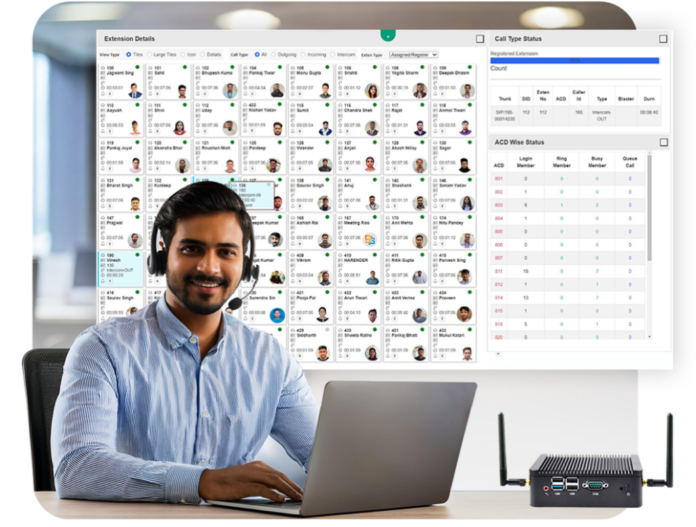
With automated dialers, call attempts, connections, outcomes, and agent activity are tracked automatically. Patterns become easier to identify. Underperforming campaigns can be adjusted faster. Training needs become clearer.
Scaling without visibility often leads to guesswork. Scaling with structured data leads to control.
The 2026 Reality: Efficiency Over Aggression
Outbound sales used to reward volume above all else. In 2026, efficiency is the differentiator.
Prospects don’t respond well to aggressive repetition. They respond to timely, relevant conversations. Automated dialing systems make it possible to increase meaningful interactions without increasing noise.
And when paired with intelligent call routing, the process feels organized instead of frantic.
The goal isn’t to overwhelm the market. It’s to operate with precision.
Building a System That Grows With You
The companies that scale outbound sales successfully aren’t necessarily the loudest. They are usually the most structured.
They understand that manual dialing works only up to a certain point. Beyond that, it becomes a ceiling. They recognize that routing responses randomly wastes momentum. And they treat call handling as a managed workflow rather than a daily scramble.
Automated dialers provide efficiency. Call routing provides order. Together, they create a foundation that can handle growth without collapsing under pressure.
Outbound sales in 2026 is still human at its core. Conversations close deals. Relationships build trust. But behind those conversations, systems matter more than ever.
When dialing is automated, routing is intelligent, and visibility is clear, scaling stops feeling chaotic. It becomes deliberate.
And deliberate growth is the only kind that lasts.

