
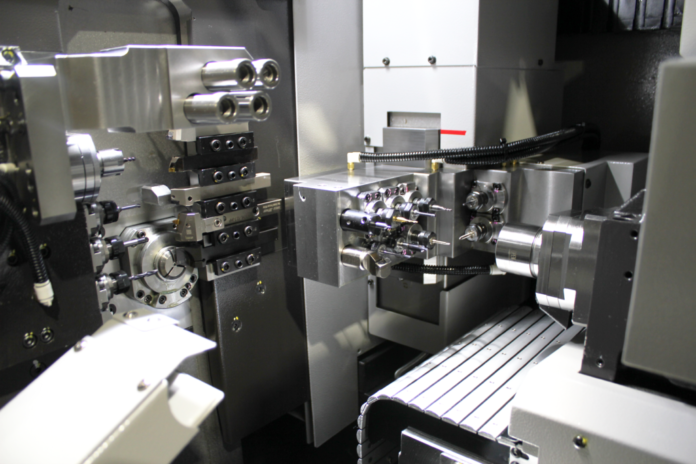

Precision and consistency are critical in modern manufacturing, especially when producing small or complex components. Errors can lead to wasted materials, increased production costs, and delays in delivery. Swiss lathe machines are engineered to minimize these risks, providing manufacturers with reliable performance and high-quality output.
Precision Engineering and Workpiece Support
One of the key reasons Swiss lathe machines reduce errors is their guide bushing system, which stabilizes the workpiece close to the cutting tool. This support prevents deflection, vibration, and movement that could cause dimensional inaccuracies. By maintaining a consistent alignment, the machine ensures each part meets stringent tolerances. This is particularly important for long or slender components, where traditional lathes might struggle to maintain precision.
Advanced CNC Control
Modern Swiss lathe machines incorporate CNC control systems that automate and regulate machining operations. These systems control spindle speed, tool movement, and feed rates with extreme accuracy, reducing the likelihood of human error. The use of CNC programming allows operators to reproduce complex geometries consistently, ensuring that every part matches the required specifications. For example, a swiss lathe machine with advanced CNC features can execute multi-axis operations in a single setup, minimizing errors associated with multiple machine transfers.
Consistent Tooling and Setup
Proper tooling and setup are crucial for minimizing manufacturing errors. Swiss lathe machines allow precise placement and alignment of cutting tools, reducing the risk of misalignment or incorrect tool paths. Automated tool changers and pre-set tool offsets further enhance accuracy, ensuring that tools remain consistent throughout production runs. This consistency helps maintain surface finish quality and dimensional accuracy across multiple parts.
Automation and Error Detection
Automation features in Swiss lathes, such as bar feeders and in-process monitoring, contribute significantly to error reduction. Automated material feeding eliminates inconsistencies caused by manual handling, while monitoring systems detect deviations in real-time. Sensors can identify tool wear, incorrect positioning, or abnormal vibrations, allowing corrective action before defective parts are produced. This proactive approach reduces scrap and rework while maintaining production efficiency.
Minimizing Human Intervention
Human error is a common source of manufacturing defects. By automating critical processes and using CNC programming, Swiss lathe machines reduce the dependence on manual operation. Operators focus on setup, supervision, and quality verification rather than repetitive machining tasks, which decreases the likelihood of mistakes. The result is a more reliable production process with fewer variations between parts.
Adaptability to Complex Components
Swiss lathe machines are capable of handling intricate designs and small, delicate components. Multi-axis machining enables simultaneous operations such as turning, milling, drilling, and threading, reducing the number of setups and potential alignment errors. This integrated approach allows complex parts to be produced accurately in a single machine cycle, improving both efficiency and consistency.
Material Handling and Chip Management
Effective material handling and chip management play a role in reducing errors. Swiss lathe machines are designed to provide stable workpiece support and efficient chip evacuation, preventing tool interference, surface damage, or dimensional inaccuracies. Proper coolant application and debris removal further enhance precision by maintaining optimal cutting conditions.
Quality Control and Feedback
Many modern Swiss lathes include integrated feedback systems that track performance and output quality. Data from sensors and CNC systems can be used to monitor tolerances, detect anomalies, and adjust machining parameters in real-time. Continuous monitoring ensures that errors are identified and corrected promptly, maintaining a high standard of consistency across production runs.
Conclusion
Swiss lathe machines significantly reduce manufacturing errors through precise workpiece support, advanced CNC control, consistent tooling, automation, and integrated feedback systems. By minimizing human intervention, maintaining stable cutting conditions, and enabling complex multi-axis operations, these machines ensure reliable, high-quality production. Implementing Swiss lathe technology allows manufacturers to achieve consistent part accuracy, reduce scrap, and optimize overall efficiency in precision machining operations.

