
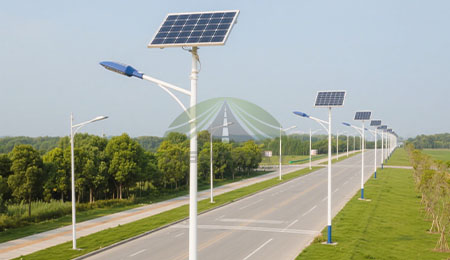

Smart cities are designed to improve urban living through efficient infrastructure, connected technologies, and sustainable resource management. As urban populations grow, municipalities and developers are looking for practical ways to reduce energy consumption, improve public services, and manage operating costs. Street lighting is an important part of this transformation because it affects public safety, transportation, energy use, and the overall urban environment.
Solar street lights are gaining attention as an alternative to conventional grid-powered lighting. By generating electricity from sunlight, these systems can reduce dependence on the electrical grid and provide illumination in areas where extending power infrastructure may be expensive or impractical.
For urban planners, contractors, and infrastructure developers, choosing a Top Solar Street Light Brand can help ensure that lighting equipment meets the technical and operational demands of smart city projects. Several factors explain why solar street lighting is becoming an increasingly attractive solution.
1. Reduced Dependence on Grid Electricity
One of the main advantages of solar street lights is their ability to generate and store energy independently of the conventional electricity network.
Solar panels collect sunlight during the day and convert it into electrical energy. The battery stores this energy for use after sunset, allowing the lighting system to operate without a continuous connection to the grid.
This feature can be particularly useful for:
- New residential developments.
- Public parks and recreational areas.
- Rural roads and remote communities.
- Parking facilities.
- Pedestrian pathways.
- Locations with limited electrical infrastructure.
Reducing dependence on grid electricity can also help municipalities diversify their energy sources and improve the flexibility of urban infrastructure planning.
2. Support for Sustainable Urban Development
Sustainability is an important objective of many smart city initiatives. Solar street lighting supports this goal by using renewable energy rather than relying entirely on electricity generated from conventional sources.
During operation, solar street lights do not require grid electricity to power their LED fixtures. This can help reduce the operational carbon footprint associated with street lighting, depending on the energy sources used in the local electricity network.
Modern LED technology also contributes to energy efficiency by producing useful illumination with relatively low power consumption.
When municipalities combine efficient LED fixtures with appropriately designed solar systems, they can support broader environmental and energy-management objectives.
3. Lower Long-Term Operating Costs
Conventional street lighting systems may involve recurring electricity expenses, grid connection charges, and infrastructure maintenance.
Solar street lights can reduce some of these costs because they generate their own operating energy. This can be especially valuable for projects involving large numbers of fixtures or locations where electricity connections are difficult to establish.
However, solar street lighting is not completely maintenance-free. Batteries, controllers, panels, and LED components may eventually require inspection, servicing, or replacement.
When evaluating the financial benefits, project planners should consider:
- Initial equipment costs.
- Installation expenses.
- Solar panel and battery specifications.
- Expected battery replacement intervals.
- Maintenance requirements.
- Warranty coverage.
- Electricity savings over the system’s operating life.
A total cost of ownership analysis can help determine whether solar street lighting offers better long-term value than a conventional alternative.
4. Easier Installation in Areas Without Grid Infrastructure
Extending electrical infrastructure can be expensive, particularly in newly developed areas, remote locations, and regions with complex terrain.
Solar street lights can simplify installation because they generally do not require underground power cables or direct connections to the electrical grid.
This may reduce the need for trenching, cable installation, and some associated civil engineering work.
Potential applications include:
- New urban development zones.
- Rural roads and village streets.
- Public parks and walking paths.
- Construction sites.
- Industrial access roads.
- Remote parking areas.
Although solar systems still require suitable foundations, poles, and installation work, their independent power supply can make certain projects easier to implement.
5. Integration with Smart Lighting Controls
Smart city infrastructure increasingly relies on connected systems that can collect information, respond to changing conditions, and improve resource management.
Modern solar street lights may include intelligent control features that help manage energy use and lighting schedules.
Common functions include:
- Automatic dusk-to-dawn switching.
- Programmable dimming schedules.
- Motion detection.
- Battery status monitoring.
- Remote control on supported models.
- Fault alerts and operating data collection.
For example, a lighting system may reduce brightness during periods of low activity and increase it when pedestrians or vehicles are detected.
More advanced installations can use networked controllers and communication technologies to support centralized monitoring. However, these capabilities depend on the selected product and supporting infrastructure.
When choosing equipment, municipalities should distinguish between basic automatic controls and genuinely connected smart lighting systems.
6. Improved Energy Management
Smart city projects need infrastructure that uses available resources efficiently. Solar street lights can contribute to this objective through coordinated energy generation, storage, and consumption.
An intelligent controller manages the charging process and determines how stored battery energy is used after sunset.
Depending on the system, it may support:
- Adjustable brightness levels.
- Scheduled dimming.
- Motion-activated illumination.
- Battery protection.
- Operating status monitoring.
These functions can help balance energy availability with nighttime lighting requirements.
However, energy-saving settings must be designed carefully. Reduced brightness should not compromise visibility or fall below applicable road and public-space lighting requirements.
7. Flexible Solutions for Different Urban Applications
Smart cities contain many different types of outdoor spaces, each with specific lighting needs.
Solar street lights are available in various power ratings, designs, mounting arrangements, and battery configurations. This allows project planners to select products for different applications.
Examples include:
Urban roads: Road-specific optical designs can help provide suitable illumination across different road widths and pole arrangements.
Public parks: Solar lighting can support pathways, entrances, and recreational spaces without requiring extensive grid connections.
Parking areas: Properly designed fixtures can improve visibility and support safer movement around vehicles.
Residential communities: Solar street lights can provide illumination for internal roads, walkways, and shared outdoor spaces.
Industrial facilities: Suitable solar lighting systems can be used for selected access roads, storage areas, and outdoor facilities.
The appropriate product depends on the required illumination, operating hours, environmental conditions, and installation layout.
8. Greater Resilience During Grid Interruptions
Power interruptions can affect conventional street lighting and reduce visibility in public spaces.
Because solar street lights store energy in batteries, they can continue operating independently of the grid when their systems are properly sized and charged.
This can provide an additional level of resilience for selected urban locations.
However, battery autonomy is critical. Extended periods of cloudy weather, insufficient solar panel capacity, or excessive energy consumption can reduce operating duration.
Project planners should evaluate expected nighttime usage, local sunlight conditions, battery capacity, and required backup days before selecting a system.
9. Better Options for Environmentally Conscious Urban Planning
Solar street lighting can form part of a wider sustainability strategy when combined with other energy-efficient technologies.
For example, municipalities may integrate solar lighting with energy-efficient buildings, renewable power systems, smart traffic management, and public transportation improvements.
Solar street lights can also help illuminate locations where conventional electrical infrastructure would require significant construction work.
To maximize environmental benefits, project planners should consider the entire product life cycle, including component durability, battery replacement, material sourcing, and responsible recycling.
Long-lasting products and accessible replacement components can help reduce waste and improve the sustainability of the installation.
10. Important Features to Check When Selecting Solar Street Lights
Not every solar street light is suitable for a smart city project. Buyers should evaluate the complete system rather than focusing only on advertised wattage or product appearance.
Important technical features include:
Solar Panel Efficiency
The solar panel must generate enough electricity to recharge the battery under local sunlight conditions. Panel capacity, orientation, shading, and seasonal weather all influence charging performance.
Battery Capacity and Autonomy
The battery should store sufficient energy to support the required nighttime operating hours. Buyers should also check battery chemistry, usable capacity, cycle performance, and protection features.
LED Performance
Review lumen output, luminous efficacy, color temperature, and optical distribution. Lighting design should match the road or public-space requirements.
Weather Resistance
Outdoor fixtures need appropriate protection against rain, dust, humidity, and temperature changes. Check the IP rating and construction materials.
Intelligent Controls
Determine whether the product includes automatic switching, programmable dimming, motion sensors, battery monitoring, or remote management.
Warranty and Technical Support
Confirm warranty conditions for the battery, solar panel, LED module, and controller. Also check the availability of replacement components and technical assistance.
11. The Importance of Choosing an Experienced Manufacturer
The success of a smart city lighting project depends not only on product specifications but also on the manufacturer’s ability to provide consistent quality and technical support.
An experienced manufacturer may offer a wider product range, established quality control procedures, and greater familiarity with international project requirements.
Before selecting a supplier, evaluate:
- Manufacturing experience and production capacity.
- Component specifications and sourcing practices.
- Quality inspection procedures.
- Relevant certifications and test reports.
- Customization capabilities.
- Export experience.
- Delivery schedules.
- Warranty and after-sales support.
Buyers should request product samples and verify technical documentation before placing large orders. For major projects, independent inspections can provide additional confidence in product quality and consistency.
12. Challenges to Consider Before Implementation
Although solar street lights offer several advantages, they are not automatically the best solution for every location.
Their performance depends on sunlight availability, system sizing, installation conditions, and maintenance planning.
Common challenges include:
- Reduced solar charging during extended cloudy periods.
- Battery degradation over time.
- Shading from buildings and trees.
- Higher initial equipment costs for some configurations.
- The need for suitable battery replacement and recycling plans.
- Potential communication and monitoring infrastructure requirements.
A proper feasibility assessment can help determine whether solar street lighting is appropriate for a particular road or public space.
For locations with limited sunlight or very high lighting demands, hybrid or grid-connected solutions may also be worth considering.
Conclusion
Solar street lights are becoming a popular choice for smart city projects because they combine renewable energy generation, flexible installation, efficient LED technology, and intelligent lighting controls.
They can help reduce dependence on grid electricity, support sustainable urban planning, and provide practical lighting solutions for roads, parks, residential communities, and other public spaces.
However, successful implementation depends on selecting products with suitable solar panels, reliable batteries, effective LED performance, durable construction, and appropriate control features.
By evaluating manufacturers carefully, verifying technical specifications, and considering long-term operating costs, urban planners and project developers can make informed decisions. Well-designed solar street lighting systems can contribute to more energy-efficient, resilient, and sustainable urban infrastructure.

