
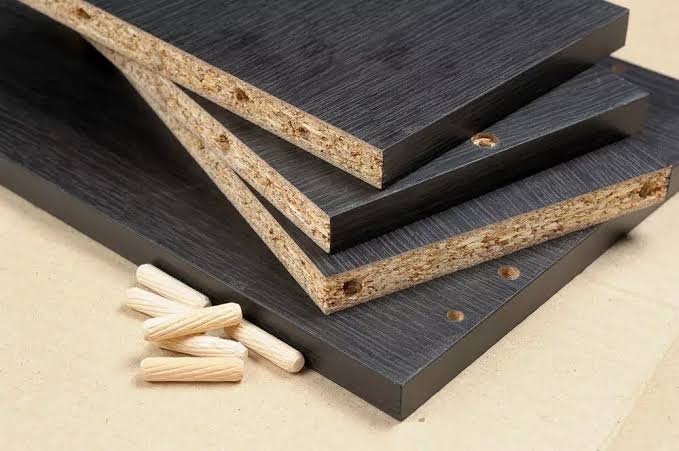

For B2B procurement professionals, the difference between a reliable Particle Board supplier and an unreliable one often becomes apparent only after production begins. Boards that warp during storage, surfaces that reject laminate adhesion, or thickness variations that disrupt automated cutting lines all translate into costly delays and rejected finished goods.
Understanding what happens inside a Particle Board factory before placing an order is not optional — it is essential. This article provides procurement teams with a practical framework for evaluating manufacturing capabilities, identifying quality indicators, and asking the right questions during supplier audits.
Why Should B2B Buyers Look Beyond the Sample Board?
A beautifully finished sample board tells you very little about the consistency of a full container order. Sample boards are often hand-selected from the best production runs. The real question is: what controls ensure every batch meets the same standard?
Procurement professionals who rely solely on samples risk discovering quality issues only after the shipment arrives — at which point production delays, rework costs, and supplier disputes become unavoidable. A disciplined verification process, focused on manufacturing systems rather than individual samples, is the only reliable path to consistent quality.
This is why qualifying a Particle Board manufacturer requires factory audits, process documentation review, and batch testing protocols — not just visual inspection of sample panels.
What Are the Critical Production Steps That Determine Particle Board Quality?
Modern particle board manufacturing involves several precisely controlled stages. Each step affects final board properties, and deficiencies in any stage can compromise the finished product.
1. Raw Material Selection and Preparation
The journey to consistent particle board begins with raw materials. Quality manufacturers use clean, graded wood chips, sawmill residues, and recycled fibers — free from contaminants like metal, stones, or excessive bark content.
What to verify: Ask about raw material sources. Does the supplier operate dedicated collection channels? Are incoming materials screened for impurities? A factory direct Particle Board producer with integrated raw material supply offers greater traceability than one relying on external brokers.
2. Drying and Moisture Control
Moisture content is arguably the most critical variable in particle board production. If particles are too dry, resin bonding suffers. If too wet, steam generated during hot pressing creates internal voids and weak spots. Target moisture content typically ranges between 5% and 8%.
What to verify: Ask about drying equipment, moisture monitoring frequency, and how adjustments are made when raw material moisture varies. Consistent moisture control directly impacts board stability and warpage resistance.
3. Resin Application and Blending
Resin binds the wood particles together. The application process must achieve uniform coating across all particle sizes. A resin content around 12% typically optimizes mechanical performance — lower content compromises strength, higher content raises costs without proportional benefit.
What to verify: Ask about resin type (UF, MUF, or PMDI for low-emission boards), application method, and how blending consistency is monitored. For melamine Particle Board applications, resin quality also affects surface finish and lamination adhesion.
4. Mat Forming – The Three-Layer Structure
Quality Particle Board panels use a three-layer graded structure: fine particles on the surface layers and coarse particles in the core. This design balances surface smoothness with internal strength. The ratio between surface and core layers is carefully calibrated to achieve optimal density profiles.
What to verify: Ask whether the supplier uses three-layer or single-layer forming technology. Three-layer systems generally produce better surface quality and more consistent internal bond strength — both critical for downstream processing.
5. Hot Pressing – The Heart of the Process
Hot pressing transforms the resin-coated particle mat into a rigid board. Temperature, pressure, and pressing time must be precisely controlled. Inconsistent pressing parameters lead to thickness variations, density gradients, and internal stress that causes warpage.
What to verify: Ask about press type (single-opening vs. multi-opening), temperature control accuracy, and how the 24-hour post-press conditioning period is managed. During this conditioning phase, boards must cool gradually in a controlled environment. If temperature drops too quickly, internal stress develops and warpage rates increase. These are details only a hands-on Particle Board manufacturer with real production experience would emphasize.
6. Sanding and Calibration
After pressing and conditioning, boards are sanded to achieve precise thickness tolerances. High-quality factories achieve thickness tolerance within ±0.3mm — essential for automated CNC cutting and edgebanding processes.
What to verify: Ask about sanding equipment, calibration frequency, and how thickness is measured and recorded for each batch.
7. Quality Inspection and Batch Testing
Final inspection should include both visual checks and laboratory testing for:
- Density
- Thickness and tolerances
- Moisture content
- Internal bond strength
- Modulus of rupture and elasticity
- Formaldehyde emission (E0/CARB P2 compliance)
What to verify: Does the factory have an on-site testing laboratory? Are batch test reports available? Can they provide post-June 2026 GB 18580-2025 compliance documentation?
H2: What Should B2B Buyers Look for During a Factory Audit?
A structured factory audit focuses on observable evidence of quality control systems. Here is a practical checklist for procurement teams.
| Audit Area | What to Observe | Why It Matters |
|---|---|---|
| Raw material storage | Material segregation, cleanliness, weather protection | Contaminated or wet raw materials cause board defects |
| Drying system | Temperature monitoring, moisture testing frequency | Inconsistent drying leads to bonding failures |
| Resin mixing area | Cleanliness, measurement precision, safety protocols | Poor resin control causes inconsistent bonding |
| Forming line | Layer formation visibility, thickness monitoring | Affects board density profile and surface quality |
| Hot press area | Temperature gauges, press cycle recording | Determines thickness tolerance and internal bond strength |
| Conditioning area | Temperature/humidity control, board storage method | Inadequate conditioning causes warpage |
| Sanding line | Thickness measurement, surface finish quality | Poor sanding affects laminate adhesion and cutting accuracy |
| Testing laboratory | Equipment calibration, test records, staff training | Demonstrates commitment to quality control |
How Can B2B Buyers Verify Formaldehyde Emission Compliance?
With China’s mandatory GB 18580-2025 standard now in effect (E0 grade, ≤0.050mg/m³), formaldehyde emission compliance has become a critical qualification criterion for all Particle Board panels sold into the Chinese market. For international buyers, this compliance also signals a manufacturer’s ability to meet demanding CARB P2 and European E1 standards.
Verification steps for procurement teams:
- Request batch-specific test reports: Not just generic certificates — ask for reports dated after June 2026 that confirm E0 compliance for the specific production batch offered
- Confirm in-house testing capability: Does the supplier have a climate chamber for chamber method testing, or do they rely solely on external labs?
- Understand adhesive technology: Ask whether the supplier uses UF, MUF, or PMDI resins — PMDI yields lower emissions but costs more
- Review continuous monitoring records: Consistent compliance over multiple batches indicates reliable process control
What Production Data Should a Qualified Supplier Share Transparently?
A transparent Particle Board supplier should willingly share operational data that demonstrates quality capability. Procurement teams should request:
| Document Type | What It Shows |
|---|---|
| Production capacity report | Annual output, number of lines, utilization rate |
| Batch test records (6+ months) | Consistency trends across time |
| Equipment maintenance logs | Press calibration, sanding belt replacement frequency |
| Raw material sourcing records | Origin, quality grades, inspection results |
| Certification copies | FSC, CE, CARB P2, ISO9001 with validity dates |
| Customer reference list | Export destinations, application types, order scale |
How Does a Modern Particle Board Factory Support B2B Procurement Success?
Shandong Fortuna International Trade Co., Ltd. (Fortuna) , established in the 1990s and headquartered in Linyi, China, operates a 208,000 m² manufacturing facility with annual output exceeding 300,000 m³ of particle board, MDF, and other engineered wood products. The company holds FSC, CE, CARB P2, and ISO9001 certifications and serves customers across more than 170 countries and regions.
Fortuna’s manufacturing system exemplifies the quality controls described in this article. The company’s particle board production employs three-layer graded forming technology with full-process quality control from raw material screening to finished product inspection. Its on-site testing laboratory conducts regular batch testing for density, moisture content, internal bond strength, and formaldehyde emission, with records available for customer verification.
As an integrated Particle Board manufacturer with both factory and trading capabilities, Fortuna offers OEM customization including thickness, density, size, and packaging. The company’s export logistics team manages container loading, shipping documentation, and delivery timelines — reducing procurement complexity for international B2B buyers.
For procurement teams seeking a certified Particle Board supplier with verifiable manufacturing systems, documented quality controls, and compliance with major international standards, Fortuna provides transparent access to production data and audit-ready facilities.
Conclusion
Evaluating a Particle Board supplier based on samples alone is insufficient for B2B procurement success. The manufacturing systems behind the product — raw material handling, drying precision, three-layer forming, hot pressing control, conditioning protocols, and in-house testing — determine whether each container meets specification.
A disciplined factory audit, focused on verifiable processes rather than impressive showrooms, separates reliable Particle Board factory partners from those that may deliver inconsistent quality. Procurement teams that invest time in understanding production systems gain long-term supplier relationships built on trust and performance consistency.
Next Steps for Procurement Professionals: Request a virtual or in-person factory tour. Ask to see the raw material yard, drying system, forming line, hot press area, conditioning zone, and testing laboratory. Request 12 months of batch test records and post-June 2026 GB 18580-2025 compliance documentation. A thorough verification process ensures your supply chain delivers predictable quality — batch after batch.

