
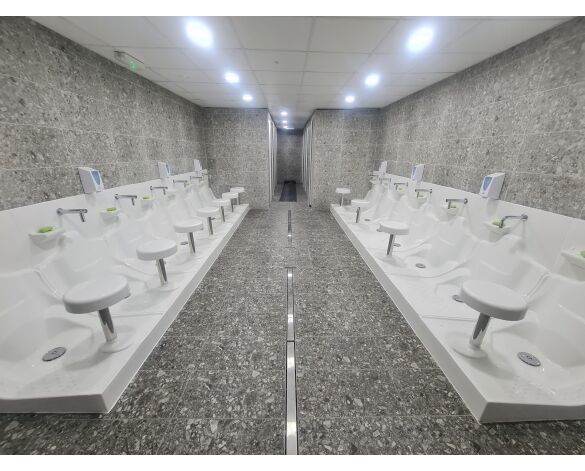

Modern mosques, Islamic centers, airports, and public facilities require ablution areas that are durable, hygienic, and easy to maintain. The Ablution Wash Basin is a critical fixture in these environments, designed to support daily Wudu practices efficiently while ensuring user comfort and safety.
For architects, facility managers, and exporters, selecting the right material is one of the most important decisions in ensuring long-term performance. A well-designed Ablution Wash Basin must balance durability, hygiene, cost efficiency, and aesthetic appeal.
Why Material Selection Matters
The material used in an Ablution Wash Basin directly impacts its lifespan, hygiene level, and maintenance requirements.
Key reasons material choice is important:
- Determines durability under heavy usage
- Affects cleanliness and hygiene performance
- Influences maintenance and repair frequency
- Impacts overall cost efficiency
Choosing the right material ensures long-term value.
Solid Surface Material Advantages
Solid surface materials are widely used in modern ablution basin designs due to their performance benefits.
Key advantages include:
- Non-porous and hygienic surface
- Seamless and modern appearance
- Resistance to moisture and stains
- Easy repair and maintenance
These qualities make them ideal for high-traffic public facilities.
Stainless Steel Options
Stainless steel is another common material used in ablution areas, especially in commercial and industrial environments.
Benefits include:
- High durability and strength
- Corrosion resistance
- Easy cleaning and maintenance
- Long service life
However, it may offer less design flexibility compared to modern materials.
Ceramic Material Considerations
Ceramic basins are traditional and widely used in smaller facilities or residential settings.
Characteristics include:
- Smooth and glossy surface
- Affordable cost
- Easy availability
- Moderate durability
However, they may crack under heavy impact or continuous use.
Durability and Long-Term Performance
Durability is essential in ablution areas due to constant daily usage.
Important durability factors include:
- Resistance to cracks and wear
- Ability to withstand moisture exposure
- Structural stability over time
- Resistance to surface damage
Strong materials reduce long-term replacement costs.
Hygiene Performance of Materials
Hygiene is a key requirement in ablution spaces where many users share the same facility.
Hygiene-related factors include:
- Non-porous surfaces prevent bacteria growth
- Smooth finishes allow easy cleaning
- Seamless designs reduce dirt accumulation
- Resistance to staining and odors
This ensures a clean and safe environment.
Maintenance Requirements
Different materials require different levels of maintenance effort.
Comparison includes:
- Solid surface: low maintenance, easy repair
- Stainless steel: moderate maintenance, high durability
- Ceramic: regular cleaning, moderate lifespan
Choosing the right material reduces operational workload.
Water Resistance and Environmental Performance
Ablution basins are constantly exposed to water, making water resistance essential.
Good materials should offer:
- No absorption of moisture
- Resistance to long-term water exposure
- Stability in humid environments
- Protection against surface degradation
This ensures long-term usability.
Aesthetic and Design Flexibility
Modern religious facilities require materials that match architectural design trends.
Design advantages include:
- Customizable shapes and layouts
- Modern and clean appearance
- Seamless integration with interiors
- Wide range of finishes
This enhances overall facility design quality.
Cost vs. Value Consideration
Material choice also affects overall project budgeting and long-term value.
Key cost considerations include:
- Initial purchase cost
- Installation expenses
- Maintenance and repair costs
- Lifespan and replacement cycle
Higher-quality materials often deliver better long-term value.
Export Market Material Preferences
For exporters, material selection plays a major role in international demand.
Market trends include:
- Strong preference for solid surface materials
- Demand for durable stainless steel systems
- Growing interest in hygienic and low-maintenance solutions
- Preference for modern, customizable designs
This creates strong global opportunities.
Conclusion
Choosing the right material for an Ablution Wash Basin is essential for ensuring durability, hygiene, and long-term performance. Solid surface, stainless steel, and ceramic each offer different advantages depending on facility needs and usage intensity.
For manufacturers and exporters, material quality is a key competitive factor in global markets. A Wudu Sink from KingKonree Solid Surface demonstrates how advanced materials and modern design can deliver efficient, hygienic, and long-lasting ablution solutions for contemporary facilities worldwide.

