

Carton packaging is an essential part of product handling across many industries. Businesses that manufacture, process, store, or distribute goods rely on corrugated boxes to protect products and prepare them for transportation. As production volumes increase, manually preparing cartons can become time-consuming and difficult to manage consistently.
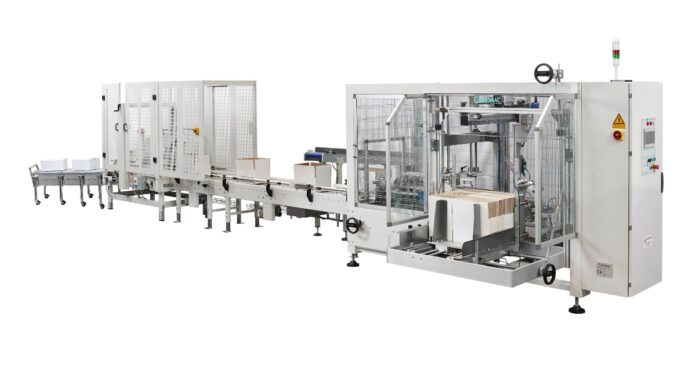
An Automatic Case Erector helps businesses automate the process of opening flat carton blanks, folding the bottom flaps, and preparing boxes for filling. This equipment can support more organized packaging operations, reduce repetitive manual tasks, and maintain a steady supply of cartons. Its benefits apply to a wide range of industries with different packaging requirements.
1. Food and Beverage Industry
Food and beverage manufacturers often handle large quantities of products that need to be packed efficiently. Items such as canned foods, bottled drinks, packaged snacks, dairy products, and frozen foods are commonly placed in corrugated cartons for storage and distribution.
An automatic case erector helps prepare boxes at a consistent rate, supporting packaging operations where production speed and carton availability are important. The formed cartons can move directly to filling or case-packing stations.
In this industry, equipment selection should account for production volume, carton dimensions, and the packaging environment. Machines used near food processing areas should also be suitable for the facility’s hygiene and cleaning requirements.
2. Pharmaceutical and Healthcare Industry
Pharmaceutical manufacturers package medicines, medical supplies, and healthcare products in cartons for safe handling and distribution. Packaging operations often require consistency because incorrectly formed cartons can disrupt product loading and sealing processes.
Automatic carton forming equipment helps prepare boxes with uniform shapes and properly folded bottoms. This can support organized workflows in facilities handling medicine cartons, medical consumables, and other healthcare products.
Manufacturers should consider equipment compatibility with their packaging procedures, documentation requirements, and quality-control systems. The case erector handles outer shipping cartons, while product-specific packaging and regulatory controls remain separate responsibilities.
3. E-Commerce and Fulfillment Centers
E-commerce businesses process orders in varying quantities and often need a continuous supply of shipping cartons. Manual box preparation can become a bottleneck when order volumes rise during busy sales periods.
An automatic case erector can form cartons before they reach picking, packing, or order consolidation stations. This helps fulfillment teams spend less time opening and folding boxes and more time preparing customer orders.
Facilities handling different product sizes should evaluate whether the machine can accommodate multiple carton formats. Quick changeover features can be especially useful when packaging requirements vary throughout the day.
4. Consumer Goods Manufacturing
Manufacturers of household products, personal care items, electronics accessories, and other consumer goods frequently use corrugated cartons for secondary packaging.
Automatic case erectors can support these operations by preparing cartons for products that are packed individually or grouped into larger shipping cases. Consistent carton formation also helps maintain smoother movement between filling, packing, and sealing equipment.
For manufacturers producing several product lines, flexibility is an important consideration. The selected system should support the carton sizes and styles used in regular production.
5. Cosmetics and Personal Care Industry
Cosmetics and personal care products often require careful packaging to protect containers and maintain product presentation. Items such as skincare bottles, shampoo containers, cosmetic sets, and hygiene products may be packed into corrugated shipping cartons.
An automatic case erector can prepare these outer cartons at a predictable rate, making it easier to coordinate packaging activities. This is useful for businesses that manage multiple product types or seasonal production demand.
The machine should be selected according to the dimensions, strength, and construction of the shipping cartons. Consistent box formation can help reduce handling difficulties during product loading and carton sealing.
6. Automotive and Industrial Parts Manufacturing
Automotive suppliers and industrial manufacturers package components such as fittings, tools, replacement parts, and mechanical assemblies for storage and transportation.
These products may vary considerably in weight, shape, and size. Suitable corrugated cartons help protect components during handling and shipping, while consistent box preparation supports organized packing operations.
Automatic case erectors can reduce the time spent manually forming shipping cartons. However, businesses should ensure that the equipment supports the required carton specifications and that the selected packaging materials provide adequate protection for the products.
7. Agriculture and Fresh Produce Packaging
Agricultural businesses and food distributors use cartons to handle fruits, vegetables, and other produce during storage and transportation. Packaging requirements can vary depending on product weight, ventilation needs, and distribution conditions.
Automatic case erecting equipment can help prepare cartons for produce packing lines, particularly in operations handling high volumes during harvest seasons.
The carton design is especially important in this sector. Businesses should consider ventilation openings, board strength, moisture exposure, and compatibility with the filling process when choosing packaging materials and equipment.
8. Logistics and Distribution Operations
Warehouses and distribution centers handle goods from multiple manufacturers and prepare shipments for retailers, wholesalers, and other customers. Their packaging activities often depend on having cartons available when needed.
Automatic case erectors can support these facilities by producing opened cartons for packing and dispatch operations. When connected to conveyors or other packaging equipment, they can help create a more coordinated material flow.
For logistics operations, equipment reliability, carton-size flexibility, and ease of maintenance are important factors. The system should fit the warehouse layout and the volume of cartons required during normal and peak operating periods.
Common Benefits Across Different Industries
Although each industry has its own packaging requirements, many businesses can gain similar operational advantages from automated carton forming.
More Consistent Carton Preparation
Automated forming mechanisms help produce cartons with repeatable dimensions and properly folded flaps. This can improve compatibility with downstream packaging equipment.
Reduced Manual Work
Employees spend less time opening flat blanks and folding carton bottoms. They can focus on product handling, quality checks, and monitoring the packaging process.
Improved Production Flow
A steady supply of formed cartons helps reduce interruptions at filling, packing, and sealing stations. This is particularly valuable in production lines where several machines operate together.
Better Use of Packaging Space
Flat carton blanks can be stored compactly and formed as needed. This may reduce the space required for storing large quantities of assembled empty boxes near packaging stations.
Support for Packaging Automation
Automatic case erectors can be integrated with conveyors, case packers, robotic loading systems, and carton sealers. This allows businesses to develop packaging lines that match their production requirements.
How to Choose the Right Case Erector for Your Industry
The most suitable machine depends on the products being packaged, the carton specifications, and the overall production process. Before selecting equipment, businesses should assess several factors:
- Production volume: Determine how many cartons the packaging line needs per hour or shift.
- Carton dimensions: Check the minimum and maximum box sizes supported by the machine.
- Material compatibility: Confirm that the equipment can handle the corrugated board grades and blank styles being used.
- Changeover requirements: Consider how frequently carton sizes change and how easily the machine can be adjusted.
- Line integration: Review compatibility with conveyors, filling stations, case packers, and sealing equipment.
- Maintenance needs: Evaluate access to components, availability of spare parts, and routine servicing requirements.
- Operating environment: Consider hygiene, humidity, dust, and other conditions specific to the facility.
A careful evaluation helps businesses choose equipment that meets their actual operational needs and can support future production changes.
Conclusion
Automatic case erectors are useful across a wide range of industries, including food and beverage, pharmaceuticals, e-commerce, consumer goods, cosmetics, automotive manufacturing, agriculture, and logistics. By automating carton preparation, these systems help reduce repetitive work, maintain consistent box formation, and support smoother packaging operations.
The right equipment depends on carton specifications, production requirements, operating conditions, and integration with existing machinery. When these factors are considered carefully, automatic carton forming can become a valuable part of an efficient and reliable packaging process.

