
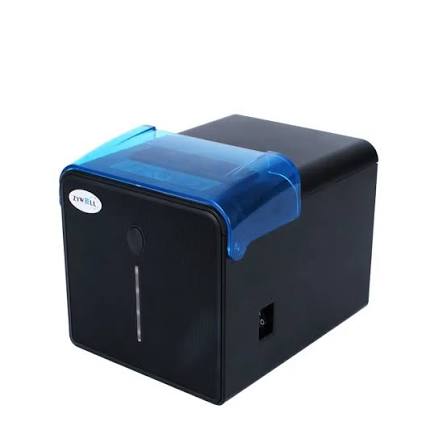

The receipt printer industry continues to evolve as businesses adopt digital payment systems, advanced point-of-sale (POS) software, and automated transaction processes. Retail stores, restaurants, supermarkets, and other commercial organizations increasingly expect printing equipment that offers reliable performance, fast processing, and flexible connectivity. To meet these changing requirements, manufacturers are investing in research and development (R&D).
Research and development plays an important role in improving product designs, developing new printing technologies, and enhancing manufacturing efficiency. It allows companies to understand market demands, solve technical challenges, and introduce products that offer better functionality. In modern receipt printer manufacturing, continuous innovation is essential for maintaining product quality and remaining competitive.
Understanding Research and Development in Receipt Printer Manufacturing
Research and development refers to the activities involved in investigating new ideas, improving existing products, and developing innovative manufacturing solutions.
In the receipt printer industry, R&D teams work on different aspects of product development, including mechanical engineering, electronic components, printing technology, firmware, and connectivity.
The process usually begins with identifying customer requirements and studying existing market solutions. Engineers then develop technical concepts, create prototypes, conduct performance tests, and make improvements before products enter mass production.
This systematic approach helps manufacturers develop printing equipment that meets practical business requirements.
1. Improving Printing Speed and Performance
Printing speed is one of the most important performance factors for businesses that process large numbers of transactions.
Long waiting times at checkout counters can affect customer experience, particularly during busy shopping periods. R&D teams work to improve printing mechanisms, control systems, and electronic components to achieve better performance.
Research activities may focus on:
- Optimizing thermal print head operation.
- Improving paper-feeding mechanisms.
- Enhancing processing efficiency.
- Reducing unnecessary printing delays.
- Maintaining consistent print quality at higher speeds.
These improvements help businesses handle transactions more efficiently without compromising receipt readability.
2. Developing Advanced Thermal Printing Technology
Thermal printing is widely used in modern receipt printers because it produces text and images without requiring traditional ink cartridges or ribbons.
However, manufacturers continue to research ways to improve thermal printing systems.
R&D teams investigate print head materials, heating element arrangements, temperature control, and paper movement to achieve consistent printing results.
They also examine how different thermal paper characteristics influence print clarity and performance.
Continuous development in this area can help manufacturers produce printers that offer dependable output, efficient operation, and practical maintenance requirements.
3. Enhancing Product Durability and Reliability
Receipt printers are frequently used in demanding commercial environments. A device installed at a busy supermarket checkout counter may operate throughout the day and process a large number of printing commands.
R&D helps manufacturers identify weaknesses in product designs and improve the durability of important components.
Engineers may evaluate:
- Thermal print head lifespan.
- Motor and roller performance.
- Automatic cutter durability.
- Housing strength.
- Internal heat management.
- Resistance to ordinary workplace conditions.
By conducting repeated-use and performance testing, manufacturers can identify potential problems before products reach customers.
4. Improving Connectivity and Device Compatibility
Modern businesses use different types of POS terminals, computers, tablets, and mobile devices. Receipt printers must communicate effectively with these systems to support smooth transaction processing.
Research and development helps manufacturers introduce and improve connectivity options such as USB, Ethernet, Bluetooth, and Wi-Fi.
Engineers also work on firmware and software compatibility to support different operating systems and POS applications.
These developments allow businesses to select printers that integrate more easily into their existing technology infrastructure.
5. Supporting Compact and User-Friendly Designs
Workspace efficiency is an important consideration for retail counters, restaurants, and other commercial environments.
R&D teams explore new product layouts and engineering techniques to create compact receipt printers without sacrificing essential functionality.
Design improvements may include smaller housing dimensions, easier paper-loading mechanisms, simplified control panels, and more accessible maintenance components.
Computer-aided design (CAD) tools and prototype testing allow engineers to evaluate different configurations before selecting a final design.
User-friendly designs can make installation, daily operation, and routine maintenance more convenient.
6. Integrating Smart Manufacturing Technologies
Research and development also contributes to improvements within manufacturing facilities.
Modern production environments increasingly use automation, connected equipment, and data analysis to improve operational efficiency.
For example, automated assembly equipment can help maintain consistency when installing electronic components. Digital inspection systems can identify visible defects, while production data can help managers monitor manufacturing performance.
Some manufacturers also explore artificial intelligence and predictive maintenance technologies to identify production problems and reduce equipment downtime.
These developments support more efficient manufacturing operations and improved product consistency.
7. Encouraging Energy Efficiency and Sustainable Production
Environmental considerations are becoming increasingly important in electronics manufacturing.
R&D teams investigate ways to reduce energy consumption, minimize material waste, and improve the efficiency of production processes.
In receipt printer development, research may focus on power management, component efficiency, packaging materials, and product durability.
Longer-lasting products can also reduce the frequency of equipment replacement and associated electronic waste.
Manufacturers may further explore recyclable packaging and materials that comply with applicable environmental regulations.
8. Responding to Changing Market Requirements
Customer expectations and industry requirements continue to change. The growth of mobile payments, cloud-based POS systems, self-service checkout stations, and digital retail platforms creates new opportunities for receipt printer development.
R&D helps manufacturers understand these changes and identify products that can support emerging business applications.
Market research, customer feedback, and product performance data provide useful information for future development projects.
Manufacturers that respond effectively to these requirements can maintain a competitive position and serve a wider range of industries.
Why R&D Matters When Choosing a Receipt Printer Manufacturer
A manufacturer’s research and development capabilities can provide valuable insight into its commitment to product improvement and long-term innovation.
Businesses should consider whether potential manufacturing partners invest in engineering, prototype development, product testing, and technical improvements.
Exploring the product range and technical capabilities of a Receipt Printer Manufacturer can help buyers understand available printing solutions and determine whether particular models meet their operational requirements.
It is also useful to ask about product development processes, customization options, technical documentation, and compatibility with existing POS systems.
Conclusion
Research and development is a major driving force behind modern receipt printer manufacturing. It supports improvements in printing speed, thermal technology, product durability, connectivity, compact design, and manufacturing efficiency.
As commercial technology continues to develop, manufacturers must invest in innovation to meet changing customer expectations and maintain product reliability. Businesses that choose manufacturing partners with strong engineering capabilities and a commitment to continuous improvement can benefit from more suitable printing solutions and stronger long-term supplier relationships.

