
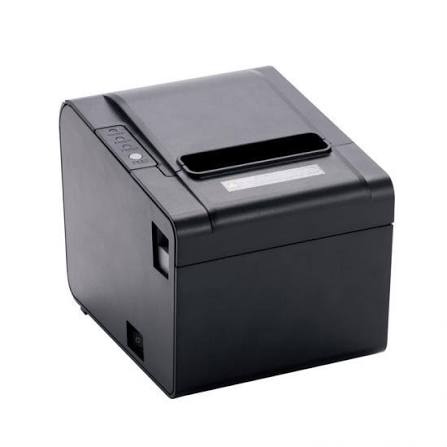

Modern businesses depend on efficient transaction systems to provide quick service and maintain accurate sales records. From supermarkets and restaurants to small retail stores, printing receipts remains an essential part of daily operations. Thermal printing technology has become a popular solution because it offers fast output, simple operation, and relatively low maintenance requirements.
A Thermal Receipt Printer uses heat-sensitive technology to produce printed information without requiring traditional ink or toner. These devices are commonly integrated with point-of-sale (POS) systems to generate purchase receipts, payment confirmations, and transaction records. Their ability to deliver clear printing quickly makes them valuable in environments where businesses process numerous transactions throughout the day.
Understanding Thermal Receipt Printing Technology
Thermal receipt printers operate using a specialized printhead that contains multiple small heating elements. These elements generate heat in specific patterns to create characters, numbers, and images on thermal paper.
Unlike conventional printers, direct thermal models do not spray ink onto paper. Instead, they use chemically treated paper that changes color when exposed to heat.
When a customer completes a purchase, the POS system sends transaction information to the printer. The printer processes the data and activates the appropriate heating elements to reproduce the required content on the paper.
This process allows businesses to generate receipts within seconds while reducing the need for additional printing supplies.
Main Components of a Thermal Receipt Printer
Understanding the major components helps explain how these devices function in everyday business environments.
Thermal Printhead
The printhead is the central component responsible for producing printed content. It contains tiny heating elements that activate selected areas of thermal paper.
Printhead quality and resolution influence the clarity of printed text, logos, and barcodes.
Thermal Paper Roll
Thermal paper has a special coating that reacts to heat. When the printhead applies controlled temperatures, the coating develops dark marks that form the required information.
Businesses should use compatible paper rolls to maintain consistent printing quality.
Paper Feed Mechanism
The paper feed mechanism moves the thermal paper across the printhead during printing. Rollers and motors work together to maintain smooth paper movement and accurate positioning.
Automatic Cutter
Many modern receipt printers include an automatic cutting mechanism. After printing is completed, the cutter separates the receipt from the remaining paper roll.
This feature saves time and makes transaction handling more convenient for employees.
Connectivity Interface
Connectivity components allow the printer to communicate with computers, POS terminals, tablets, and other business equipment.
Common connection options include USB, Ethernet, Bluetooth, and Wi-Fi, depending on the printer model.
How Thermal Receipt Printers Work During Transactions
Thermal receipt printing follows a series of coordinated steps that connect business software with the physical printing process.
Step 1: Transaction Information Is Collected
When a customer purchases products or services, the POS system records details such as item names, quantities, prices, taxes, and payment methods.
Step 2: Data Is Sent to the Printer
After payment is processed, the POS software sends the receipt information to the connected printer. The printer interprets the incoming instructions and prepares the required content.
Step 3: The Printhead Generates Heat
The printer activates specific heating elements according to the receipt data. These elements apply controlled heat to the thermal paper.
Step 4: Text and Images Appear
The heat-sensitive coating reacts to the printhead, creating visible text, numbers, logos, and other printed information.
Step 5: The Receipt Is Delivered
The paper feed mechanism moves the printed receipt outward. If the printer includes an automatic cutter, the receipt is separated for the customer.
This complete process typically takes only a few seconds, making thermal printing suitable for busy commercial environments.
Applications in Modern Retail and Business Environments
Thermal receipt printers support different operational requirements across multiple industries.
Retail Stores and Supermarkets
Retail businesses use thermal printers to produce receipts containing product descriptions, prices, discounts, taxes, and payment details.
Their fast operation helps reduce checkout delays, particularly during busy shopping periods.
Restaurants and Food Services
Restaurants use thermal printers for customer bills, kitchen orders, and payment confirmations. Kitchen printers can receive order information directly from POS terminals, helping employees coordinate food preparation and service.
Banks and Financial Institutions
Banks use thermal printing technology in ATMs and transaction terminals. These devices generate withdrawal receipts, balance information, and payment confirmations.
Transportation and Ticketing
Bus stations, railway counters, parking facilities, and ticketing offices use thermal printers to produce tickets and transaction records quickly.
Healthcare and Pharmacies
Healthcare facilities may use thermal printers for billing documents, payment receipts, and pharmacy transaction records. Their compact designs make them suitable for service counters with limited space.
Advantages of Thermal Receipt Printers for Businesses
Thermal printing provides several operational benefits that make it attractive to modern businesses.
- Fast printing: Receipts can be generated within seconds, supporting efficient customer service.
- Reduced consumable expenses: Direct thermal models do not require ink cartridges or toner.
- Quiet operation: These printers generally produce less noise than traditional impact printers.
- Compact construction: Their space-saving designs fit easily into checkout counters and workstations.
- Simple maintenance: Fewer consumable components help reduce routine maintenance requirements.
- POS integration: Multiple connectivity options allow compatibility with different business systems.
These features help businesses maintain efficient transaction processes without adding unnecessary complexity to their operations.
Factors to Consider When Selecting a Thermal Receipt Printer
Choosing the right printer involves understanding transaction volume, system compatibility, and workplace requirements.
Printing Speed and Resolution
Businesses with high customer traffic should consider printing speed carefully. A faster printer can help maintain smooth checkout operations.
Resolution is equally important when receipts include detailed logos, barcodes, or QR codes.
Connectivity and Software Compatibility
Check whether the printer supports the connection interfaces and operating systems used by existing POS equipment.
USB and Ethernet connections are common in fixed checkout environments, while Bluetooth and Wi-Fi can provide additional flexibility.
Paper Width and Printing Capacity
Common receipt paper widths include 58 mm and 80 mm. The appropriate option depends on the amount of information printed and the available counter space.
Durability and Maintenance
Businesses should evaluate printhead lifespan, cutter reliability, construction quality, and manufacturer maintenance recommendations before making a purchasing decision.
Maintaining Consistent Printing Performance
Regular maintenance helps thermal receipt printers operate reliably over extended periods.
Clean the printhead according to the manufacturer’s instructions to remove dust and paper residue. Check the paper feed mechanism for obstructions and ensure that paper rolls are installed correctly.
Businesses should also store thermal paper away from excessive heat, moisture, and direct sunlight because environmental exposure can affect print quality.
Using compatible supplies and following recommended operating procedures can reduce printing problems and unnecessary equipment downtime.
Conclusion
Thermal receipt printers play an important role in modern retail and business environments by simplifying transaction documentation. Their heat-based printing process, fast output, compact construction, and low consumable requirements make them practical for a wide range of commercial applications.
By understanding their components, working principles, advantages, and maintenance requirements, businesses can select suitable printing equipment and improve everyday transaction efficiency. As retail technology continues to develop, thermal receipt printers will remain an important part of reliable POS and customer service operations.

