
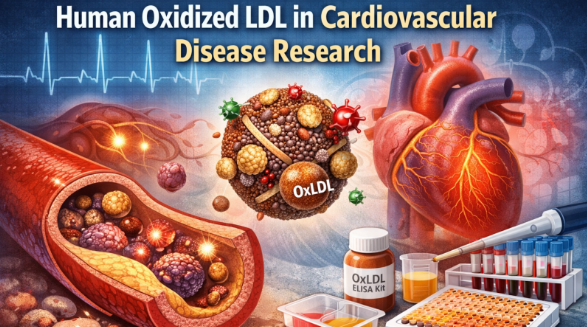

Cardiovascular diseases are one of the leading causes of illness and death all across the world. Studying the underlying mechanisms of these diseases is a major focus of research. Oxidized low-density lipoprotein is one of many factors involved in cardiovascular pathology. It has emerged as a key molecule that connects lipid metabolism, oxidative stress, and vascular inflammation.
Modern research further clarifies the role of OxLDL in atherosclerosis. Researchers use the OxLDL ELISA kit, a reliable analytical tool in cardiovascular disease research.
Understanding LDL Oxidation and OxLDL Formation
Low-density lipoprotein (LDL) transports cholesterol throughout the body. Native LDL particles interact with reactive oxygen species in oxidative stress, leading to the formation of OxLDL. This oxidative process alters both the lipid and protein components of LDL, thereby altering the biological behavior of the LDL particle.
Scavenger receptors on macrophages take up OxLDL, which is a key event in the early stages of atherosclerosis. When OxLDL accumulates within arterial walls, it contributes to endothelial dysfunction. It also sets the stage for chronic vascular inflammation.
Role of OxLDL in Atherosclerosis Development
OxLDL also plays an important role in the formation of atherosclerotic plaques in cardiovascular disease. It attracts monocytes to the blood vessel lining and triggers the transformation of monocytes into macrophages.
Macrophages take in OxLDL and transform into fat-filled foam cells. The formation of these cells is part of the early stage of atherosclerosis. OxLDL reduces the production of nitric oxide and also disrupts the function of normal blood vessels, which directly harms endothelial cells.
It also increases the production of adhesion molecules and pro-inflammatory cytokines, which intensifies inflammation in the arterial wall. These effects promote plaque growth. This significantly increases the risk of heart attack, stroke, and other serious cardiovascular events.
OxLDL and Inflammation in Cardiovascular Disease
OxLDL is a strong promoter of inflammation, which is a key factor in cardiovascular disease. It activates NF-κB and several other signaling pathways. This leads to the release of molecules that cause inflammation, which gradually damages the arteries. In addition to macrophages, OxLDL also affects dendritic cells, T cells, and other immune cells. It is important to study these inflammatory effects in modern heart disease research.
OxLDL as a Research Biomarker
OxLDL is closely linked to atherosclerosis and blood vessel problems. Therefore, it is used as a research biomarker in these diseases. Studies show higher levels of OxLDL in patients with heart disease, high blood pressure, and metabolic disorders. In addition to regular cholesterol and lipid levels, researchers also measure OxLDL for a better understanding of the development of these diseases. Researchers use the OxLDL ELISA kit to accurately measure OxLDL levels in biological samples.
Measuring OxLDL Using ELISA-Based Methods
It is important to accurately measure OxLDL to obtain reliable and consistent results in research. ELISA is a highly sensitive and specific technique commonly used to measure OxLDL. Researchers use the OxLDL ELISA kit to measure the exact amount of OxLDL in serum, plasma, tissue, or cell culture fluids. This kit uses antibodies that bind to oxidized LDL. This binding leads to a color change, which helps quantify OxLDL.
Applications
Testing Antioxidant Compounds
Researchers use the OxLDL ELISA kit to determine if antioxidant treatments can:
- reduce oxidative damage to LDL
- protect blood vessels
Evaluating Lipid-Lowering Therapies
Quantifying OxLDL levels helps assess the effectiveness of drugs used to lower cholesterol or improve lipid profiles in experimental models.
Studying Anti-Inflammatory Treatments
Changes in OxLDL levels indicate the effectiveness of anti-inflammatory therapies in reducing vascular inflammation linked to atherosclerosis.
Supporting Preclinical Drug Research
Scientists use the OxLDL ELISA kit to monitor OxLDL in early-stage studies. This helps evaluate how new drugs affect lipid oxidation and overall cardiovascular health.
Challenges and Future Directions
One of the key challenges in OxLDL research is variability. Advancements in antibody development and assay optimization can improve the accuracy of OxLDL detection. Its applications are likely to expand further into systems biology and personalized medicine.
Conclusion
Studying human oxidized LDL provides valuable insights into disease mechanisms and potential therapeutic strategies. An OxLDL ELISA kit provides precise, reproducible results in research settings.

